Buying second-hand equestrian equipment has become second nature for many riders: according to the Sofinscope 2024 barometer, nearly three out of four French people bought a second-hand product in the last twelve months. When it comes to horse riding, the vein is tempting, with a high-end saddle potentially losing half its value in the first year. However, equestrian equipment presents specific risks that do not exist in other second-hand markets: a tree that is twisted and invisible to the naked eye, dried-out leather that could give way mid-action, or a helmet that has sustained a knock, compromising its internal shell. This guide reviews, piece by piece, the checks to be carried out before any purchase, the applicable legal framework, and the equipment that should never be sold on the second-hand market.
The legal framework for buying second-hand goods: what truly protects your rights
Before discussing technical checks, a frequently misunderstood legal point: the remedies available to you depend on the Seller status, not of the nature of good.
Statutory warranty of conformity: reserved for professional-to-consumer sales
The legal guarantee of conformity, provided for in Articles L217-3 and following of the Consumer Code, applies for two years from the date of issue, including on used equipment. However, it does not apply for sales concluded between a professional seller and a non-professional buyer. However, this guarantee does not apply if you buy from a private individual, a dealer, or at a public auction. For used goods sold by a professional, the presumption of pre-existence of the defect is limited to 12 months (compared to 24 months for new goods): beyond that, it is up to the buyer to prove that the defect existed at the time of sale.
Latent defect: the only remedy between private individuals
Between private individuals, the open route is that of articles 1641 to 1649 of the Civil Code on the warranty for hidden defects. Three cumulative conditions must be met: the defect must be non-apparent at the time of purchase, pre-existent to the sale, and sufficiently serious to render the item unfit for its intended use. The time limit for taking action is two years from the discovery from vice, within twenty years of purchase. Specifically, a warped saddle tree that is not detectable by visual inspection or a helmet that has sustained a hidden impact fall within this scope, provided that the defect's prior existence can be proven, which almost always requires an expert assessment.
Good to know: Always keep written communications with the seller (advertisement, messages, photos from the advertisement), photograph the item upon receipt, and insist on a receipt mentioning the price, date, and nature of the goods. These elements will be essential if a dispute arises later.
Inspecting leather: the tests to run systematically
Leather is the material that most quickly reveals the true quality of pre-owned equipment. Several simple tests, carried out on the spot and before any payment, allow you to distinguish a supple piece of leather from dead leather.
Recognising genuine leather
Three converging signs allow you to identify genuine leather, though none of them are infallible on their own:
- Tactile and thermal testing: Place your hand on the surface for a few seconds. Real leather warms to the touch of the skin, synthetic stays cold.
- Absorption test: Place a drop of water in an inconspicuous area. On natural, untreated leather, it will be absorbed gradually; on faux leather, it will bead on the surface. Be aware that water-resistant treated leather may give a false negative.
- Olfactory and visual test Genuine leather gives off a characteristic organic smell linked to the tanning process. Conversely, a plasticky chemical smell, overly regular grain, or uniform reflections are warning signs.
Assessing the health of the leather
Beyond authenticity, the actual condition of the leather determines its remaining lifespan. Gently bend the piece 90 degrees: healthy leather will return to its original shape without visible whitening or cracking. Leather that whitens when bent, remains fixed in position, or reveals micro-cracks is dry and weakened. Re-oiling can improve suppleness, but it cannot restore already broken fibres. Our Expert guide to equestrian leather care Detail the signs of degradation and compatible products according to the type of tanning.
Disqualifying signs deep cracks going through the fibres, mould stains (greenish or whitish), persistent musty smell after airing, blackish areas indicating internal oxidation of the tanning. These defects cannot be repaired, they condemn the piece.
Checking a second-hand saddle: the critical points
The saddle is the most expensive and delicate item to buy second-hand. A well-maintained saddle can last twenty years; a saddle that has been poorly stored or ill-fitted to another horse can be out of commission in a few months. The inspection is done in three stages: the tree, the panels and flocking, then the peripheral leathers.
The saddle tree, a vital element
The saddle tree forms the skeleton of the saddle. If it is twisted or broken, the saddle is unusable and can injure the horse's back. Place the saddle on a tripod and observe from the rear the alignment between the centre of the cantle and the centre of the pommel: any misalignment indicates a twisted saddle tree. Then, grasp the pommel and the cantle and gently try to twist them relative to each other: a healthy saddle tree should show no play or cracking.
Panels and flocking
The panels carry the rider's weight on the horse's back. Palpate them on both sides: they must be supple yet uniform, with no hard lumps or marked hollows. Compressed or off-centre flocking creates pressure points that cause injuries and defensive behaviour. On a saddle older than five years, reflocking by a saddler (200 to 500 euros) is often required to restore a sound seat.
Peripheral leatherwork and hardware
Inspect the billets (which receive the girth strap) with particular care: these are the most stressed parts under tension. A faulty stitch here can lead to the saddle becoming detached. Pull firmly on each billet, check the condition of the stitching and the wear on the leather where the buckles pass.
The most profitable investment A full diagnostic by a saddler or saddle-fitter generally costs between €50 and €150. This is negligible compared to the price of a second-hand saddle (often several thousand euros) and the veterinary costs of an injured back. Get it done. before to finalise the purchase, or demand a conditional trial period from the seller.
Bridles, girths, stirrup leathers: what to check
No mandatory European standard applies to bridles (unlike helmets and body protectors), as we detail in our Comprehensive Guide to Equine Safety 2026. The quality therefore depends entirely on the original manufacturer and the maintenance received. On a second-hand part, several areas warrant targeted inspection.
Stitching and tension areas
The stitching focuses on the bridle attachment points, the noseband buckling, and the headpiece fastening. Visually check that the thread is uniform, with no slackened sections or fraying, then manually pull on each side: sound stitching does not open up and retains its geometry. Any stitching that slackens or shows the needle hole must be redone by a saddler before use.
Hardware and metal parts
Inspect each buckle, carabiner, and ring: everything must operate smoothly and without sticking, with no visible deformation. A buckle with a stiff pin, an ovalised ring, or a carabiner that no longer closes perfectly are signs of advanced wear. Green traces (brass oxidation) are essentially aesthetic, but reddish rust on metal supposedly stainless betrays a poor alloy that could break under stress.
Stirrup leathers: the part that gets replaced
Stirrup leathers concentrate stress at the adjustment holes and wear out quickly. Good saddlers advise swapping the left and right leathers regularly and replacing the pair after a few years of intensive use. When buying second-hand, check the remaining thickness at the most frequently used hole, look for signs of transverse cracking, and don't hesitate to discard any pair where the leather is dry or split. A stirrup leather breaking during a jump is one of the most dangerous accident scenarios.
Helmets, vests, safety stirrups: why second-hand items are to be avoided
This is the most important part of this article and where the economy is least justifiable. The Personal protective equipment (PPE), meaning helmets, EN 13158 protective vests and equestrian airbags, share a fundamental technical characteristic: their absorption capacity relies on materials with unique deformation. A single impact, even if not visible externally, permanently compromises their performance.
Riding helmets: why not second-hand without a history
The inner shell of a helmet, usually made of expanded polystyrene, deforms to absorb shock energy. Once crushed, it does not return to its original shape and no longer offers the same level of protection. Manufacturers and BETA, the British body that certifies a large proportion of equestrian helmets in Europe, recommend a replacement after any significant impact, even with no visible trace, and a preventive replacement approximately every five years (up to eight years after the date of manufacture according to manufacturers).
A helmet bought second-hand from an unknown seller means you have to take their word for it as to whether it's been dropped or not. The gamble isn't worth the savings, especially since the introduction of the standard EN 1384:2023, which has strengthened the lateral stiffness and penetration requirements and makes helmets from before 2023 technically less performant.
EN 13158 body protectors
Body protectors comply with the standard BS EN 13158, which distinguishes three levels (1 professional racing, 2 low-risk leisure, 3 high-risk disciplines such as motocross). The absorbent foams progressively compress, losing their protective capacity. BETA recommends a Preventative replacement every 3 to 5 years. Buying second-hand requires knowing the production date, usage history, and absence of impact, all parameters that a private seller can rarely document.
Equestrian airbags
Modern equestrian airbags incorporate triggering electronics (via cable for classic models, and wirelessly for the E-Twist'Air approved to NF S72-800:2022). These systems require a periodic technical inspection by the manufacturer (typically every 2 to 5 years depending on the model) and a Annual replacement of gas cartridges undeployed. A second-hand airbag without inspection documentation or a valid cartridge presents a real risk of non-functionality.
Safety stirrups
Floating caliper brakes, magnetic release brakes, or flip-flop brakes rely on moving mechanisms that wear out. When used, they may appear to function normally without showing signs of wear until the day they seize up when releasing. Saving a few dozen euros does not justify the risk of a dragging foot, one of the most serious accident scenarios in horse riding.
The simple rule: for anything that protects your head, your back and your life, buy new, insist on CE marking and keep the receipt. This is the only way to guarantee that the traceability chain is intact and that the advertised protection is effective.
Check the morphological fit before signing
Second-hand equipment in perfect condition but unsuitable for your horse's morphology is worthless: you'll have to resell it, modify it or, worse, use it as is to the detriment of the animal's back. Our Morpho-equipment adjustment guide Detail the steps to be taken. Before any purchase, systematically check three points.
For a Saddle, the saddle tree must correspond to the width of the horse's withers (measured with a template or assessed by a saddle fitter). A saddle designed for narrow withers on a wide horse will restrict shoulder mobility; conversely, a saddle that is too wide will tip forward and weigh on the withers.
For a bridle, measure the circumference of the noseband, the circumference of the head behind the ears, and the length of the browband before making any purchase. Standard sizes (pony, cob, full) cover common head shapes but offer limited adjustability. If there's a difference of more than 2 to 3 centimetres from the available sizes, the equipment will be unsuitable.
For a Strap, the length depends on the chest circumference at the girth passage and specific girth for your saddle. A girth that is too short or too long will unbalance your seat and can cause injury in the girth area.
Where to buy: an overview of the available channels
The purchasing channel influences both the average quality of the merchandise offered and the security of the transaction. Four options stand out.
Specialised equestrian platforms
Sites like Equirodi Horseted concentrates a community of riders, which translates into better-documented listings (detailed photos, precise measurements, context of use) and a common technical vocabulary. Equirodi is notably free for individuals (no commission on sales). The main filter is specialisation: a seller posting on an equestrian marketplace is almost always a rider or former rider, which reduces the risk of categorisation and description errors.
Tack sales and equipment fairs
Car boot sales organised by equestrian centres, regional committees, or during competitions offer the major advantage of the physical inspection. You see the item, you handle it, you identify the seller. The social dimension (regular sellers, local network) creates a form of reputational pressure that secures the transaction. Downside: the choice is limited to the day's stock.
Generalist platforms and professional saddlers
Generalist platforms (Leboncoin, Vinted, Facebook Marketplace) offer the lowest volumes and sometimes the lowest prices, but require increased vigilance: absence of fine equestrian categorisation, sellers who are often not riders, increased risk of fraudulent adverts. Prefer in-person meetings with inspection before payment, refuse any payment by postal order [mandat cash], and demand an invoice for valuable items.
Conversely, some professional saddlers take back and resell reconditioned second-hand equipment, sometimes with a workshop guarantee (3 to 6 months on the leather, up to 2 years on the tree of high-end saddles). Prices are higher than in direct transactions, but the professional commits their reputation, and you also benefit from the legal guarantee of conformity, which is not applicable between private individuals.
The actual budget: thinking beyond the listed price
The most common mistake when buying second-hand equestrian equipment is to focus solely on the purchase price. For a second-hand bridle or saddle, you should always factor in the cost of postage or collection, an initial thorough clean (15 to 30 euros for glycerine soap and leather conditioner), replacement of worn hardware (€5 to €15 per item), any necessary stitching repairs (€20 to €80 depending on the item), and for a saddle, a professional assessment or even re-padding (€50 to €500 depending on the condition of the panels). The total cost can push the actual price up by 30 to 50 per cent above the listed price. For an entry-level item, the difference compared to a new, guaranteed product can sometimes end up being negligible.
When to favour customised new equipment
The opportunity makes sense for robust, easily inspectable items with clear legal status: straps, stirrup leathers in good condition, standard bridles from recognised brands, grooming accessories. For other uses, custom new items remain the most rational option.
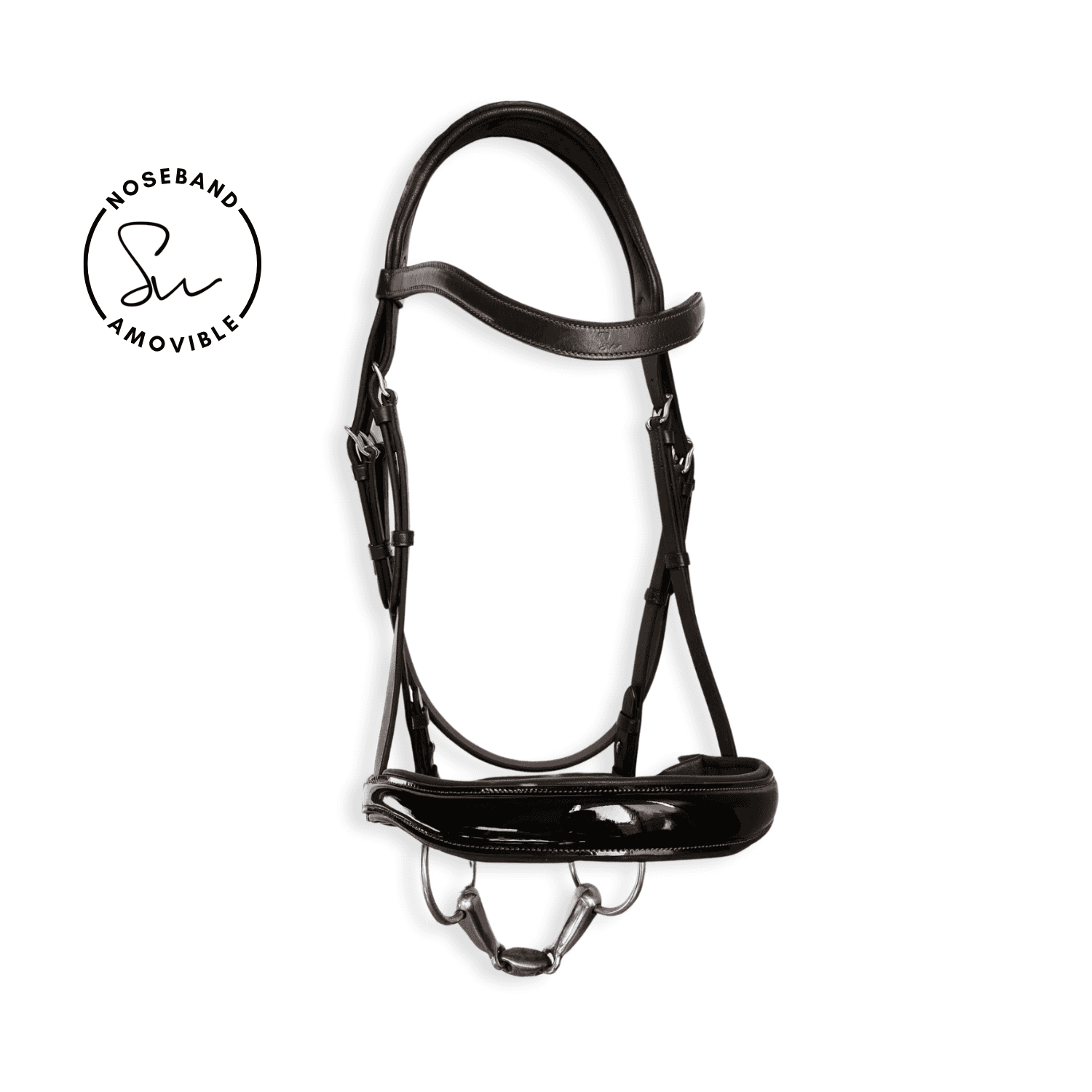
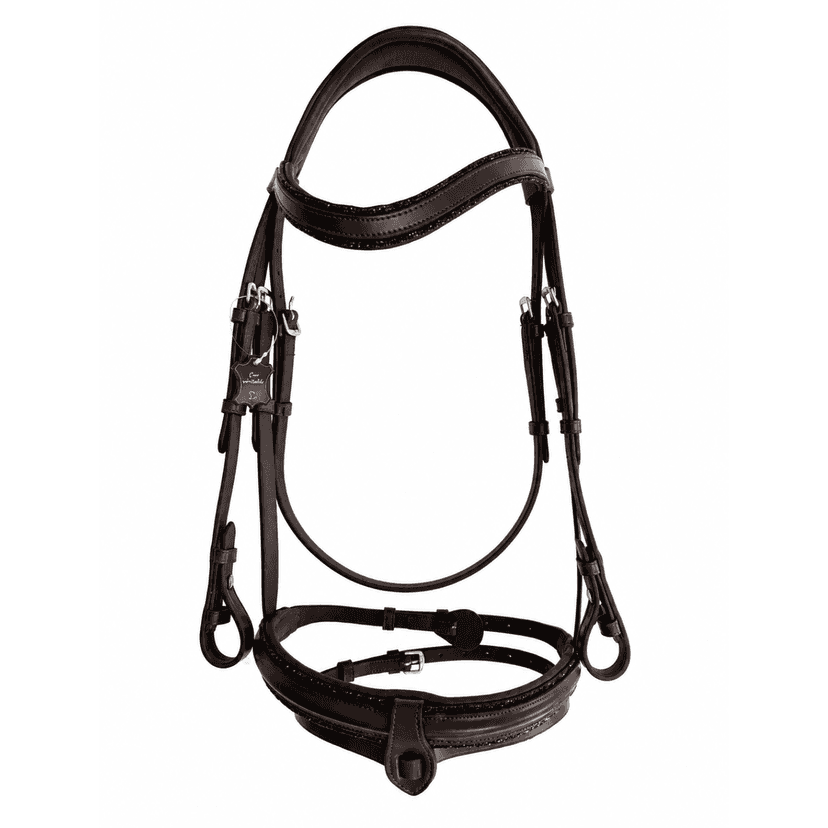
At Smart Wag, every snaffle bridle is made to order, in France, in vegetable-tanned full-grain leather and hand-stitched. Three concrete benefits follow:
- A Custom adjustment to the horse's morphology (noseband circumference, head circumference, cheekpiece length), which a standard second-hand size does not allow.
- A full traceability leather and supplies.
- A 4-year workshop warranty which is added to the statutory 2-year warranty, and after-sales service capable of repairing or modifying the part over time.
Over ten to fifteen years of use, a well-fitting, high-end bridle often costs less per kilometre than a succession of second-hand bridles replaced every three or four years. The long-term logic aligns with that of well-managed second-hand items: what matters is the ratio between the actual usage duration and the total real cost.
Frequently asked questions
What equestrian equipment should you never buy second-hand?
All PPE with untraced history: riding helmets, EN 13158 protective vests and airbags. A single impact, even if invisible, permanently compromises their shock-absorbing capacity. Safety stirrups with worn release mechanisms are also to be avoided, as are leather parts showing deep cracks that go through the fibres.
Does the legal guarantee of conformity apply to a second-hand purchase between private individuals?
No. The legal guarantee of conformity (Articles L217-3 et seq. of the Consumer Code) only applies to sales between a professional seller and a non-professional buyer, whether brand new or second-hand. Between private individuals, the only recourse is the guarantee against hidden defects under the Civil Code (Articles 1641 to 1649), to be exercised within two years of discovering the defect.
How can you quickly check whether leather is genuine?
Three converging clues: real leather warms to the touch while synthetic stays cold, it slowly absorbs a drop of water while imitation repels it, and it gives off a characteristic organic smell linked to tanning. Irregular pores and non-uniform grain confirm authenticity. No single test is infallible: combine several.
Which platform is best to use for buying second-hand equestrian equipment?
Specialised platforms like Equirodi or Horsete tend to attract a discerning equestrian community and offer a dedicated environment for equestrian equipment (fine categorisation, detailed photos, sellers who are often experienced riders). Swap meets allow for in-person inspection. Generalist platforms remain a viable option for common items, provided you inspect them before payment and avoid any payment by postal order or unsecured transfer.
Should a second-hand saddle be assessed by a saddle fitter?
Yes, it's the most profitable investment in the process. A saddler or saddle-fitter will detect a warped tree, compressed flocking or off-centre panels that the untrained eye won't see. Budget £50 to £150 for a full diagnosis, which should be weighed against a saddle that can cost several thousand pounds and affect your horse's back for years.
Choosing customised new equipment: durability and traceability
Occasion has its merits for robust and well-documented items. For bridles, where a morphological fit makes all the difference to the horse's comfort and the equipment's longevity, a new custom-made item remains the safest investment. At Smart Wag, each bridle is fitted to your horse's precise measurements, crafted from full-grain French leather with vegetable tanning, hand-stitched, and covered by a four-year workshop guarantee in addition to the legal conformity guarantee.
Discover our range of customisable snaffle bridles:
- Mont Blanc anatomical bridle, Anatomical cut for horses demanding comfort.
- New Soul bridle Contemporary design, versatile for all disciplines.
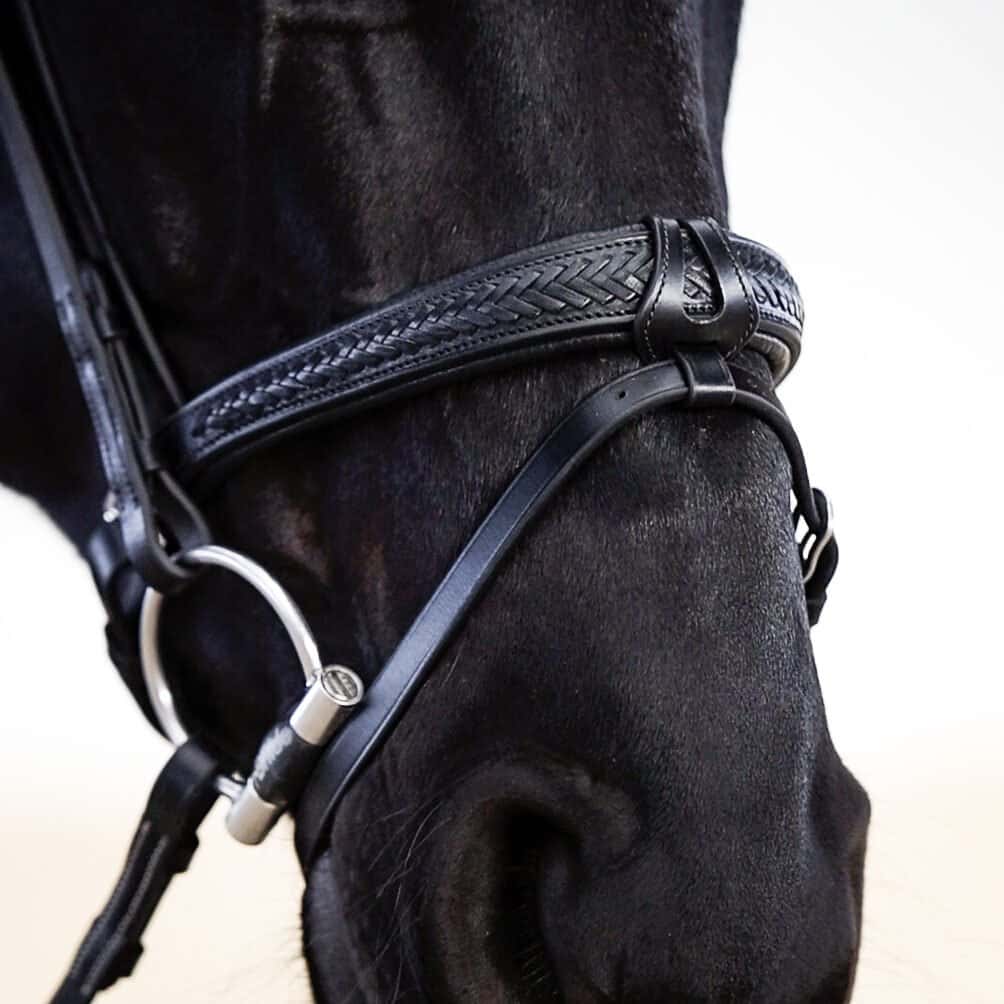
- Braided leather bracelet from Basel, Exceptional handcrafted braided finish.
- Patent leather bridle Zurich Elegance and performance for dressage.
- Shambord bridle, Timeless, hand-stitched classic.