Key takeaways
- A full-grain leather snaffle bridle that is properly stored lasts 10 to 15 years, compared with only 2 to 3 years without suitable protection.
- The right bag ticks three boxes: a tough technical fabric (1680D polyester, Textilene®), mesh ventilation, and dimensions sized for a fully assembled snaffle bridle.
- Beyond 65%% humidity in a closed bag, mould attacks leather: ventilation and silica gel are essential.
A leather bridle represents an investment of 200 to 400 euros for a quality model, sometimes much more for bespoke items. However, many riders store them at the back of a locker or a stable bag without any real protection, which reduces their lifespan by five. Choosing a suitable bridle bag isn't a minor detail: it's what transforms beautiful leather into durable equipment, capable of lasting ten years of riding without losing its suppleness or shape. Here are the practical criteria for choosing well, without falling into common traps.
Why a good bridle bag protects your investment
A leather bridle lives with its rider: it softens, takes the shape of the horse's head, and develops its own patina. Stored poorly, however, it undergoes the opposite effect: hardening, deformation of the cheekpieces, oxidation of the buckles, and the appearance of mould on the nosebands and throatslaps. On the French equestrian market, bridles range from 50 euros for entry-level models to over 800 euros for high-end designs. At this level of investment, protection becomes an obvious economic calculation.
Dampness, the sworn enemy of leather
Moulds develop as soon as the relative humidity exceeds 65 %, a threshold very quickly reached in an hermetically sealed bag, especially if the bridle was put away still slightly damp after a session. The consequence is visible within a few weeks: whitish spots, characteristic odour, weakening of the fibres. Once the leather is attacked, restoration costs more than a new bridle in the majority of cases.
The deformations that are not immediately visible
A bridle folded flat in an ill-fitting bag ends up losing its shape. The headpiece flattens, the cheekpieces crease at the jaw, and the noseband twists. These deformities often go unnoticed until you try to put it back on the horse: the headpiece no longer sits correctly behind the ears, and the noseband no longer follows the curve of the nose. A correctly sized bag preserves the original geometry.
The oxidation of metal coils
Bits, buckles, rings and loops: a bridle contains about ten metal parts, usually made of stainless steel or nickel-plated brass. Stored in contact with damp fabric or in an unventilated environment, these elements will rust or tarnish. On nickel-plated parts, corrosion appears within 6 to 12 months and can no longer be repaired. On stainless steel, it takes a little longer but affects the long-term function of the buckles.
Materials: what sets a good bag apart from a bad one
Not all bridle bags are created equal, and the fabric used makes a significant difference. Four families of materials will share the market in 2026, with lifespans ranging from 3 years for low-cost models to 15 years for high-end ones.
| Material | Characteristics | Lifespan | Best for |
|---|---|---|---|
| Polyester 1680 denier with PVC coating | Fully waterproof, abrasion-resistant | 8-10 years | Heavy transport, damp stables |
| Nylon 600D / 420D | Lightweight, tear-resistant | 5-7 years | Club rider, moderate use |
| Textilene® 1000×2000 denier | UV, fire, mould resistant | 10-15 years | Competition, long-term storage |
| Technical recycled fabrics | Eco-friendly, equivalent performance | 7-10 years | Environmentally conscious knight |
Beyond the main fabric, also look at the manufacturing details that make a bag last: double stitching on seams, branded zips (YKK remains the benchmark in the industry), reinforcements at the corners and base, and an interior lining made of mesh or synthetic sheepskin to absorb shocks without trapping moisture.
Good to know: Be wary of low-end faux leather bags. Under the guise of a premium product, they combine all the flaws: they don't breathe, they crack within 2 to 3 years, and they don't offer adequate protection from moisture. A €60 technical polyester bag will protect better than a €40 faux leather one.
Dimensions and ventilation: the two technical boxes to tick
A poorly sized bag forces the bridle to be folded or leaves too much space for it to rattle around during transport. A bag without ventilation turns even a short trip to the farrier into a steam bath. These two criteria are the most overlooked when purchasing, yet they determine the majority of the outcome.
Dimensions by snaffle bridle size
For a horse-sized bridle (full or cob full), allow 40-45 cm in height, 30-35 cm in width, and 15-20 cm in depth. For a cob or pony bridle, 35 x 28 x 15 cm is sufficient. For a Shetland or mini-Shetland, reduce this to 30 x 25 x 12 cm. The best test when buying: being able to slide the fully assembled bridle in without bending the headpiece or crushing the noseband. If the bag has an integrated hook or wooden bridle holder, even better: this preserves the shape over time.
Ventilation system: mesh, perforations, perforated fastenings
Four technical solutions provide effective ventilation without compromising protection. Strategic mesh panels (on the sides or upper part) ensure optimal air circulation while blocking driving rain. Perforated side vents continuously evacuate residual moisture. Perforated zips maintain ventilation even when the bag is closed. Finally, synthetic sheepskin linings naturally regulate humidity while absorbing shocks.
Compartments and internal organisation
A truly useful bridle bag has at least two compartments: a main compartment for the bridle, and a secondary compartment for reins or a spare bit. Competition models add an external pocket for towels, glycerine soap, and cleaning cloths. Also check for padded shoulder straps if you plan to carry it on foot from the paddock to the stable: leather bridles weigh from 800g to 1.2kg, which becomes noticeable over time.
2026 innovations: RFID, eco-design and technical materials
The equestrian storage market follows the general trend of the sector: increased technicality, digital traceability, eco-design. Three developments are worth the attention of discerning riders in 2026.
RFID tags and tack traceability
Premium manufacturers are now integrating RFID chips sewn into the bag’s lining. The aim: to facilitate the tracking of equipment in stables, avoid confusion between riders from the same club and speed up inventory at competitions. Associated mobile applications record maintenance dates, alert on lubrication needs and keep a purchase history. The additional cost remains limited (€10 to €30), for a user-friendliness that makes a difference on repeated trips.
Recycled fabrics and certifications
GRS (Global Recycled Standard) and Oeko-Tex® certifications are becoming commonplace for mid-range and high-end equestrian bags. Recycled materials from plastic bottles now offer technical performance equivalent to virgin polyester, with a reduced carbon impact of 30-50 %. For a rider concerned with environmental consistency, this is a credible option with no compromise on durability.
Technical and antibacterial linings
The linings now incorporate durable anti-bacterial and anti-mould treatments (up to 50 washes). On structured models, memory foams position the bridle, keeping the poll strap arched and the noseband in its original curve, extending its wear by several years.
Care: extend your bag's life by 50 to 70%
A quality bridle bag requires only a few minutes of care each month. Regular attention makes all the difference: a well-maintained bag will last 10 to 15 years, while a neglected one will be ready for the bin in less than half that time.
Monthly routine
For a synthetic material bag, cleaning with a damp sponge and mild soap (Marseille soap or diluted glycerine soap) is sufficient. Avoid the washing machine as it can damage the waterproof coatings and seams. For a bag with leather parts, supplement with a nourishing balm on the leather areas only, every 3 months.
Storage between uses
Store the bag in a dry, temperate location (15 to 25°C, humidity 40 to 60 %), never in direct sunlight or in a damp cellar. At the end of the season, slide a silica gel sachet inside and leave the bag slightly open to allow it to air. Avoid piling heavy objects on top of it: prolonged deformations will eventually become permanent.
Repairs to plan ahead
Inspect the seams, zips, and shoulder straps every 6 months. A faulty zip can be replaced by a cobbler for €15-€30, compared to €80-€150 for a new bag. A loose seam can be repaired for €5-€10. Anticipating these small repairs can double the bag's total lifespan.
Stable tip: To absorb moisture from a bridle stored after a rainy ride, place two silica gel sachets (costing £1-£2 each from shops) at the bottom of the bag. Replace them every 3 to 6 months or as soon as they become saturated. This tip reduces the risk of mould by tenfold.
A bag suitable for the bridle it protects
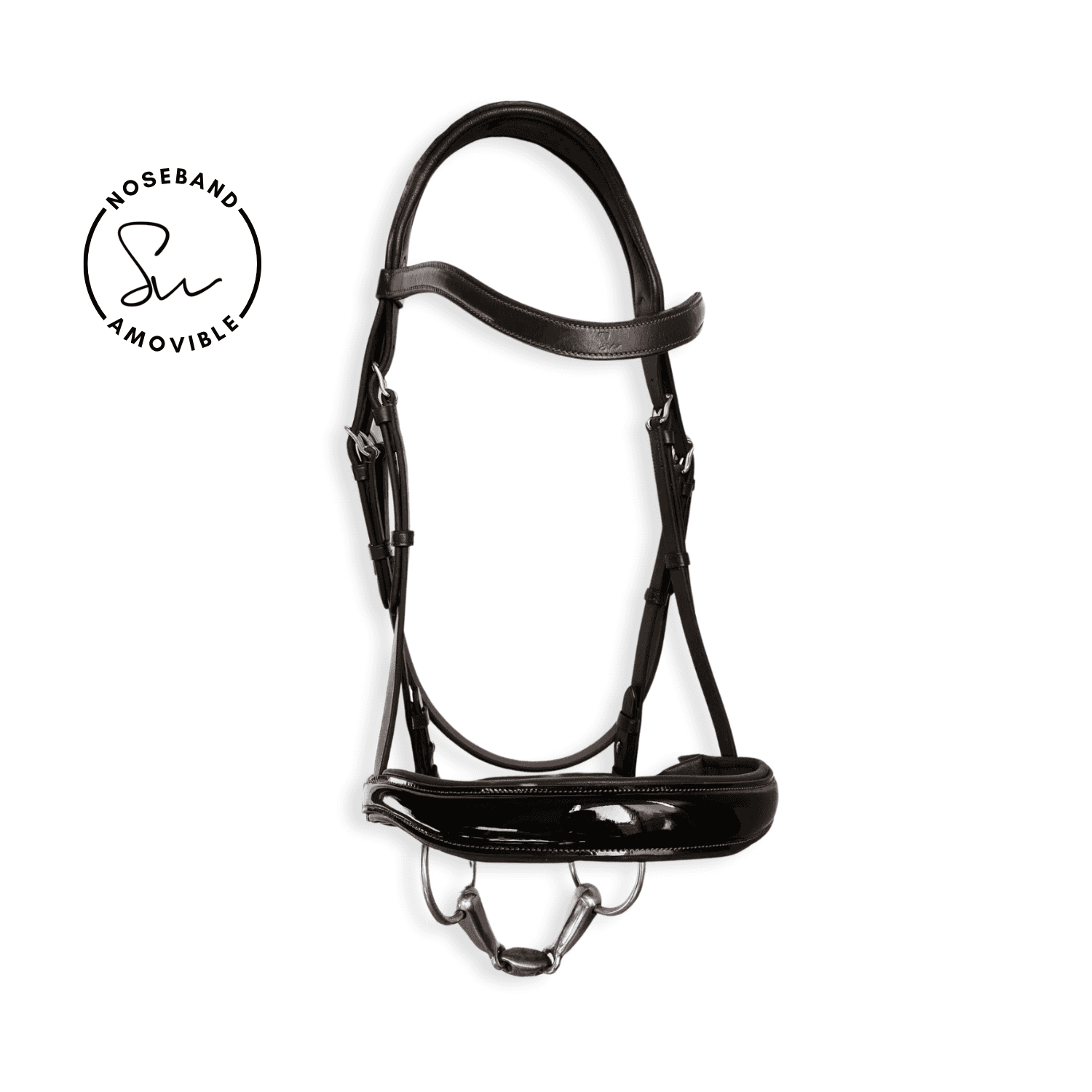
A premium bridle bag only makes sense if it protects a bridle that's worth protecting. At Smart Wag, our bridles are crafted from European-tanned full-grain leather, with anatomical headpieces and shaped nosebands that deserve to last ten years rather than three. For demanding competition or club use, the Mont Blanc anatomical bridle combine ergonomics and high-end finish. For a more brilliant look and exceptional leather, the Patent leather bridle Zurich Provides a very durable varnish finish. For versatile everyday use, the New Soul bridle remains a robust reference.
To learn more about the daily maintenance of your leather, consult our Bridle maintenance guide, and to understand the differences between a bridle, a snaffle, and a double bridle, read our Bridle or snaffle comparison.
Frequently asked questions
Which bridle bag size should you choose for a horse-size snaffle bridle?
For a horse-sized bridle (full or cob full), allow for a bag approximately 40 to 45 cm in height, 30 to 35 cm in width, and 15 to 20 cm in depth. This size enables the bridle to be stored fully assembled without folding the cheekpieces or crushing the noseband, which helps maintain the leather's shape. For a pony or cob bridle, dimensions of 35 x 28 x 15 cm are sufficient. Ensure the bag has an integrated hook or bridle holder for easy hanging.
How to effectively protect a bridle from dampness?
Three precautions prevent 90 % of moisture-related damage. First, never store a wet bridle in a closed bag: let it dry for 24 hours in the open air, at room temperature, away from any heat source. Next, choose a bag with mesh ventilation or side perforations: the relative humidity in a closed bag rises above 65 % in a few hours, the threshold at which mould develops on leather. Finally, place a silica gel sachet in the bag to absorb residual moisture, and replace it every 3 to 6 months.
Is it worth investing in a top-of-the-range bridle bag?
The calculation is simple: a properly protected full-grain leather bridle lasts 10 to 15 years, compared to 2 to 3 years without suitable storage. For a bridle costing 250 or 400 euros, the economic difference largely justifies a 50-150 euro bag over an entry-level 20 euro model which deforms and doesn't properly insulate from moisture. For an amateur rider who rides 2 to 3 times a week, a mid-range bag made from technical polyester with a mesh lining represents the best value for money. For competitions, a reinforced, structured bag offers a real benefit for transport.
Which materials should you favour for a bridle bag in heavy use?
For intensive use, opt for 1680 denier PVC-coated polyester or 1000×2000 denier Textilene: these technical fabrics resist abrasion, UV rays, and bad weather for 8 to 15 years. 600D/420D nylon is lighter and more economical, but its lifespan is limited to 5-7 years. Avoid low-end faux leather bags that crack quickly and don't breathe. Also check the seams (double stitching minimum), the zips (prefer YKK brands), and the quality of reinforcements at the corners, which are classic weak points.
How to care for a bridle bag so that it lasts?
For a synthetic material bag, a monthly clean with a damp sponge and mild soap is sufficient. Avoid the washing machine, which damages the waterproof coatings. For a bag with leather parts, apply a nourishing balm every 3 months to the leather areas only. Store the bag in a dry, temperate place (15 to 25°C, 40-60% humidity %), never in direct sunlight or a damp cellar. Inspect the seams, fastenings and attachments every 6 months: replacing a faulty zip costs €15 to €30 at a cobbler, compared to €80 to €150 for a new bag.
Conclusion: protecting a bridle also enhances its value.
A bridle bag is not a carrying accessory, it's the logical extension of a considered investment. Technical materials, careful ventilation, appropriate dimensions, and regular maintenance: these four pillars extend the lifespan of a bridle from 3 years to over 10 years, without changing your routine. For a €250 or €400 full-grain leather bridle, the economic calculation needs no explanation.
At Smart Wag, our leather bridles are designed to last a minimum of a decade. Discover our range of bridles Full-grain leather tanned in Europe, customisable with free engraving.