«Is your horse a 16.2hh Quarter Horse? Get the standard size for the breed.» This idea is everywhere, and it's misleading. Within the same breed, variations in height, back length, wither width, or head shape are perfect for challenging any generalisation. Choosing a halter, bridle, or saddle based solely on the breed name is like buying your shoes based on your nationality.
This is not a detail. A poorly fitting saddle is now considered the primary cause of preventable back problems in ridden horses, and a noseband fitted to an average size quickly creates pressure points on bones that do not conform to any standard. The good news is that a few measurements and a bit of observation are all it takes to escape this trap.
This guide sorts out the useful breed standards, the persistent morphological myths and the individual measurements that really matter when fitting tack.
The reality of within-breed variation
Stud books describe a theoretical horse. In practice, each individual deviates to a greater or lesser extent from this average. The variations are wide enough to make the idea of «breed standard» equipment dangerous.
The case of the Thoroughbred
The Thoroughbred is often cited as an example of a homogeneous breed, selected for racing over three centuries. The reality is more nuanced. Adult height at the withers typically ranges between 15.2 and 17 hands, which is approximately 157 to 173 cm, with an average of 163 cm. Almost 16 cm separate the smallest from the largest representatives of the breed.
Champions illustrate this breadth. Hyperion, a major stallion of the 1930s, was approximately 15.1 hands (155 cm), with a short-legged and long-backed build. The famous Zenyatta, decades later, topped out at 17 to 17.2 hands (173 to 178 cm). Between the two, almost twenty centimetres difference for two very high-calibre thoroughbreds.
Evolution over time further amplifies the gap. The first Thoroughbreds of the early 18th century measured on average 13 to 14 hands, about 140 cm. Today, the average exceeds 16 hands. More than twenty centimetres gained in three centuries of selection: the «standard» of a breed is never fixed.
The case of the Quarter Horse
The Quarter Horse offers another interesting read. The breed was profoundly reshaped by a few foundation sires, among them Doc Bar, foaled in 1956. Doc Bar stood barely 15 hands and possessed a conformation very different from the «punchy» Quarter Horse of the 1950s: a more pronounced wither, a higher set neck, and finer lines. His descendants literally changed the standards for halter and cutting, to such an extent that judges had to adapt their criteria.
Result today: two Quarter Horses of the same height measured at the withers can present very different backs, shoulder angles and topline widths, depending on their Doc Bar, working cow horse, halter or pleasure ancestry. The American saddle maker Keith Seidel, who has been making Western saddles for over 40 years, insists on this point: he first looks at the horse's shape and conformation, and only then chooses the appropriate tree. Breed comes second.
Other typical examples
The phenomenon isn't exclusive to purebreds and Western horses. It's found in most breeds:
- French Saddle real adult size amplitude of about 1.60 to 1.75 m depending on the strains, with more lanky lines oriented show jumping or more compact models.
- Purebred Lusitano (PSL or Lusitano) a head often described as short and arched, but the chamfer range varies considerably between very fine models and heads that are wider at the cheek.
- Friesian very typical mane and withers standards, but with real variability in back length according to generations.
- Icelandic Long considered a «sturdy pony», today it features finer sporting models, selected for competitive tölt, which are no longer suited to uniformly heavy equipment.
Good to know: «Breed standard» and «morphological type» do not mean the same thing. A studbook describes selection criteria (origin, accepted coat colours, minimum height); the actual morphological type of an adult individual depends as much on its precise lineage, its diet when young, and its work as on the breed registered on paper.
Four persistent morphological myths
Some myths are so widespread that they are repeated without verification. Here are the four most costly ones.
«All Fjords take Cob»
False in a significant number of cases. The Fjord does indeed have a shorter head than that of a classic riding horse, which leads to choosing a Cob bridle. However, the forehead is wide and the cheekbones prominent, and specialist retailers have long reported that’A large part of the Fjords fits better with a Full size browband and noseband., sometimes associated with a Cob headpiece. Pragmatism consists of measuring each piece separately rather than buying a complete kit based on breed name.
«The Quarter Horse always has a short back»
Too simplistic. The breed includes compact, short-backed cutting models, but also much longer pleasure and reining models, not to mention the Appendix which brings in Thoroughbred blood. Buying a «78-inch rug because it's a Quarter Horse» exposes you to systematic over or under-sizing. The correct measurement is taken from the chest to the tail fold, not from a breed guide.
«The Friesian inevitably requires bespoke ornamentation»
True for traditional presentation, false for everyday work. A Friesian used for leisure or modern training can quite happily wear a classic bridle made of full-grain leather with a simple cut, provided that the headpiece is wide enough to fit behind the breed's very high-set ears, and that the throatlash is sufficiently long. This is a case where careful measurement is better than marketing hype.
«My horse is the same size as my coach's, their tack will fit me.»
The most common, and one of the most costly, mistake. Two horses measuring 1.65m can have chest girths of 1.20m and 1.30m, back lengths differing by ten centimetres, withers that are fine or wide, and a noseband that is straight or arched. A ’Full« size headcollar from one manufacturer will not have the same measurements as from another. Five minutes of trying it on by hand is better than weeks of rubbing.
Individual asymmetry: the variable that race ignores
Beyond the ratings, there is laterality. Like humans, horses are not perfectly symmetrical. The majority of horses have one shoulder that is more developed than the other, a consequence of right or left dominance that establishes itself from early muscle development.
The research has quantified these asymmetries. A publication in PLOS One (Persson-Sjodin et al., 2024) observed that approximately 70 % of high-performance horses perceived as not lame yet presented measurable movement asymmetries to the sensor. Another study on pressure distribution under the saddle, at stance and trot, showed that rider and horse asymmetries significantly influence the distribution of forces on the back.
Practical consequence: no «breed standard» says anything about the lateralisation of the horse in front of you. It is observation, palpation and, if necessary, pressure pad testing by a saddle fitter that reveal the actual asymmetry. This is precisely what standards ignore, and what individualisation corrects.
Useful clinical indicator A saddle that systematically slips to one side is not insignificant. The work of Greve and Dyson, published in the Equine Veterinary Journal, has shown that it is associated with hindlimb lameness in approximately 54 % cases in their cohort, compared with just 4 % in horses with forelimb lameness. Recurrent saddle slip is a sign that warrants investigation, not a defect to be compensated for with a corrective saddle pad.
Measuring your horse for real: a practical method
Moving away from race-based reasoning doesn’t require investing in a laser rangefinder. With a flexible tape measure, a pencil and a sheet of paper, you can cover 80% of your everyday equipment needs. Here’s the procedure to follow.
Snaffle bridle, halter and headpiece
- Amount (bit-to-bit) Length of the corner of the mouth on one side, over the nape, to the corner of the other side. Gives the size of the headstall + cheekpiece.
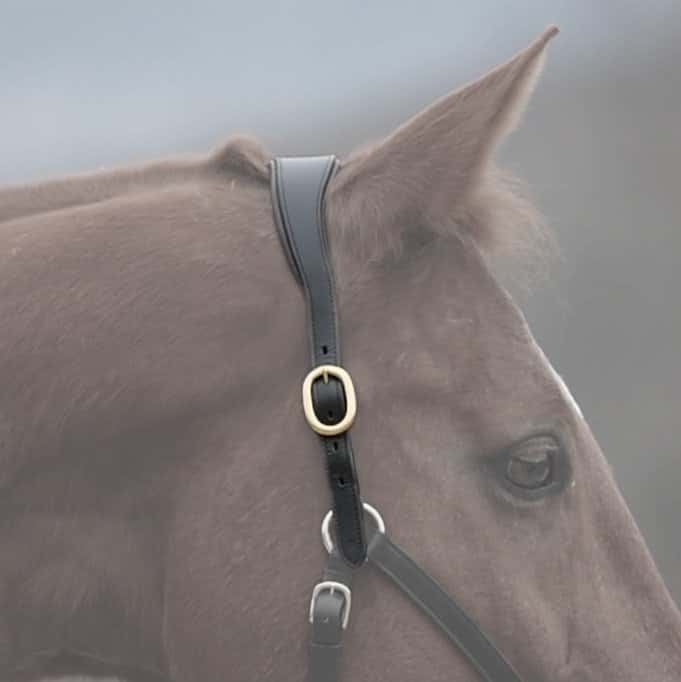
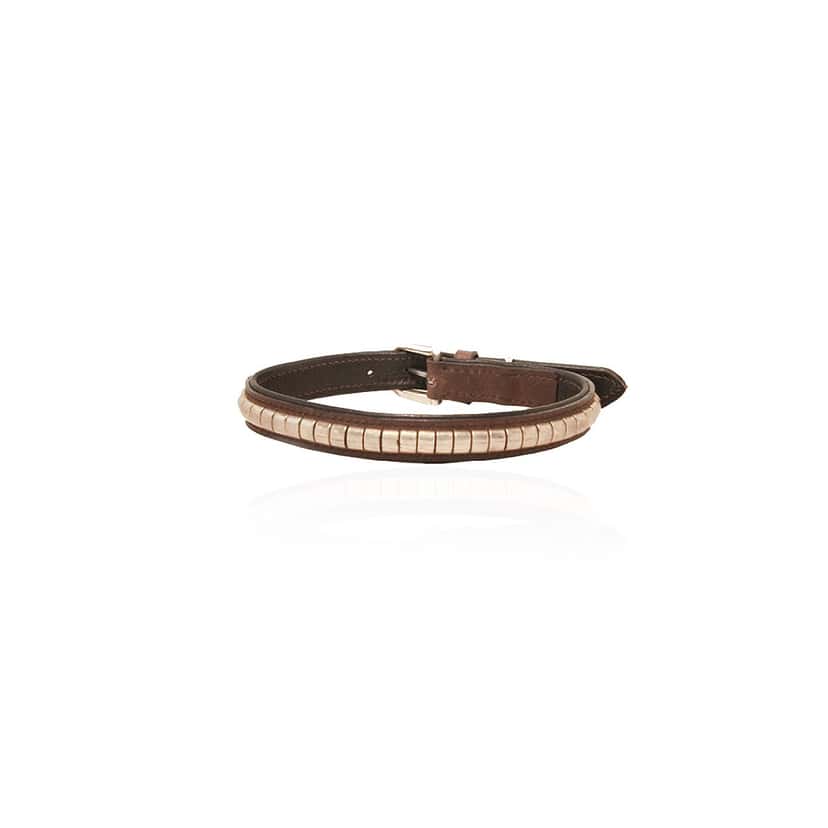
- Front"} From ear base to ear base, following the contour of the forehead. For horses with a broad forehead (Fjord, some Iberian heads), allow extra room.
- Noseband : chamfer tour two finger widths below the zygomatic bone (the cheekbone). This is the area actually supported by the noseband, not the lower part of the nose.
- Throatlatch A throat tour passing just under the jowls. Must allow four fingers to pass freely once in place.
To take your horse's halter selection further, our Guide to choosing the ideal halter by size and material Take these criteria with concrete size ranges.
Saddle and girth
Saddle fitting remains a craft. However, a few measurements can help pre-select models.
- Back length from the top of the withers to the last rib (T18). Beyond this is the lumbar region, on which the saddle must never rest.
- Withers width trace the template approximately 5 cm below the top of the wither, using a flexible wire or a plastic template. This is used by the saddle fitter to pre-select the tree.
- Chest circumference behind the elbows Thoracic volume indicator, useful for the strap.
- Strap passage circumference at the narrowest point, to anticipate saddle positioning.
A fit check by a qualified saddle fitter typically costs €100 to €200 and remains the best preventative investment in the entire saddle's upkeep, ahead of any miracle «shock-absorbing» pad.
Head, neck and laterality
Finally, two useful observations you can make yourself:
- Neckline Length of the nape to the withers, high versus low topline, presence of a hollow in front of the withers. This determines the comfort of the headpiece and the overall balance in hand.
- Laterality Observe while walking, with reins in hand, if one shoulder seems more prominent, if the foot lands more heavily on one side, if the horse is more inclined to rest a hind leg on the right or left. These clues, without being diagnostic, alert to areas where the saddle or bridle risk causing asymmetry in the horse's work.
Measurement frequency: A stable adult horse can be measured once or twice a year. A young, growing horse, a horse starting new training, a recovering or elderly horse warrants a check-up every three months. Dr Sue Dyson reminds us that a horse’s shape can change in a month; it is rare but possible, and it is better to notice it in time.
Morphology evolves: why «fitted» equipment doesn't stay that way
Choosing equipment suited to a particular moment does not exhaust the subject. The horse's body is constantly moving, under the effect of several factors.
- Seasons A horse in a pasture can lose several tens of kilograms over the winter, then regain them when the spring grass returns. On a weight of 500 kg, fluctuations of 30 to 50 kg are not exceptional, and alter the girth and the thickness of the required girth strap.
- Work A horse returning to work after a long break develops its back muscles within weeks, which can transform the shape of the Withers and the saddle area. Conversely, a long period of inactivity causes these muscles to atrophy.
- Training laterality : Working systematically on one rein or in an asymmetrical discipline can accentuate a natural asymmetry. This is one of the arguments for varied groundwork, longeing, and working on both sides.
- Age Over the years, the top line sags, the angle of the withers changes, and the musculature alters. A saddle that suited a horse at 8 years old may no longer be suitable at 18.
- Nutrition and health A change in diet, a chronic illness, or recovery after an injury can alter overall body composition and fat distribution.
To go further into the biomechanical reading of the back and equipment adjustment, our dedicated file on Ergonomic equipment and the biomechanics of the horse detail the sensitive zones and best practices for observation.
What 2026 tools really change
Several recent technologies make individual measurement easier. Not all live up to their promises, some are genuinely useful.
Smartphone 3D scanner
The application HORSESHAPE smart3Dscan, developed from a university research project and available on the App Store, transforms an iPhone equipped with FaceID into a horse-back scanner. It uses the TrueDepth sensor to generate a 3D model of the back's surface, which can be used by a saddle-fitter to pre-select a tree or to monitor morphological changes over months. It is currently the most accessible tool for objectively assessing the real shape of a horse's back, without replacing a visit to a professional.
Pressure-sensing pads and stirrups
Instrumented saddle pads (such as the ECHO Smart Saddle Pad with its 64 textile sensors) and instrumented stirrups or loadpads (Novel’s loadpad) enable real-time visualisation of weight distribution and pressure symmetry. This is a powerful diagnostic tool for professional riders and saddle fitters, but interpreting the data requires proper training. Marketing claims such as «+8 % in scores over 3 months» or «−40 % in price over 2 years» circulating around these products are not supported by independent publications.
Wearable sensors and connected hooves
The market gets enriched each year with pastern sensors, «smart sneakers» like the Consteed Smart Horse Sneaker (winner of Spoga Horse Top Innovations 2025), and instrumented protective mats. Scientifically validated by university centres, these tools measure weight distribution, impact angle, and contact duration. In daily use, their main benefit is not to «change the equipment,» but to objectify sub-clinical lameness or chronic asymmetry before it becomes a problem.
Honest sorting: None of these technologies replace a trained saddle-fitter or veterinarian. They provide data. The value depends entirely on the quality of its interpretation. For an amateur rider, a careful tape measure and a conscientious saddle-fitter remain infinitely more useful than the latest €800 sensor without any support.
Summary: breed standard vs individual measurement
| Piece of equipment | What the breed standard says | What really matters |
|---|---|---|
| Bridle headpiece | «Cob for Fjord, Full for a riding horse» | Actual cheekpiece measurement (corner of the mouth to corner of the mouth) and forehead width |
| Noseband | Manufacturer's default size for the breed | Two-finger bevel tour below the zygomatic bone |
| Bridle | Cob, Full or XFull depending on the breed | Head circumference, nasal bridge circumference, jaw distance and browband width |
| Saddle tree | «Narrow for Thoroughbred, wide for Quarter Horse» | Withers circumference and true back length to the last rib |
| Girth | Standard catalogue length by horse size | Chest girth behind the elbows, measured in real conditions |
| Rug | Indicative inches by breed | Length from chest to dock, following the topline |
Three common mistakes to avoid
Compensating a poor fit with a thicker pad
Adding a half-pad or a thicker numnah under an already fitted saddle alters the balance of the tree and can create new pressure points. If the saddle doesn't fit, it's the saddle that needs adjusting, not the thickness of the padding underneath. The numnah is for protecting a successful fit, not for correcting a poor one.
Tightening the noseband to «hold» a horse that opens its mouth
A gaping mouth almost always indicates discomfort: a dental problem, a poorly fitting bit, a harsh hand, or neck tension. Tightening the noseband masks the symptom and amplifies the problem. Before tightening, have an equine dentist check the horse (annual check-up is compulsory), verify the bit's size and position, and if necessary, revisit ridden work with a reference rider.
Buy the race and keep it «because it's new»
New but ill-fitting equipment is not an investment, it's a debt for the horse. If a bridle or halter rubs after a few outings, clear marks on the coat or skin are a signal to be taken seriously. It is better to resell a poorly fitting piece and buy a new, properly fitted one, rather than wait for the horse to associate this degraded comfort with lasting defensive behaviour.
Our recommendations for genuinely individualised tack
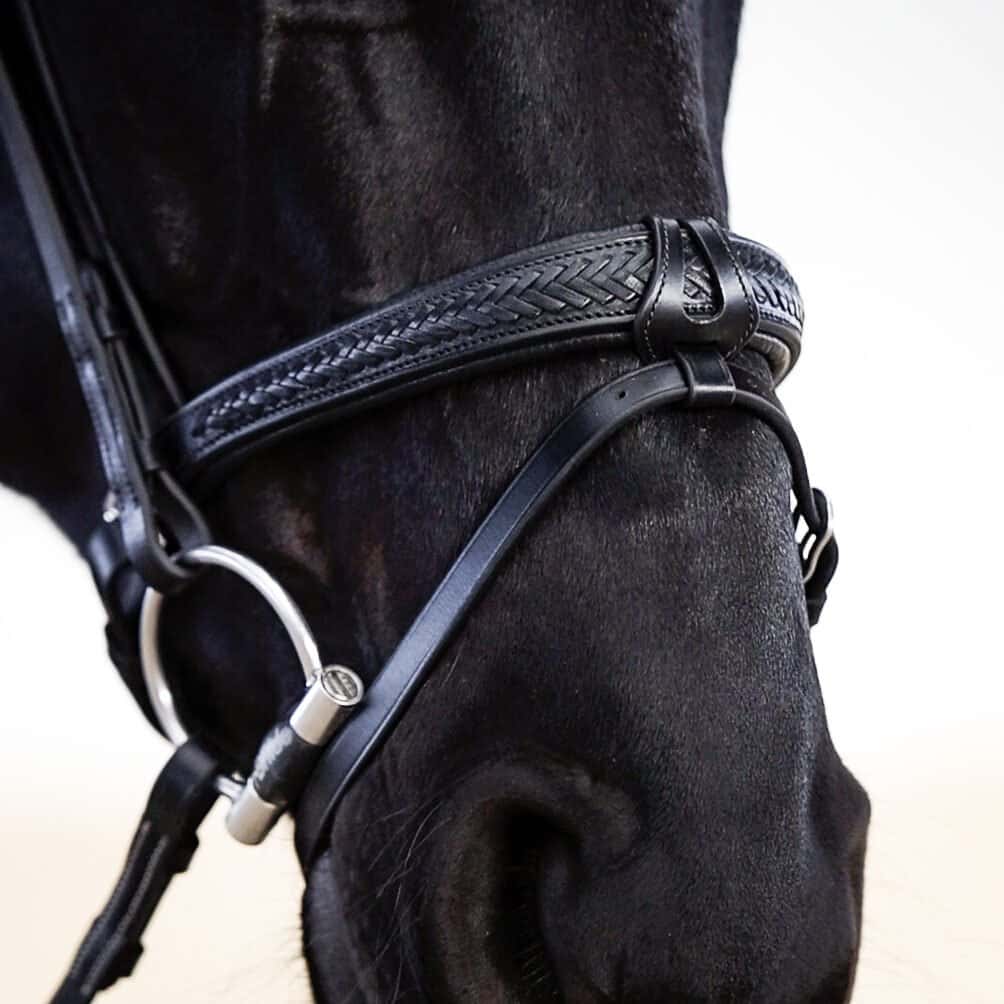
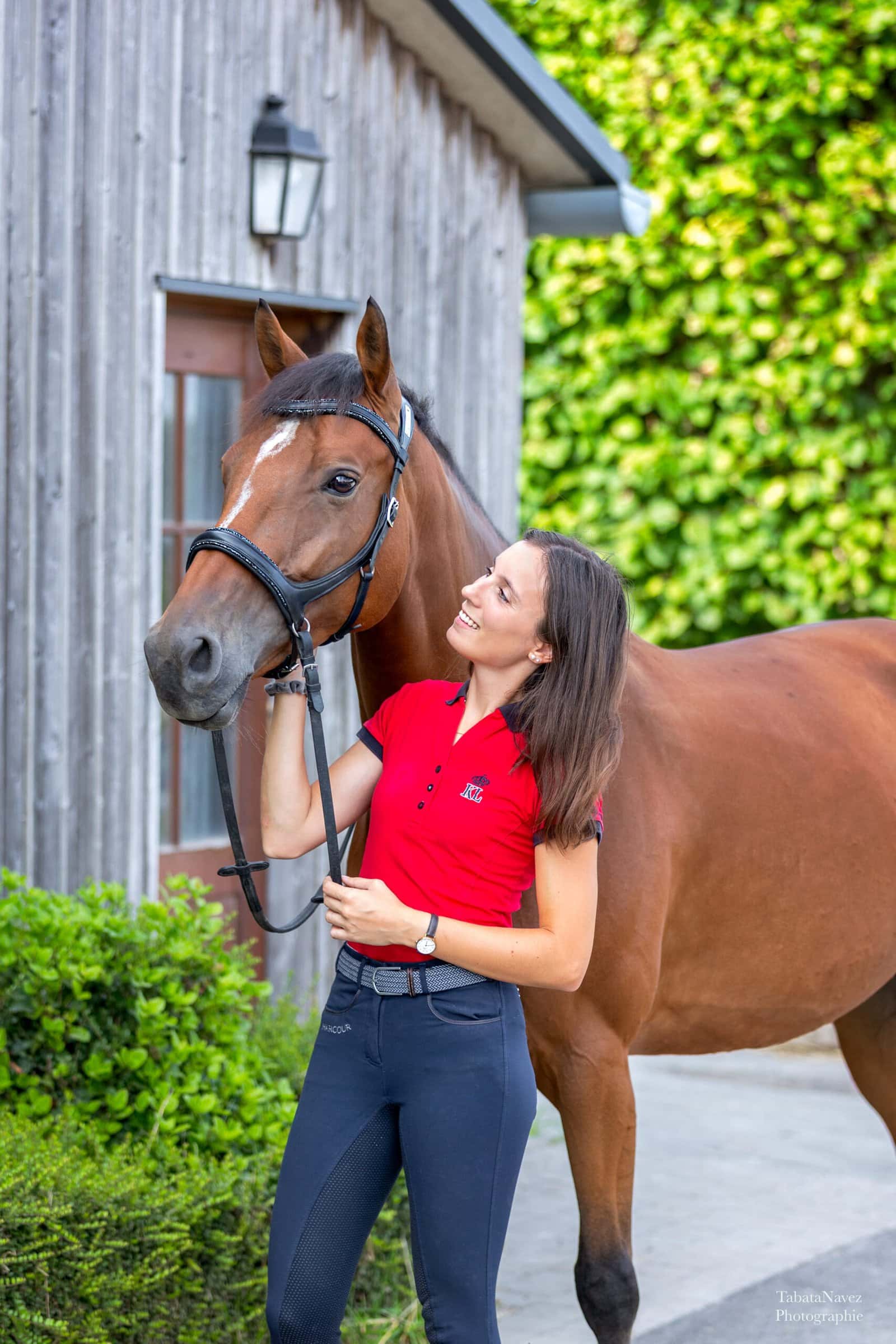
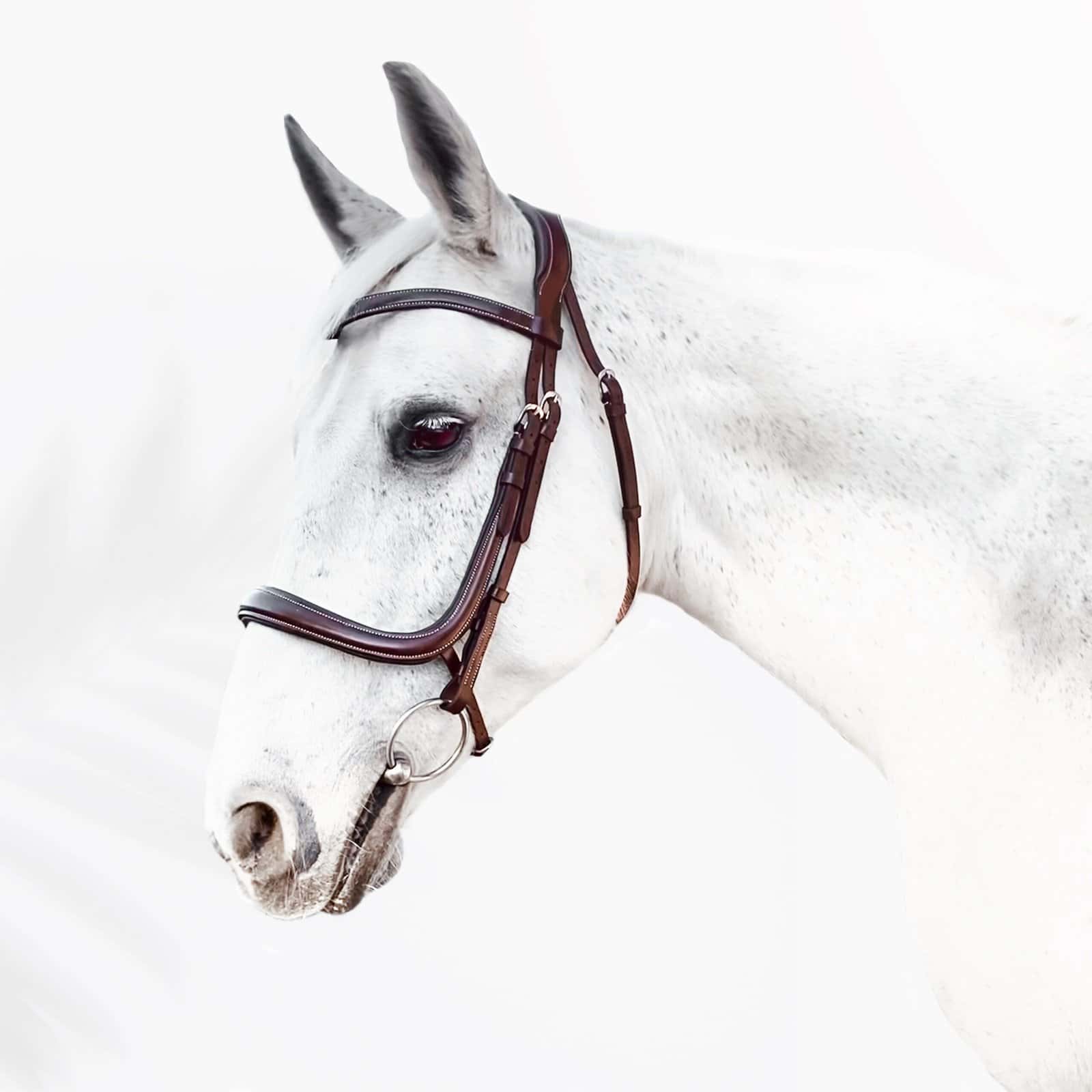
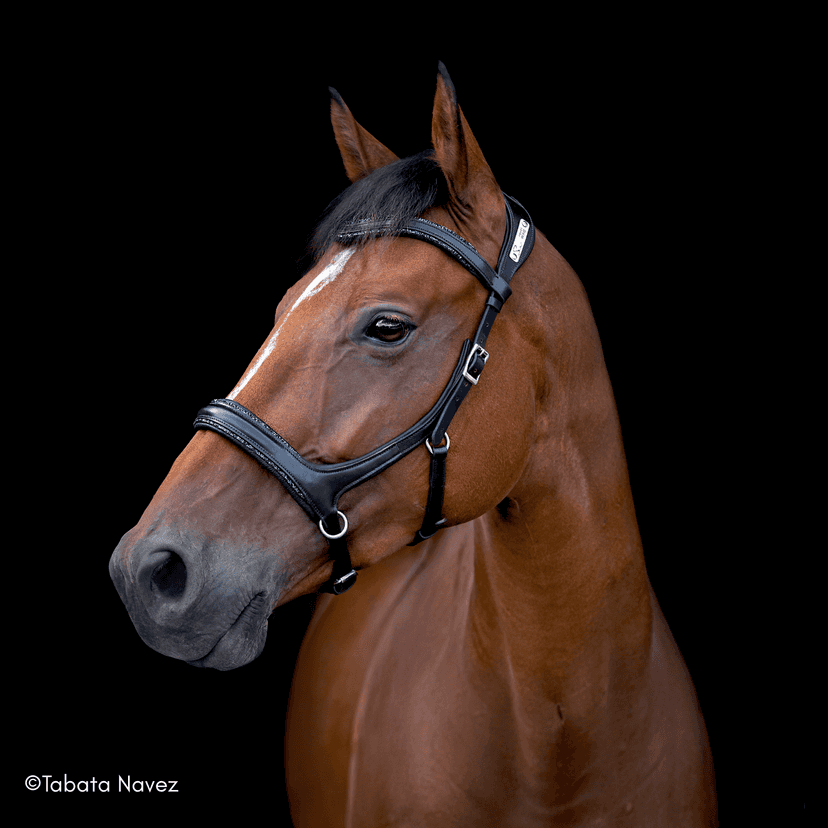
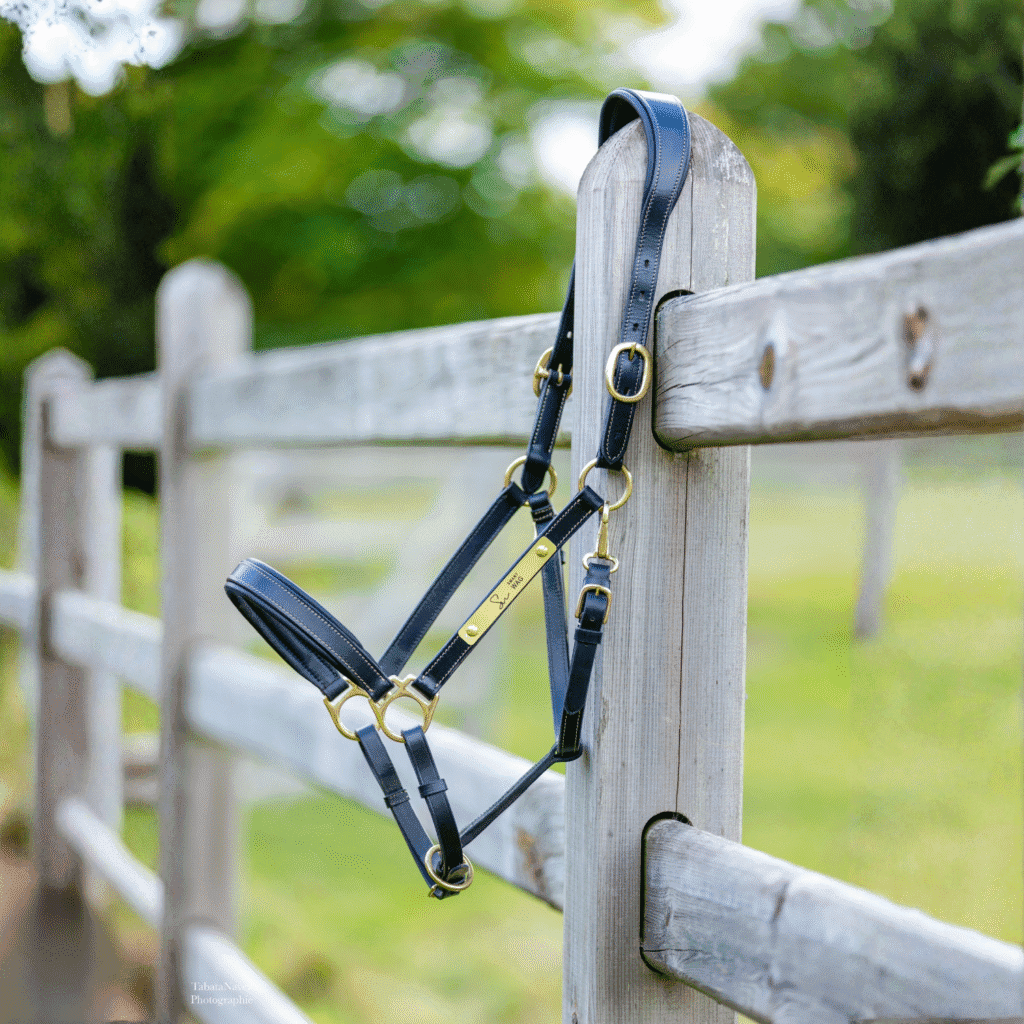
For a horse registered in a «standard» breed on paper but with its own distinct morphological specificities, the sensible approach combines three simple steps: measure, choose pieces whose sizes fit precisely, adjust on the horse before use. At Smart Wag, the bridles and halters are made in France from hand-stitched full-grain leather, and designed to offer genuine adjustment flexibility, piece by piece.
Here are a few examples of equipment particularly suited for use adapted to individual morphology:
- The Mont Blanc anatomical bridle, designed to fit the sensitive areas of the forehead and neck thanks to a carefully studied anatomical cut.
- The New Soul bridle, versatile all-round, with a cut suitable for a wide range of head morphologies.
- The Patent leather bridle Zurich, elegance and finesse for more refined heads, both in presentation and in work.
Frequently asked questions
Why can't we rely on the breed standard to choose equipment?
Because intra-breed variations are significant. In English Thoroughbreds, the height at the withers ranges from approximately 157 to 173 cm, a difference of nearly 16 cm. In Quarter Horses, the influence of bloodlines such as Doc Bar has increased the differences in conformation at the withers and back within the breed itself. Therefore, two horses of the same breed and size may require very different equipment.
My horse is the same size as my friend's: can we share the same bridle?
Not necessarily. The wither height doesn't tell you anything about the length of the noseband, the width of the forehead, the distance between the cheeks or the shape of the headpiece that suits the horse. A Fjord, for example, is often bought in Cob size when its wide forehead and prominent cheekbones require a Full size headpiece. It's better to measure, try on and observe the horse than to copy a fellow animal's equipment.
Which measurements should I take myself to choose a snaffle bridle properly?
Four measurements are sufficient to objectify the choice: the length from the corner of the eye on one side, over the nape, to the corner of the eye on the other side (poll and bridle length), the width of the forehead from one ear base to the other, the girth of the muzzle two fingers below the cheekbone, and the throat girth. Note the values and compare them to the manufacturer's sizes rather than the breed indicated on the guide.
How often does a horse's morphology change?
Dr Sue Dyson reminds us that a horse can change shape in a month. Weight can naturally vary by several stone between winter and returning to spring pasture, dorsal musculature develops with work, and age affects the topline. A saddle check every six months, and a visual check of the bridle at each moult, are reasonable minimums.
What is the cost of a poorly fitting piece of equipment?
From a health perspective, a horse with chronic pressure points develops atrophy, back pain, and defensive behaviours. Financially, a specialised veterinary spinal consultation with imaging quickly runs into several hundred to several thousand euros, not including osteopathy or physiotherapy sessions. A saddle-fitting check costing 100 to 200 euros and a correctly adjusted bridle weigh little in comparison.
Tack designed for your horse, not for its breed
Moving away from breed-based reasoning also means choosing equipment that is designed to truly fit. At Smart Wag, each bridle is crafted in France from hand-stitched full-grain leather, with piece-by-piece adjustment options and a complimentary personalised engraving. It’s the best way to respect your horse's unique conformation, regardless of what their pedigree says.
Discover our range of customisable snaffle bridles:
- Mont Blanc anatomical bridle, anatomic cut designed for sensitive areas of the forehead and nape.
- New Soul bridle, versatile contemporary design for all disciplines.
- Braided leather bracelet from Basel, Exceptional artisanal braided finish.
- Patent leather bridle Zurich, Style and performance for the presentation.
- Shambord bridle, Timeless classic, hand-stitched.