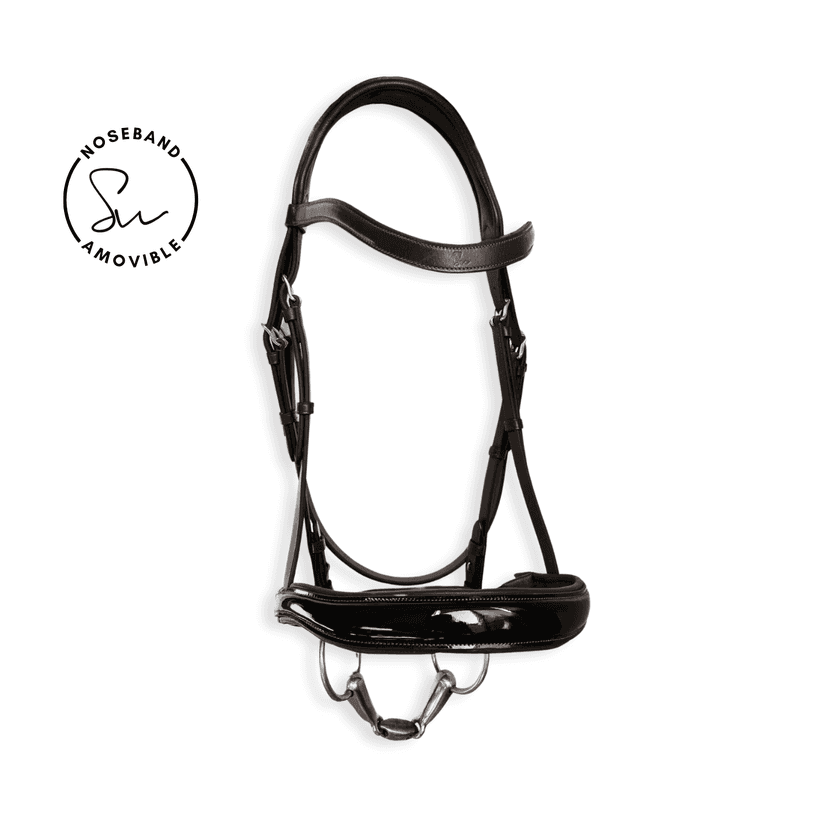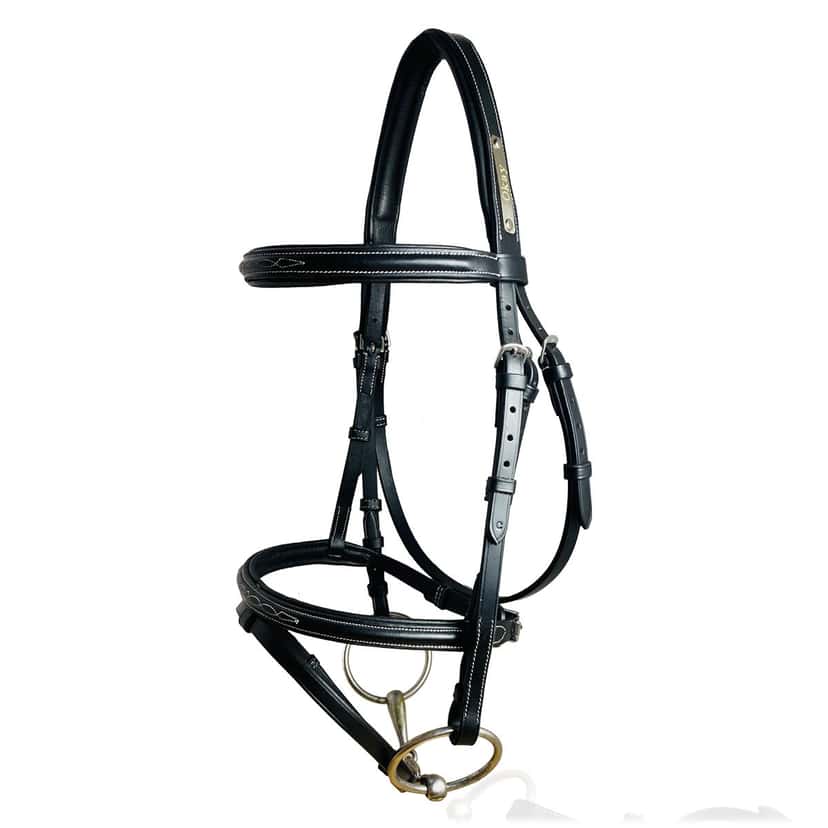
A bitted bridle can work without a noseband when its construction and the applicable rules allow it. Depending on its design and tightness, a noseband limits mouth opening. It should not hide pain or compensate for an unsuitable bit. A supervised trial helps assess bridle stability and the horse’s responses.
A nosebandless bridle: fashion or ergonomic choice?
Choosing a nosebandless bridle may reflect a wish to reduce restrictions around the mouth. That choice alone does not establish greater comfort. Removing the noseband, removing the bit and loosening a noseband are different changes: they do not alter the same contact points.
The studies cited here examine specific settings and equipment. They do not demonstrate a universal breathing benefit from riding without a noseband. Their findings must be read in light of the number of horses, trial conditions and designs tested, without turning an observation into a promise for every horse.
This guide addresses three related questions:
- What do studies show about tightness and pressure distribution?
- Which conclusions would go beyond what was actually measured?
- What should you check before changing a bridle or removing its noseband?
The aim is to support an individual decision, not to assume that either nosebanded or nosebandless equipment is always preferable.
Bridle with or without a noseband: which should you choose?
Why ride without a noseband?
Removing the noseband removes that component’s contact with the nasal area. It does not remove bit action or every pressure from the bridle. For a sensitive horse, investigate the cause of discomfort first. Then test a permitted, suitable setup with qualified support.
Why use a noseband?
A noseband forms part of many conventional bridles and limits mouth opening according to its adjustment. It should not conceal resistance or compensate for an unsuitable bit. Competition rules may also determine whether it is required. The right choice still depends on the individual horse.
Comparison: bridles with and without a noseband
| Configuration | Uses to consider | Checks required | Browse models |
|---|---|---|---|
| Bridle with an adjustable noseband | Leisure riding or dressage, depending on horse and rules. | Placement, tightness and stability. Check all contact on a sensitive nose. | Compare leather bridles |
| Bitted bridle without a noseband | Supervised leisure trial when noseband contact is an identified concern. | Compatible construction and stable fit. For dressage, first check whether this setup is permitted. | Compare leather bridles |
Read the scientific background below
Start by checking the current equipment with a qualified bridle fitter. Removing a component does not guarantee greater comfort. Observe the horse’s responses and check that the bridle remains stable. If you suspect pain, seek veterinary advice before continuing trials.
World Horse Welfare’s bridle fitting guidance
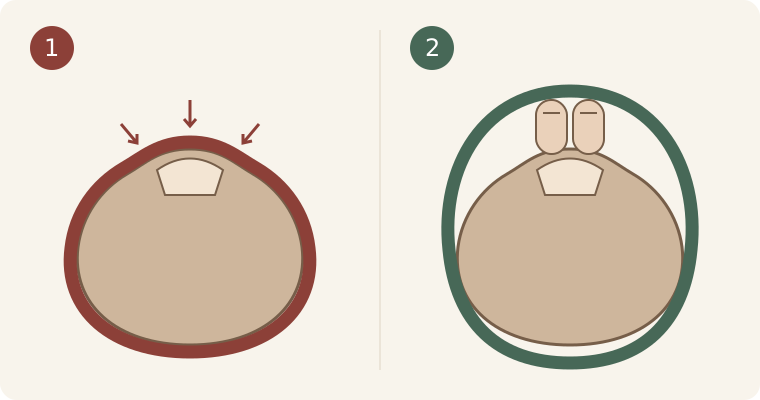
The two-finger rule is a traditional reference, not an identical measurement across different hands. ISES recommends a standardised taper gauge placed without force at the nasal midline.
Scientific background
Pressure measurements, behaviour and physiological responses provide complementary information. No single indicator establishes a horse’s comfort in every situation. The two studies cited in this article need to be considered in their specific experimental context.
- Fenner and colleagues (2016) studied 12 horses wearing a double bridle and crank noseband. They compared four tightness conditions. In the tightest condition, with no space beneath the noseband, the researchers observed the following changes relative to baseline measurements.
- Heart rate increased.
- Heart rate variability (HRV) decreased.
- Eye temperature measured by infrared thermography increased.
Together, these changes indicate a physiological stress response under the experimental conditions. Chewing also decreased in the two most restrictive conditions. This does not mean that every noseband has the same effect, or that removing one guarantees better breathing.
Measured pressures: bitless is not the same as nosebandless
Robinson and Bye (2021) compared five ridden horses in a snaffle bridle with a cavesson, a sidepull and a cross-under bitless bridle. For the sidepull tested, the median peak noseband pressure was 8.06 N/cm², with an interquartile range of 2.53 N/cm². This is neither a universal maximum nor a validated pain threshold for all horses.
All three setups retained a noseband: the study did not compare the same bridle with and without one. It highlights how removing the bit transfers forces to other areas of the head. The small sample and differences in design and adjustment limit broader conclusions.
Checking tightness: practical reference versus official protocol
Two fingers is a traditional reference, not an identical measurement across different hands. Since 1 May 2025, the FEI has used a dedicated device beneath the noseband, over the nasal bone. A finger check does not replace that assessment. ISES also recommends a standardised taper gauge placed without force at the nasal midline.
- Check your competition: assessing tightness and permitting noseband removal are separate questions. Consult the rules that apply to your class.
- Check your horse: passing a spacing check does not, by itself, establish a suitable fit. Design, position, stability and the horse’s responses still need assessment.
Individual fitting: how a professional can help
A qualified bridle fitter can assess the complete setup. This support does not replace a veterinary examination when pain is suspected. Nor does it establish that one design or configuration suits every horse.
- Do not tighten the noseband to hide repeated mouth opening or other signs of discomfort: investigate their cause.
- Check head shape, contact points and strap position. Avoid poorly placed pressure and follow the instructions for the specific design.
- Where removal is possible and permitted, assess bridle stability and the horse’s understanding of the aids during a supervised trial.
The question is therefore not simply “with or without a noseband?”, but whether this equipment, adjustment and use suit this particular horse.
Practical recommendations
Before changing the equipment, keep these checks in mind:
Use a repeatable method to assess spacing. Follow the manufacturer’s instructions and, in competition, the official protocol. Fitting two fingers beneath a noseband is neither a comfort certificate nor a breathing guarantee.
Do not aim for a closed mouth at any cost. Tightening a noseband does not correct an unsuitable bit or uncomfortable rein contact. If pain is suspected, have the horse examined before continuing trials.
Observe behavioural changes in context. Tongue protrusion, neck tension or unusual salivation may warrant investigation, but none alone diagnoses an incorrect fit. Work with the appropriate professionals to identify the cause.
Assess the stability of the whole bridle. Removing the noseband does not guarantee better communication; retaining it does not guarantee bit stability either. Check the complete setup and the horse’s response before choosing a configuration.
Avoid general conclusions from a single trial. Compare observations under consistent conditions and stop if the horse shows discomfort. The studies cited do not identify one ideal bridle for every horse and rider.
To turn these checks into an equipment choice, compare the Basel bridle and Montreux sidepull below.
Snaffle bridle or double bridle: two different setups
In dressage terminology, a snaffle bridle usually carries one snaffle bit and one pair of reins. A double bridle combines a bridoon and a curb bit, with two pairs of reins. The curb chain is a chain attached to the curb bit, not a second bit. It forms part of the curb’s leverage action.
A double bridle requires suitable schooling and a rider able to manage two pairs of reins. It is not an automatic solution to a control problem. The space available in the horse’s mouth must also be assessed. Choosing a snaffle or double bridle is separate from deciding whether to use a noseband. Have the equipment and applicable rules checked before changing.
Western bridles and other bitless setups: how the noseband question changes
Traditional western bridles often omit the noseband. Some practices pair a curb bit with one-handed riding. That combination does not describe all western riding: snaffle work can use two hands. NRHA rules specifically allow exceptions for certain snaffle bit and hackamore classes.
NRHA 2026 rules on rein handling
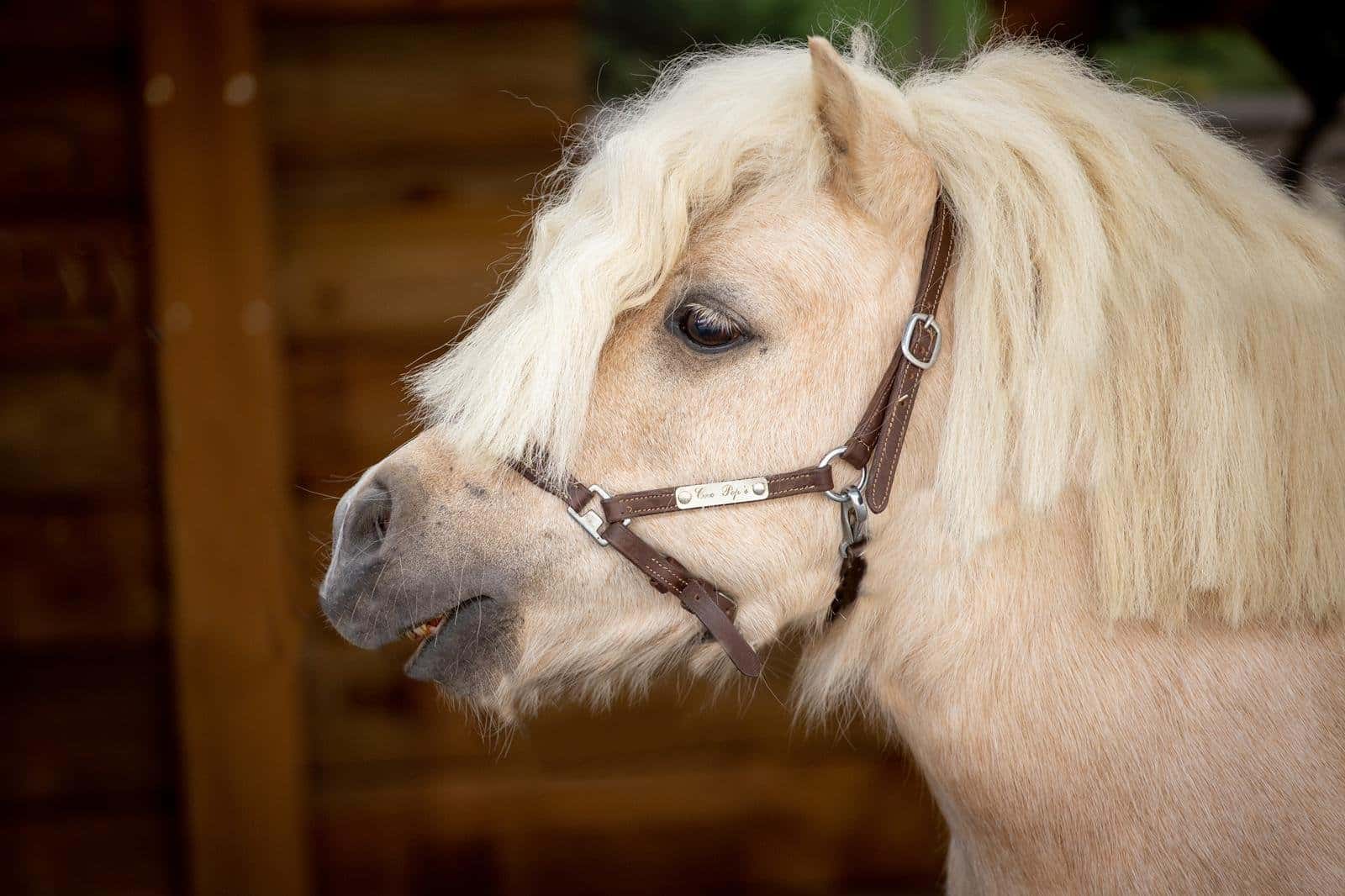
Nosebandless does not mean bitless. A nosebandless snaffle bridle retains a bit in the mouth. A sidepull removes the bit but keeps a noseband with lateral rein attachments. Rein action moves to the nose; it does not disappear. That change requires cues the horse understands and suitable fitting.
At Smart Wag, explore the Montreux sidepull.
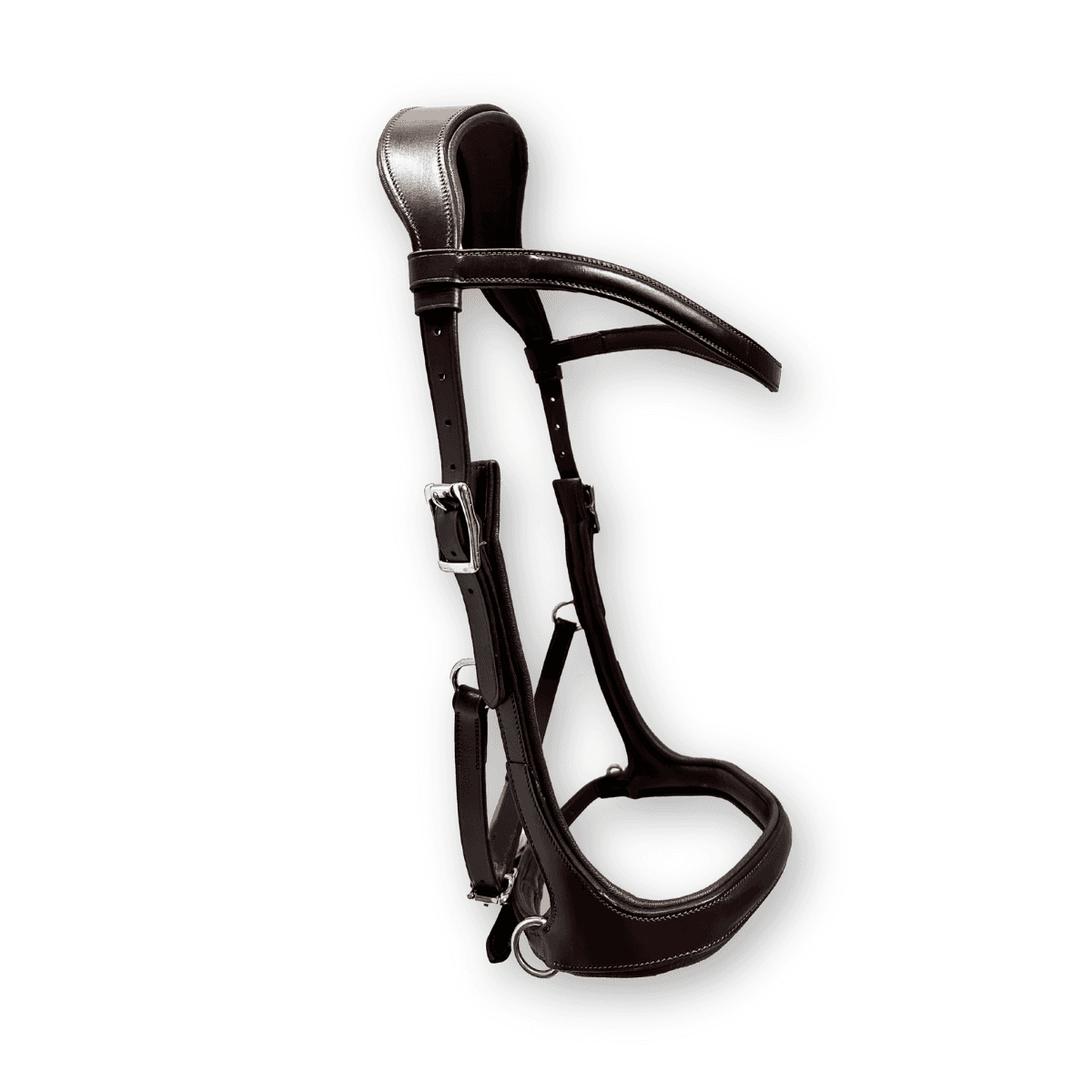
The manufacturer reserves Montreux for horses educated to respond to bitless cues. It excludes leading, tying and riding under strong tension. This is not a leading halter. A padded noseband guarantees neither low pressure nor equal comfort for every horse.
To compare the available constructions, browse the leather sidepull range.
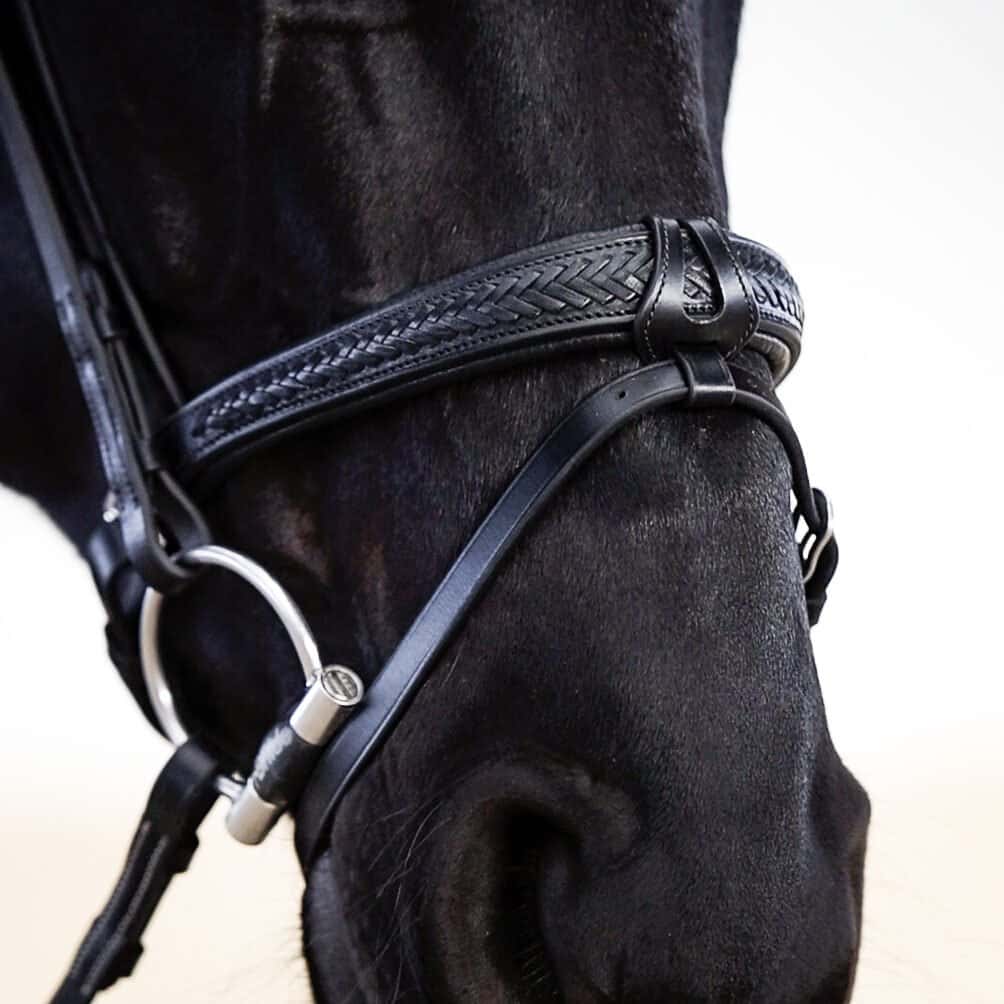
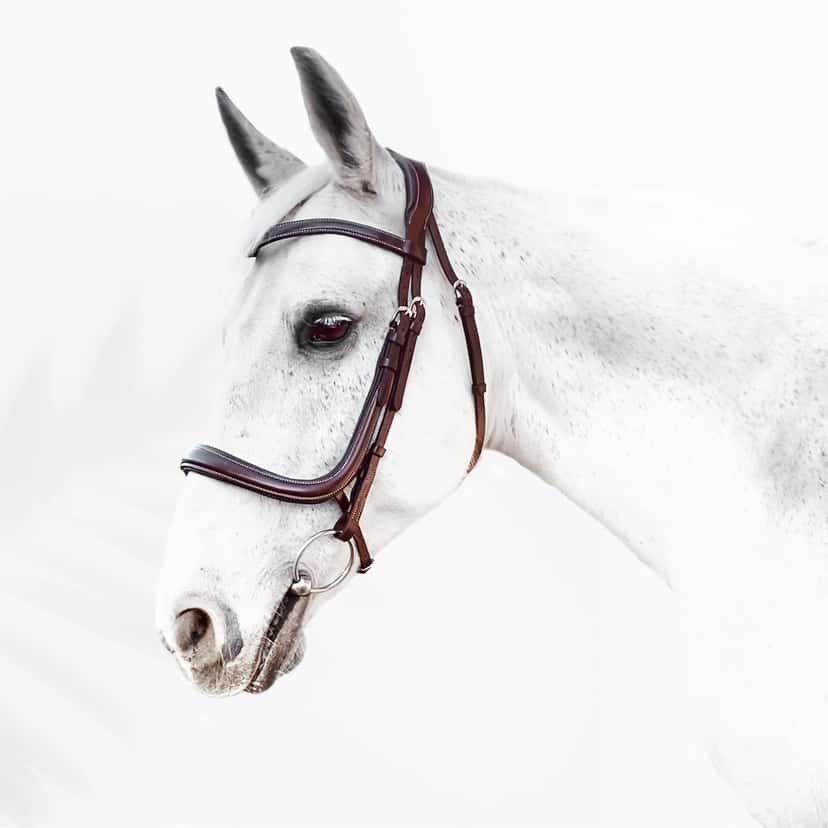
Basel offers another option for retaining a bit: a padded anatomical headpiece and braided leather. It is a bridle with a noseband, not a sidepull. Compare its measurements and adjustments with your current equipment.
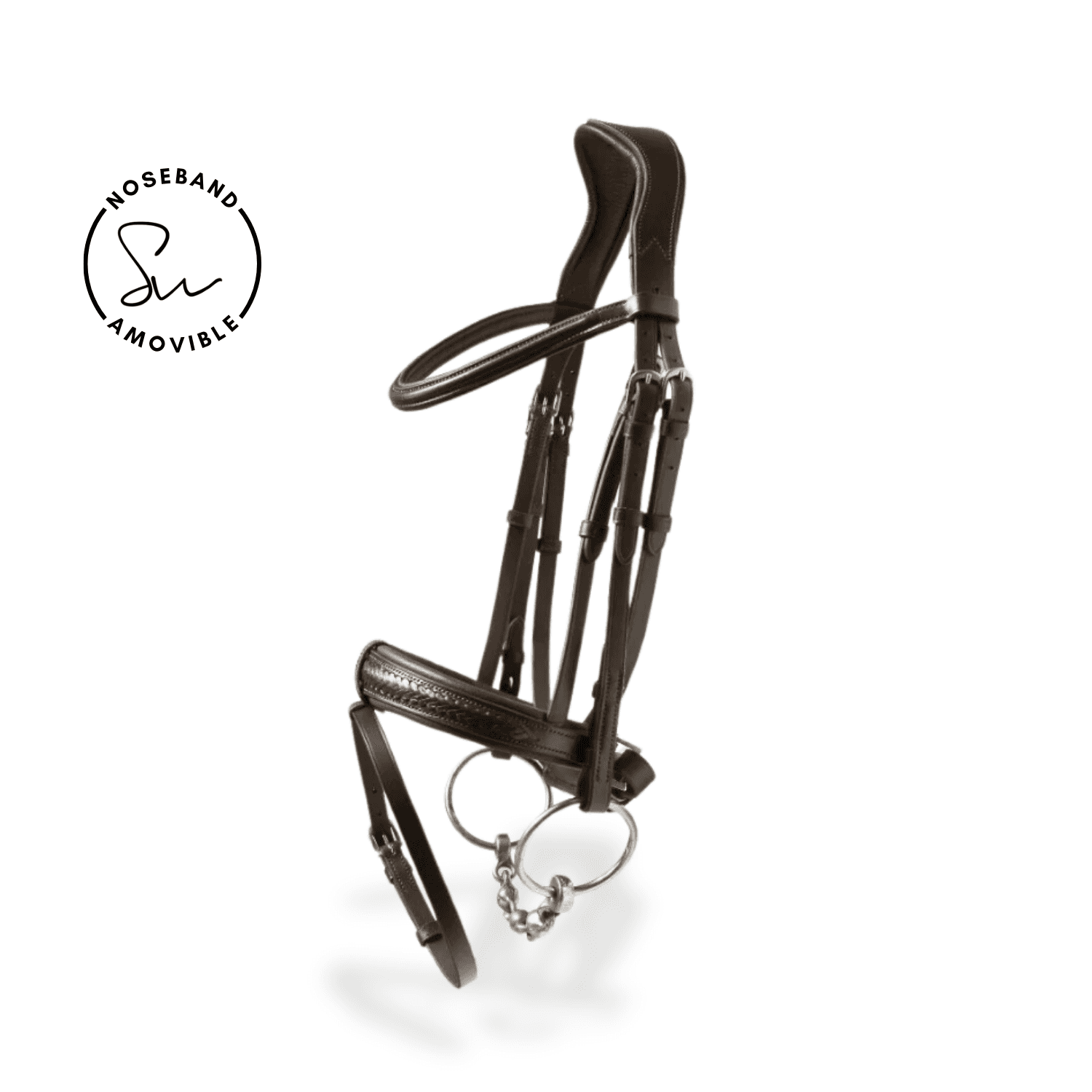
On Basel, the removable component is the lower flash strap, shown with its attachment loop in the catalogue close-ups. Removing it leaves the padded noseband in place: this is not a nosebandless setup. Complete noseband removal is neither confirmed by the description nor shown in these photos. The word anatomical does not guarantee a better fit.
View the black flash strap and attachment loop · View the brown detail
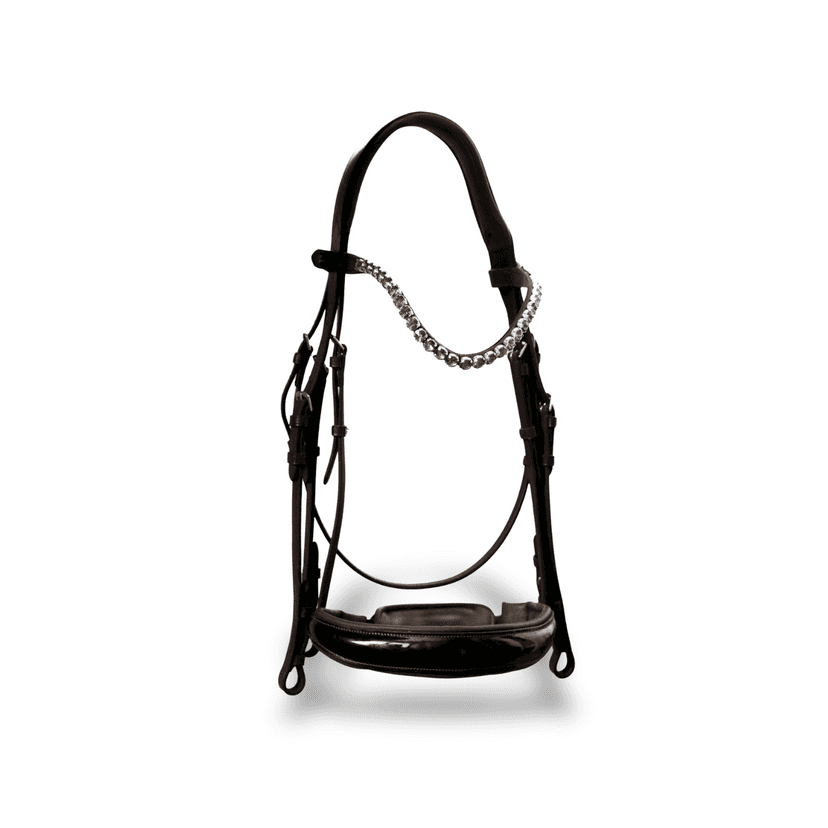
Mont Blanc: a bridge headpiece and U-shaped noseband, adjustable on both sides.
Zurich: a patent pull-back noseband with cheek straps adjustable on both sides.
Both models have a noseband. Complete removal is unconfirmed; ask the workshop before purchasing for nosebandless riding.
For discipline-specific selection, also read which bridle to choose for show jumping.
Nosebandless bridles: the conclusion
No setup guarantees comfort for every horse. Compare the current fit and the horse’s responses before removing a noseband. A supervised trial can inform your choice, without replacing investigation of pain. Check the requirements of your discipline too.
Explore Smart Wag’s customisable leather bridles by comparing their measurements and adjustments. Engraving personalises appearance; it changes neither size nor tightness. For an adaptation beyond the available settings, ask the workshop to confirm feasibility. Made-to-measure manufacture is not assumed to be included.
Nosebandless bridle questions
Why ride without a noseband?
To remove that component’s contact with the nasal area when it addresses an identified need. The bit still acts, and comfort is not guaranteed. Check the cause of discomfort, the setup’s stability and the applicable rules before a supervised trial.
Why use a noseband, and is it necessary?
It limits mouth opening according to its construction and adjustment. Whether it is needed depends on the horse, bridle and rules. Do not use it to hide pain. Official FEI checks use a dedicated measuring device, not your two fingers.
What is the difference between a snaffle and a double bridle?
A conventional snaffle bridle carries one snaffle bit. A double bridle combines a bridoon and a curb bit, with two pairs of reins. The curb chain is not a bit. This setup requires suitable training and individual fitting.
Why do western bridles not have nosebands?
This construction accompanies a tradition including curb bits and one-handed riding. Western riding also includes two-handed snaffle work. A nosebandless setup is therefore neither universal nor a guarantee of comfort. Check the equipment rules for your particular class.
What is a bridle with no bit called?
It is called a bitless bridle. A sidepull is one type: its reins attach to the sides of the noseband. It acts on the nose, unlike a nosebandless snaffle bridle, which retains a bit. Other bitless designs can work differently.