Introduction: why the right bridle changes everything
A well-fitted horse bridle distributes contact without pulling on the ears. It also helps the rider give a clear signal. Comfort and communication depend first on size, then on adjustment. Smart Wag models combine genuine leather with personalised engraving.
This guide compares a classic leather horse snaffle, an anatomical bridle and more technical shapes. You can choose a leather horse bridle for the horse's head, your discipline and daily use.
What is a bridle, and how does it differ from a double bridle?
A bridle, often called a snaffle bridle, carries one bit and one pair of reins. It supports everyday schooling, steering and conventional contact. A double bridle carries two bits, a bradoon and a curb. It also uses two pairs of reins. This technical arrangement is mainly used in advanced dressage. It requires a trained horse and an independent hand.
Horse bridle size chart
The chart retains Smart Wag's measurements in centimetres. Compare every area with a bridle that already fits the horse. A Cob or Full label remains only a starting point.
| Size | Front (A) | Noseband (B) | Noseband amount (C) | Jaw height (D) | Headrest (E) |
|---|---|---|---|---|---|
| Pony | ~30 | ~50-60 | ~18-23 | ~25-34 | ~30 |
| Cob | 32.5 | 57-67 | 21-27 | 27-36.5 | 32 |
| Full | 34.5 | 65-75 | 24-33 | 29-40 | 33 |
| X-Full | ~36 | ~70-80 | ~26-36 | ~31-43 | ~35 |
Product match: Pony is available for Basel and Exclusif. Cob and Full are also available for Mont Blanc. For X-Full, check the horse bridle category before ordering.
Size explanations
Pony size Designed for ponies and small horses with reduced proportions to avoid discomfort. The headpiece and noseband are adapted to shorter, slimmer heads. Generally suitable for B and C ponies.
Cob size Ideal for horses with thin and/or short heads. The uprights and headpiece are slightly longer than the Pony size. Generally suitable for Cob ponies and Thoroughbred horses.
Full size Standard for most medium-sized horses, such as saddle horses (Selle Français, Selle Suisse...).
Size X-Full Intended for horses with a larger head, of the half-trait type, or for non-standard horses.
Important note: Smart Wag bridles sometimes run small. If in doubt, choose the size above.
Compare headpieces and nosebands: which one suits your use?
What bridle size fits a horse? Full often fits an average riding horse. Cob suits a shorter or finer head, while X-Full suits a larger head.
Always measure the browband, noseband, cheekpieces and headpiece. Then validate every area on the horse.
Size is not enough. A misplaced curve can create an edge even when its length is correct. Choose an architecture that follows the head first. Then select the noseband for the bit and discipline.
Start with your real use. A horse ridden daily needs a setup that is easy to check. Sport adds movement and competition rules. Do not select a noseband only because it is common in your discipline.
Then observe the bare head. Note the poll width, the base of the ears and the line of the nasal bone. Compare both sides. A small asymmetry can change the position of buckles and padded edges.
Finish with the commercial options. Clean genuine leather is straightforward to inspect and maintain. Personalised engraving identifies the bridle but does not improve its fit. Size and shape remain the priorities.
Straight, anatomical or offset headpiece: which use?
A straight headpiece has a simple construction. It suits an even and sufficiently wide poll area. Check its edges during flexion. The browband must never pull the headpiece forwards.
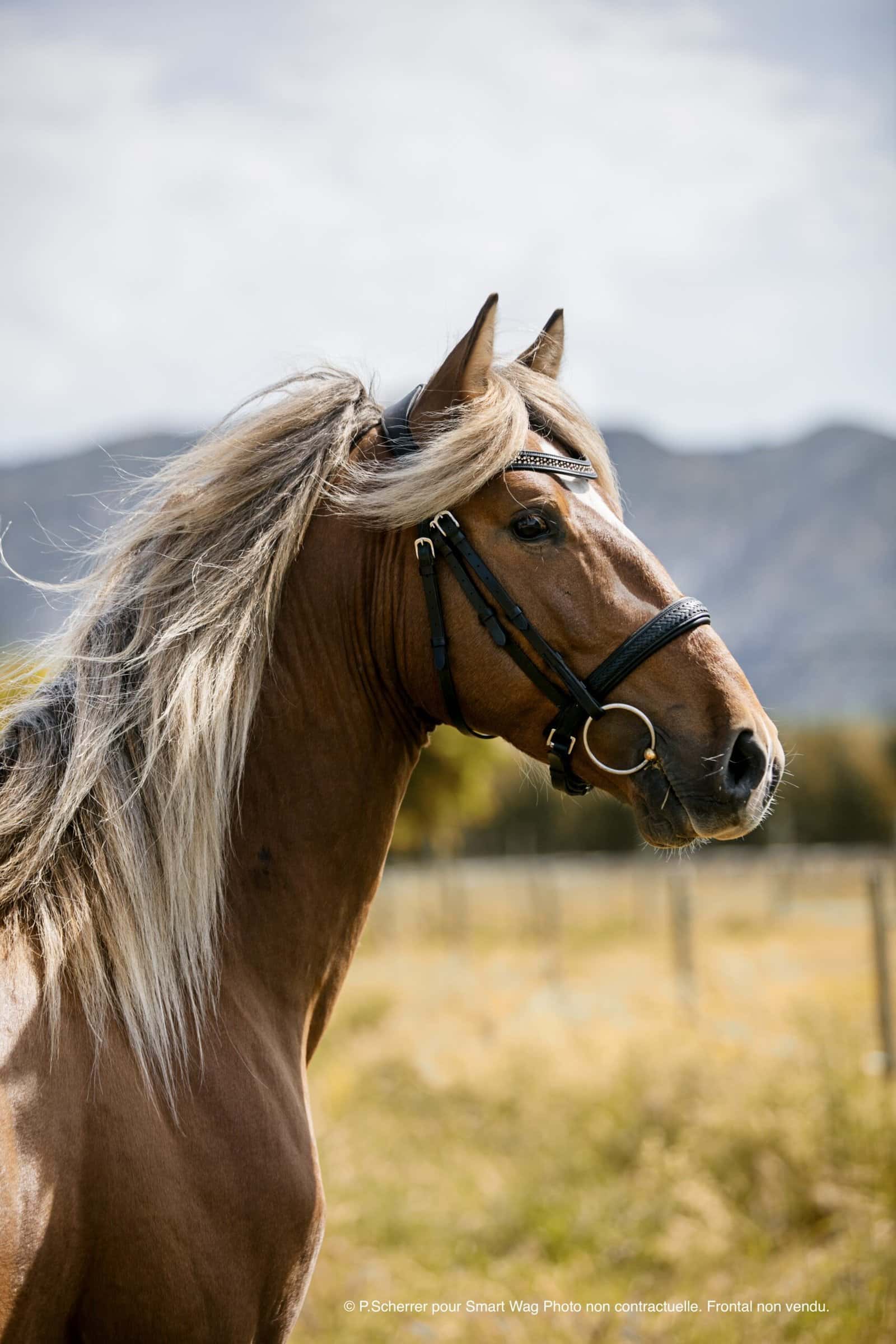
An anatomical headpiece curves around the base of the ears. It may distribute contact better on some heads. The shape must follow the actual anatomy. A small cut-out will sit in the wrong place.
An offset or bridge headpiece moves the bearing area. It serves a specific head shape, not a visual preference. Ask a bit fitter or bridle fitter about persistent reactions.
Cavesson, flash, grackle or drop noseband: which use?
A cavesson noseband circles the nasal bone above the bit. It suits many classical uses. Its width and padding should match the head. It must not force the mouth closed.
A flash noseband adds a removable strap below the bit. It can stabilise a specific setup. Remove it when it has no defined purpose. Check that the horse can chew and swallow.
A grackle noseband crosses over the face. It appears in jumping, cross-country and endurance. Its straps need careful placement. They must leave the nostrils and sensitive bony areas clear.
A drop noseband sits lower, in front of the bit. It addresses particular mouth and dental configurations. A professional should confirm this choice. No noseband replaces suitable bitting and measured adjustment.
Bridle type to Smart Wag model matching table
| Headpiece and noseband | Recommended use | Discipline | Smart Wag model |
|---|---|---|---|
| Bridge headpiece, U-shaped noseband | Head shape needing an offset bearing area | Flatwork, dressage | Mont Blanc |
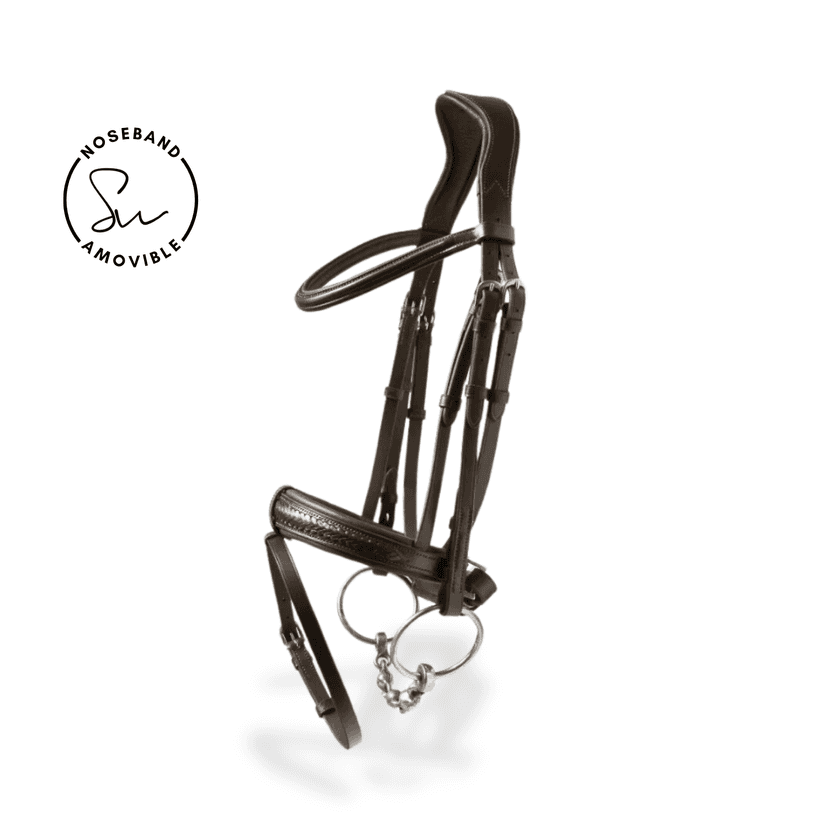
| Anatomical headpiece, removable flash | Versatility and room around the ears | Dressage, jumping, leisure | Basel |
| Padded headpiece, padded cavesson | Familiar setup for everyday work | Leisure, flatwork | Exclusif |
Measure and then check the bridle fit
A horse bridle size needs several measurements. Head circumference alone can hide a short browband. It can also hide a long noseband. Use a flexible tape and record every value.
Take the useful measurements
Measure the browband between its attachments. Then record the noseband length around the face. Measure each cheekpiece without stretching the leather. Finish with the headpiece from one attachment to the other.
Compare these values with the chart, not only the size name. A horse may need a Full browband and Cob cheekpieces. Separately adjustable parts are useful in this situation.
Check the bridle on the horse
Place the headpiece without trapping the ears. The browband stays free and does not pull it forwards. The cheekpieces remain symmetrical. The bit neither hangs low nor strongly wrinkles the lips.
Check the noseband over the bony part of the face. The horse must breathe, chew and swallow. Walk for several minutes. Then look for heat, disturbed hair or sensitivity to touch.
When to ask a professional
Consult a bit fitter or bridle fitter if the bridle rotates, slides back or touches the ears. Do the same for repeated resistance. The professional considers the head, bit, teeth and rider's hand together.
Three Smart Wag bridles to compare
All three models use genuine leather and offer personalisation. Their main differences concern the headpiece, the noseband and available sizes.
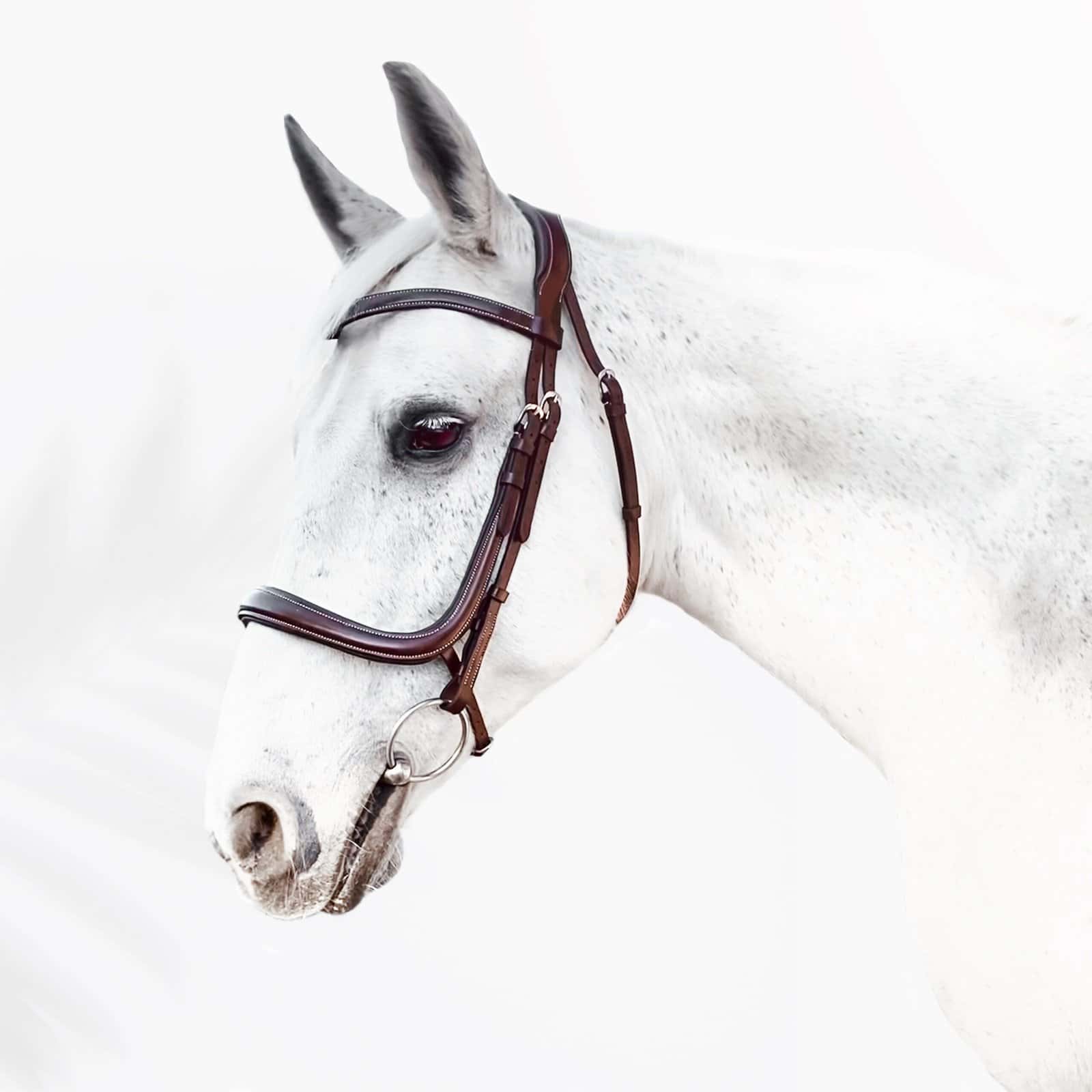
Mont Blanc: bridge headpiece
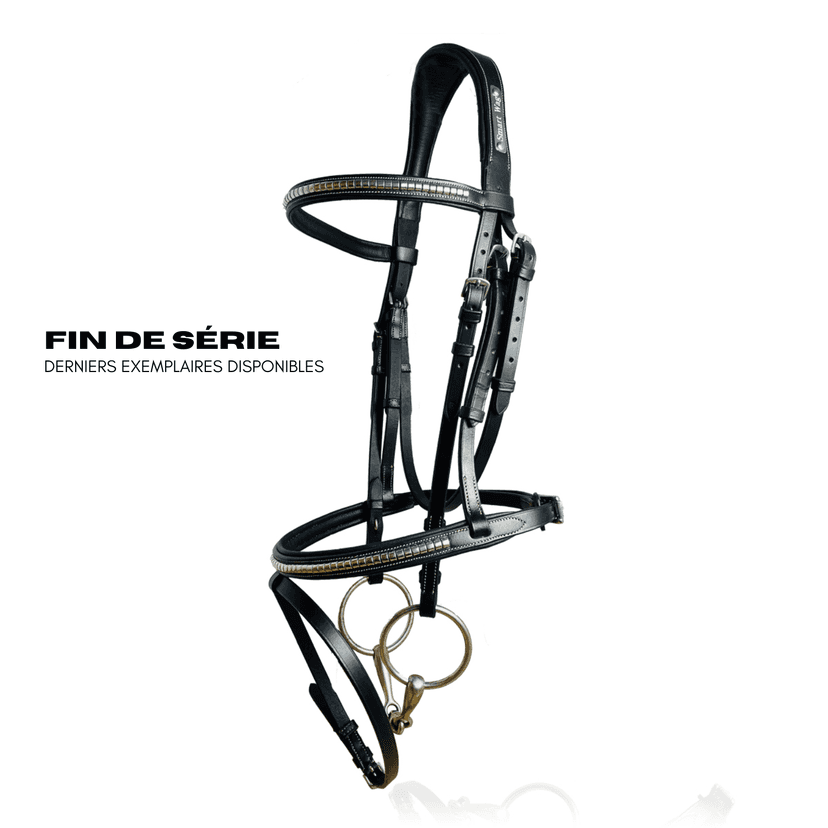
The Mont Blanc bridle has a bridge headpiece and a U-shaped noseband. It comes in Cob and Full. Choose it for a compatible head shape, preferably after specialist advice.
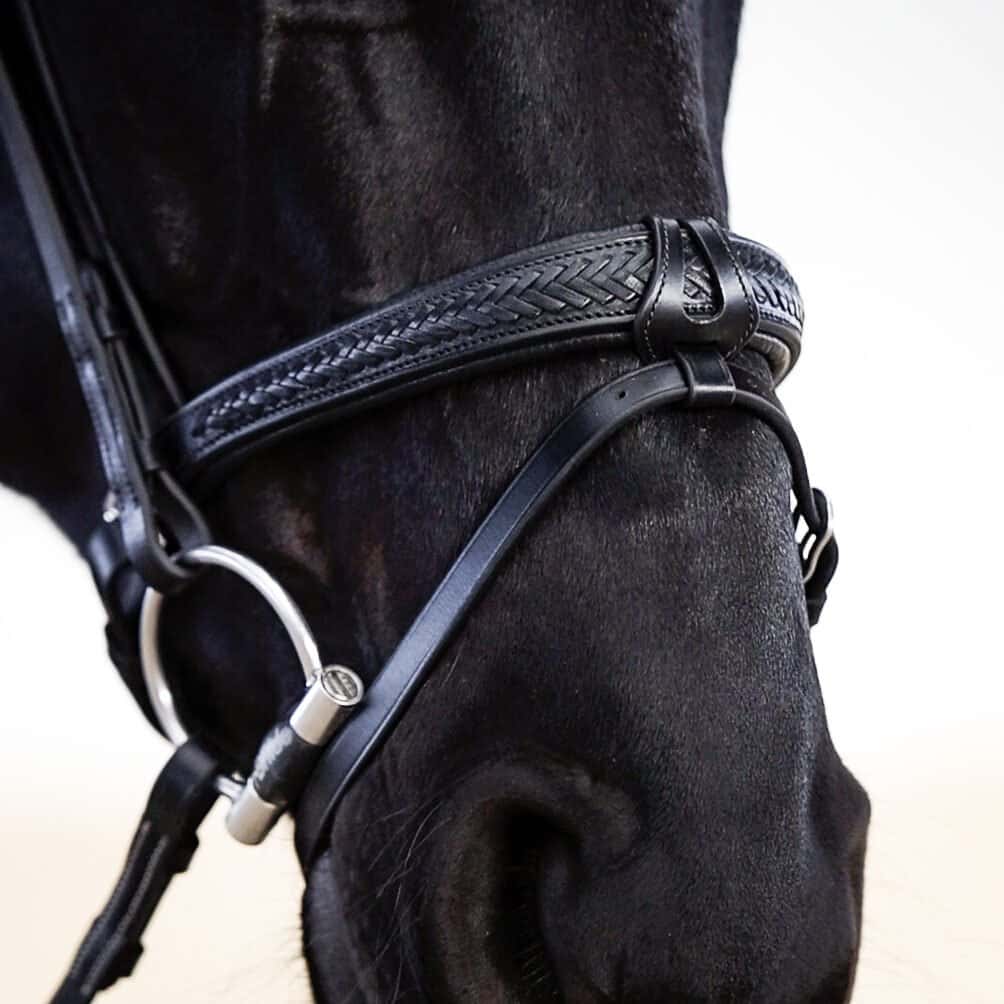
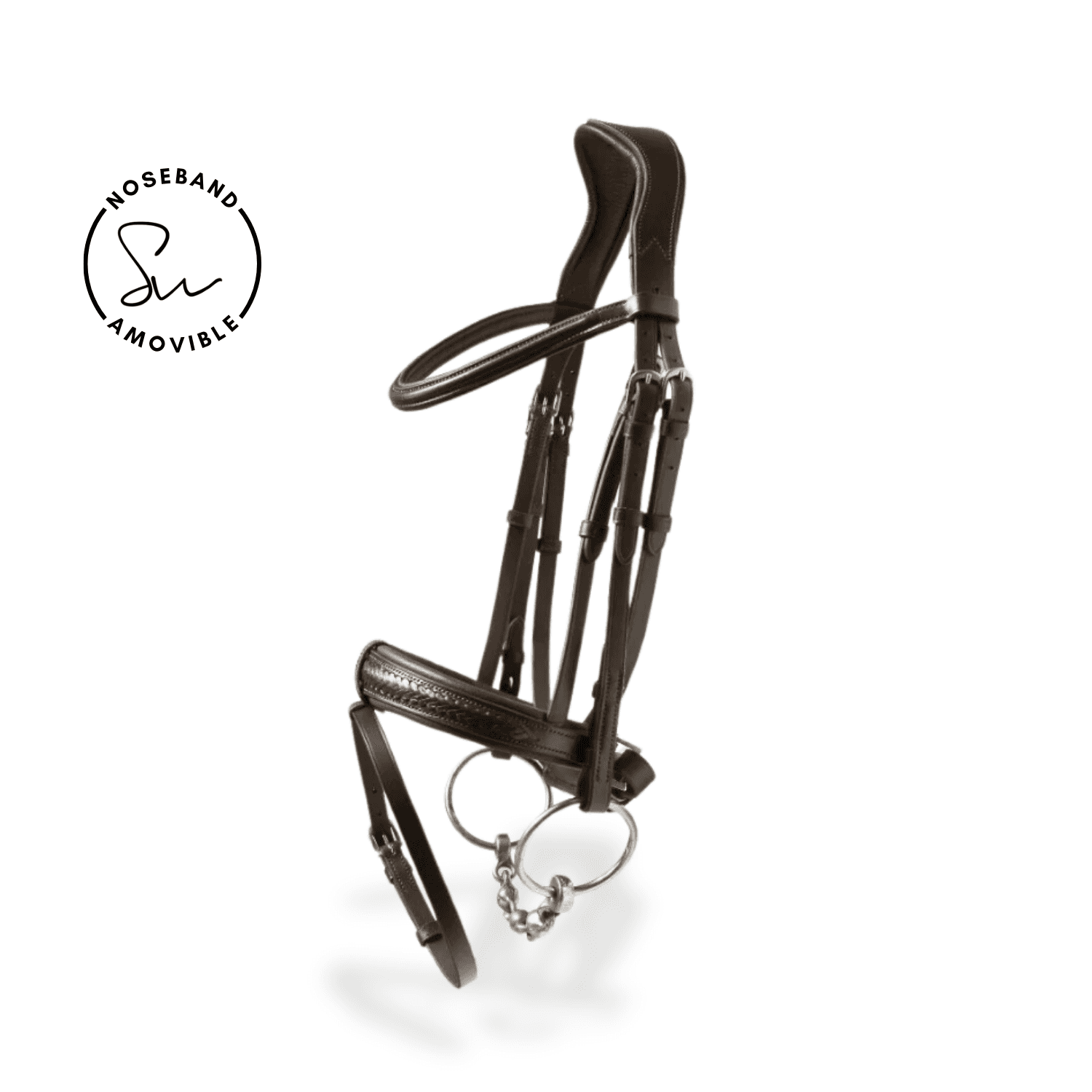
Basel: braided leather and anatomical headpiece
The Basel bridle combines an anatomical headpiece with a padded noseband. Its flash strap is removable. Pony, Cob and Full sizes cover several head shapes.
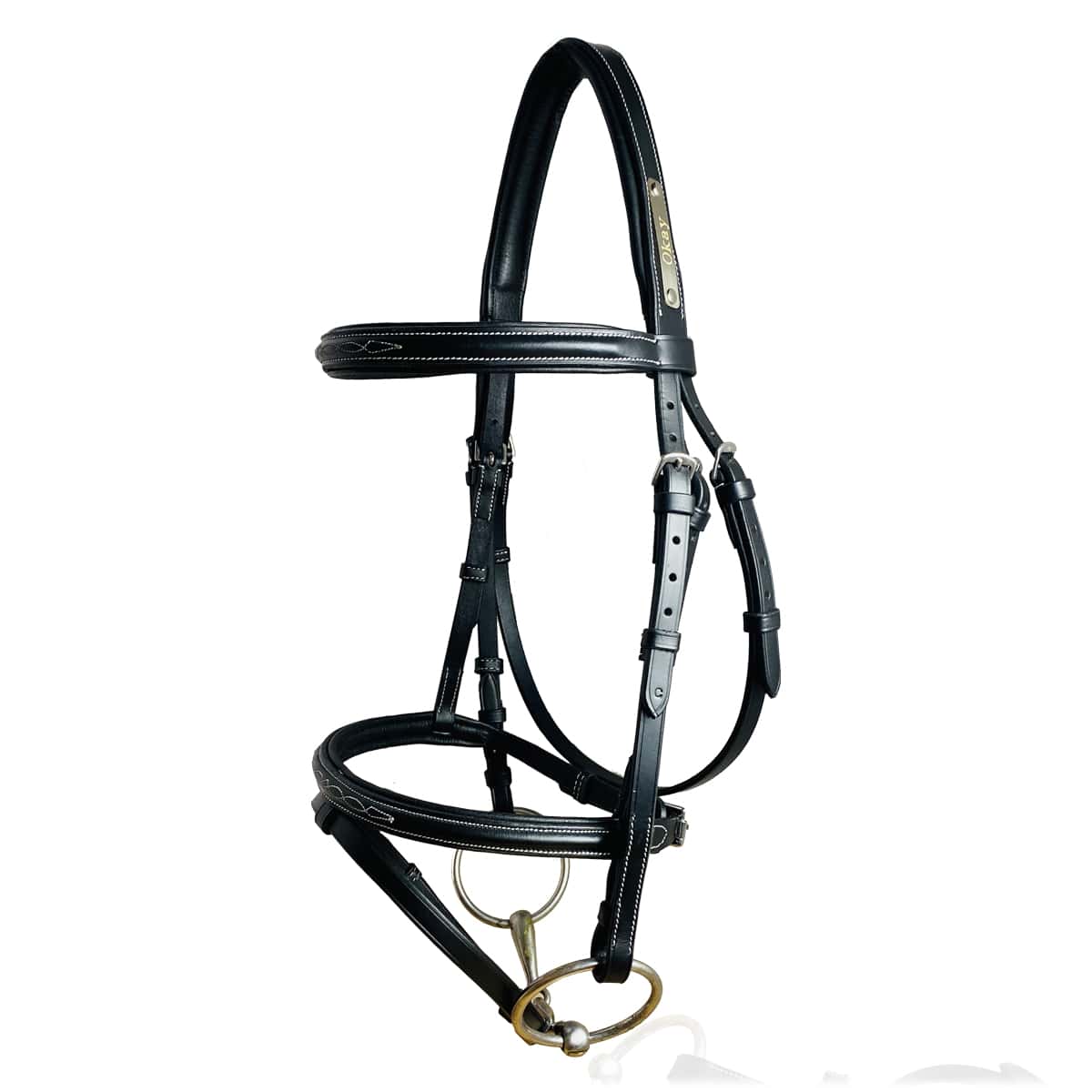
Exclusif: padded classic construction
The Exclusif bridle combines contrast stitching with a padded headpiece and noseband. Stock includes Pony, Cob and Full sizes. This custom horse bridle is a final-stock model.
Read next
Browse every model in the horse bridle category. You can also open the Mont Blanc or Basel product page.
Considering action without a bit? The 2026 sidepull guide compares that option with a classic bridle. Make any transition gradually and first test it in an enclosed area.
Frequently asked questions about choosing a bridle
What is a bridle for a horse?
A bridle is equipment worn on the horse's head. It usually carries a bit, a noseband and one pair of reins. It conveys the rider's signals for steering, slowing and maintaining contact. Its fit must protect the ears, nasal bone and jaw movement.
What is the difference between a bridle and a double bridle?
A bridle uses one bit and one pair of reins. A double bridle uses two bits and two pairs of reins. It is mainly associated with advanced dressage. It requires more precision and must not compensate for gaps in training or control.
How do I choose a horse bridle size?
Full often fits an average riding horse, Cob a finer head and X-Full a larger head. Measure every component before buying. Compare the browband, noseband, cheekpieces and headpiece with the chart. A trial on the horse then confirms the size.