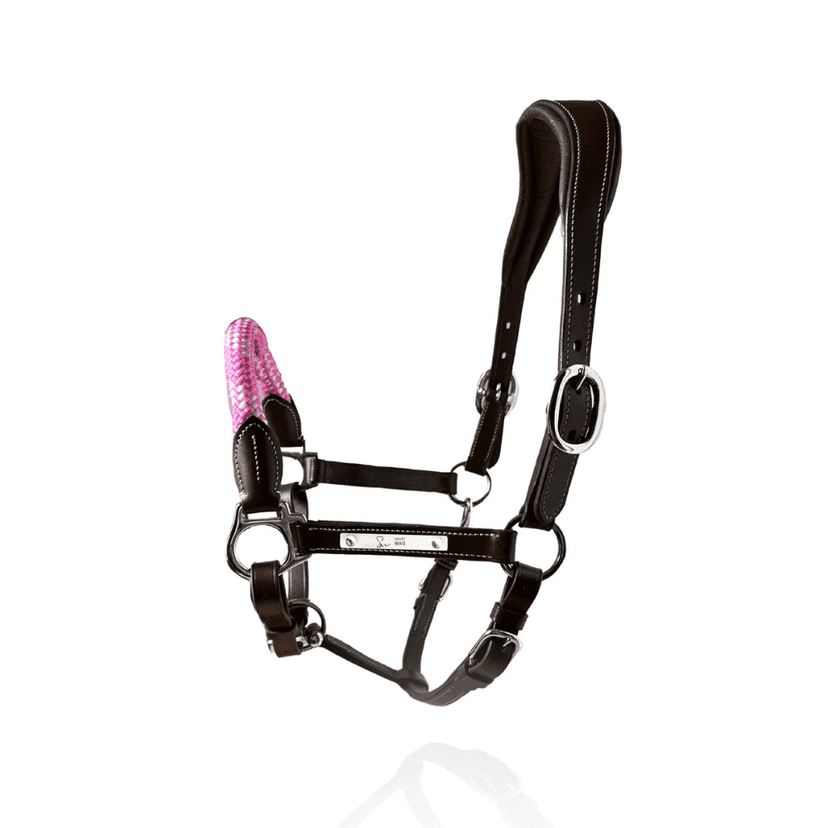
Halter or headcollar: two names for the same equipment
A halter, also called a headcollar, fits around a horse’s head so you can hold and lead it from the ground. It can be leather, rope or nylon and does not include a bit. To compare the different constructions, start with our guide to choosing a leather headcollar.
In French, licou and licol refer to this same equipment. Both spellings appear in dictionaries; licou is not a separate model or size. Regional usage can influence the word you hear. In English, headcollar and halter are useful terms when you browse tack, although particular products can have different constructions.
The lead rope lets you accompany the horse from the ground; it is not a pair of reins. A driving collar is different equipment worn around the neck and shoulders. Identifying the item first helps you avoid buying a replacement strap for the wrong purpose.
10 parts and fittings of a halter and lead rope
This list retains the article’s ten terms: nine component or accessory references, followed by the hardware as a group. The lead rope is removable, not sewn into the halter. Designs vary, so not every model has each part in exactly the same form.
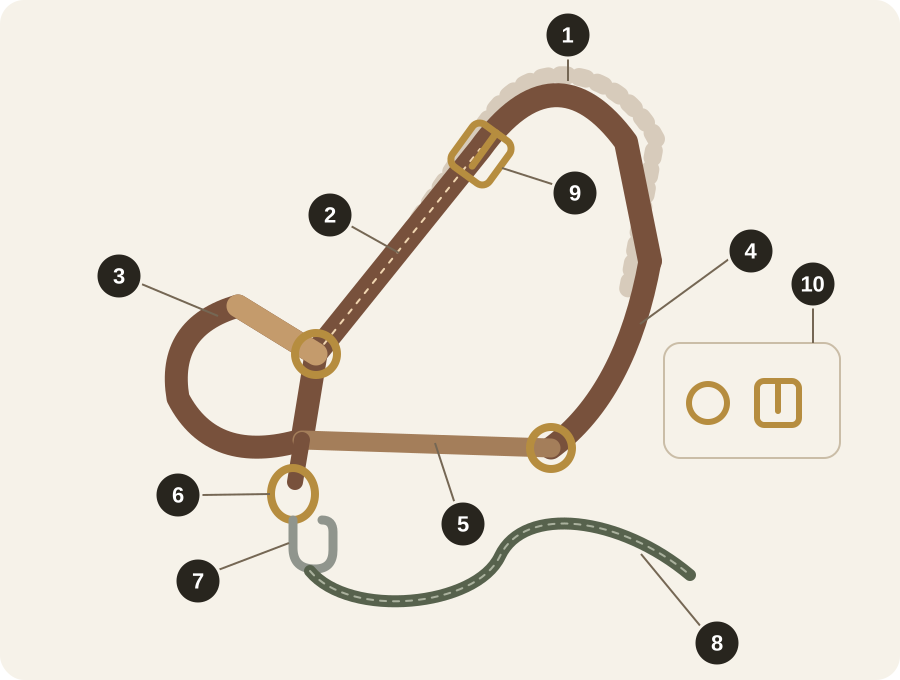
- 1Headpiece
- 2Cheekpiece
- 3Noseband
- 4Throatlatch
- 5Connecting strap
- 6Lead-rope ring
- 7Safety snap hook
- 8Lead rope
- 9Buckle
- 10Hardware
1. Headpiece
This is the part that passes behind your horse’s ears. It holds the halter in place on the head. Always check that it fits properly, neither too tight nor too loose!
The separate anatomical leather headpiece can also replace a compatible component. Check its size and attachment against your halter before ordering.
2. Cheekpiece
Cheekpieces are the vertical straps connecting the headpiece to the noseband. They should follow the contours of your horse’s face without getting in the way.
3. Noseband
The noseband runs across your horse’s nose. Its position follows the horse’s anatomy, above the soft, lower part of the nose. Ask your instructor to check its height rather than applying one finger measurement to every horse.
4. Throatlatch
This strap passes beneath your horse’s throat and helps keep the halter in place. Leave enough room for your horse to swallow comfortably.
5. Connecting strap
The connecting strap joins the noseband to the throatlatch. It keeps these two parts of the halter connected.
6. Lead-rope ring
The ring beneath the noseband is where you attach the lead rope to lead your horse.
To maintain these connections, see the replacement halter snap hook and replacement throatlatch, then check compatibility with your model.
Smart Wag’s replacement throatlatch also includes its clip and the strap connecting it to the noseband. Do not confuse this fastening with a lead-rope snap. Compare the fittings and dimensions before replacing a part; a similar photograph does not establish compatibility.
7. Safety snap hook
This metal fastener connects the lead rope to the attachment ring. Some designs have a quick-release mechanism. An ordinary snap hook does not release automatically when a horse pulls. A throatlatch clip is a different component, so check its purpose before replacing it.
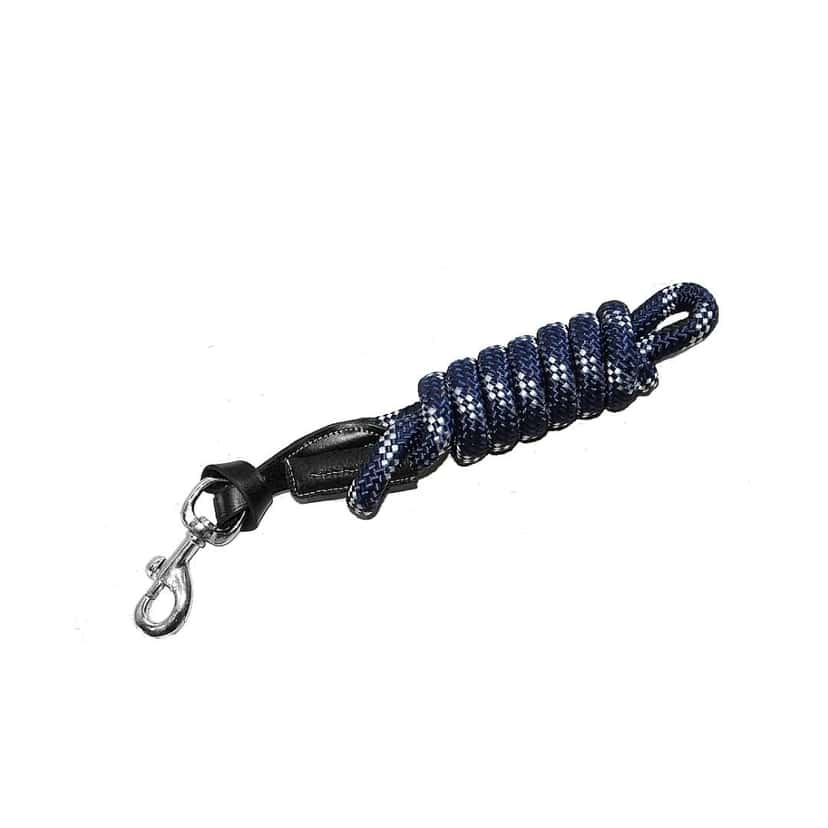
8. Lead rope
The rope clips to the attachment ring and lets you lead your horse. Lead ropes are commonly around two to three metres long.
9. Buckle
Buckles adjust the halter to fit your horse’s head. They are usually on the headpiece and sometimes on the throatlatch.
10. Hardware
Hardware means the halter’s metal buckles and rings together. These fittings let you adjust the straps and attach the lead rope. Keep them maintained and inspect them for damage.
How to use your halter properly
To put a halter on your horse, hold it with the noseband down and the headpiece open in your right hand. Approach calmly, slide the noseband over the nose, then lift the headpiece behind the ears before fastening it.
Learn to tie a quick-release knot with your instructor before tying your horse. It lets you undo the rope by pulling the intended free end, but does not release automatically under tension. Use a suitable breakaway point and remain nearby.
Pro tip
Check that you can slip two fingers between the halter and your horse’s head. Too tight is uncomfortable; too loose can let the halter slip off. This check is a guide, not a replacement for checking the whole fit.
Choosing a halter for its intended use
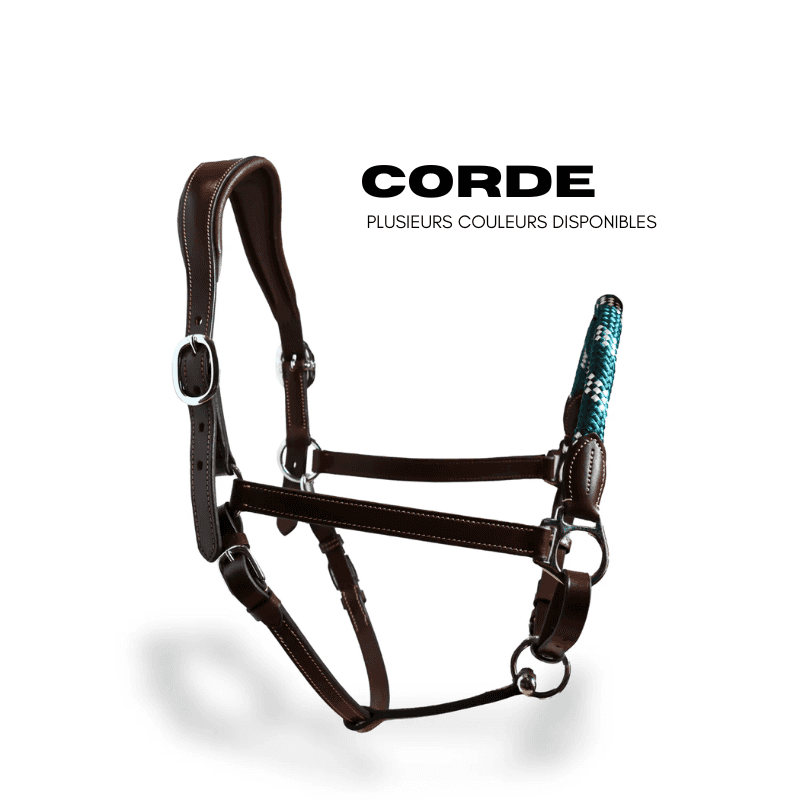
Knowing the parts helps you compare models beyond their appearance. Start with the task: leading, groundwork or handling a foal. Then check the adjustment points and size. An anatomical headpiece describes a shape; it can also be fitted to an all-leather halter.
| Construction | Use to consider | Model to explore |
|---|---|---|
| All-leather | Leading and routine handling after fitting. | Soul |
| Leather and rope | Groundwork and leading. Not recommended for tying up or transport. | Leather and Rope |
| Anatomical | Leading with a shaped headpiece, according to head shape. | Soul NeckFit |
| Foal | Supervised early handling with a foal-sized model. | Little |
These rows are not a ranking from basic to best. A rope noseband makes different contact from a broad leather noseband. The Leather and Rope model therefore needs appropriate handling. Here, all-leather describes construction rather than certifying full-grain leather quality.
With Little, check the fit regularly as your foal grows. Adjustment does not guarantee that one halter will fit through adulthood. With Soul NeckFit, check ear clearance and headpiece stability rather than assuming an anatomical shape suits every horse.
Frequently asked questions
What is the difference between a halter and a bridle?
A halter holds and guides your horse from the ground. A bitted bridle has a bit and reins for riding. These are different pieces of equipment with different uses.
What materials are used for halters?
Halters are available in nylon, leather or rope. Nylon is easy to clean, leather needs suitable care, and rope models require appropriate handling. Choose according to your budget and intended use.
What is another name for a halter?
Headcollar is another English name for this equipment. In French, licol and licou name the same item; regional usage can affect which spelling you encounter.
Explore halters and lead ropes
Vocabulary and tying references
For the French spellings, see Larousse. British Horse Society guidance explains the use of a breakaway point and a quick-release knot.