A customisable leather and rope headcollar
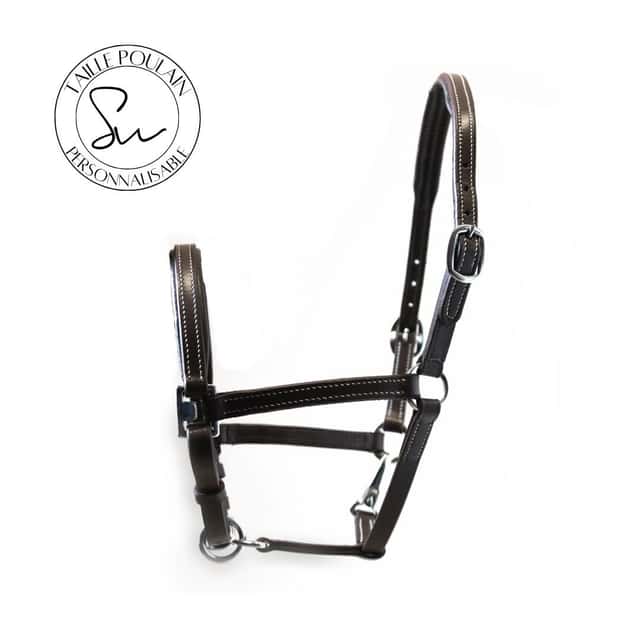
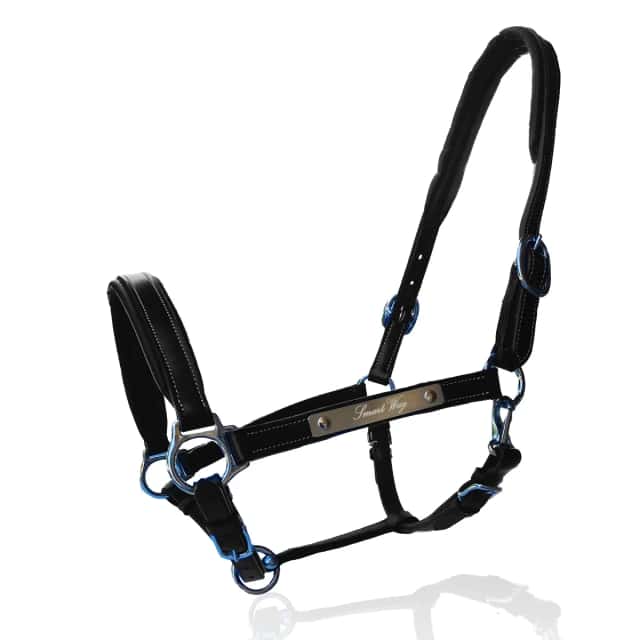
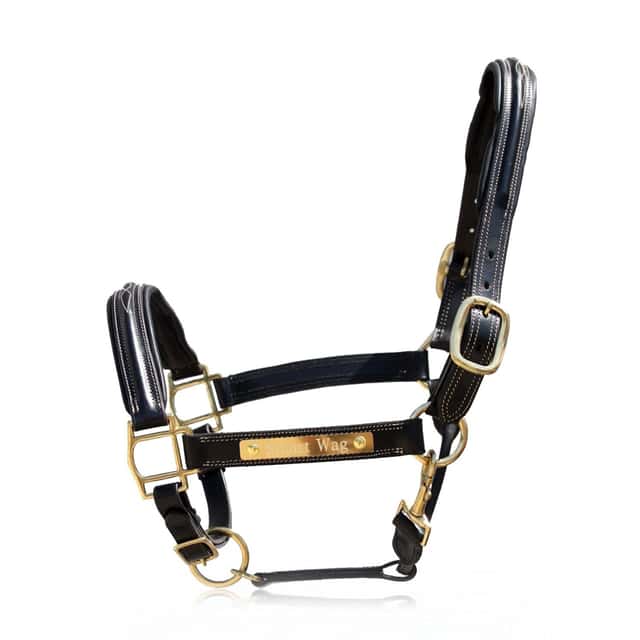
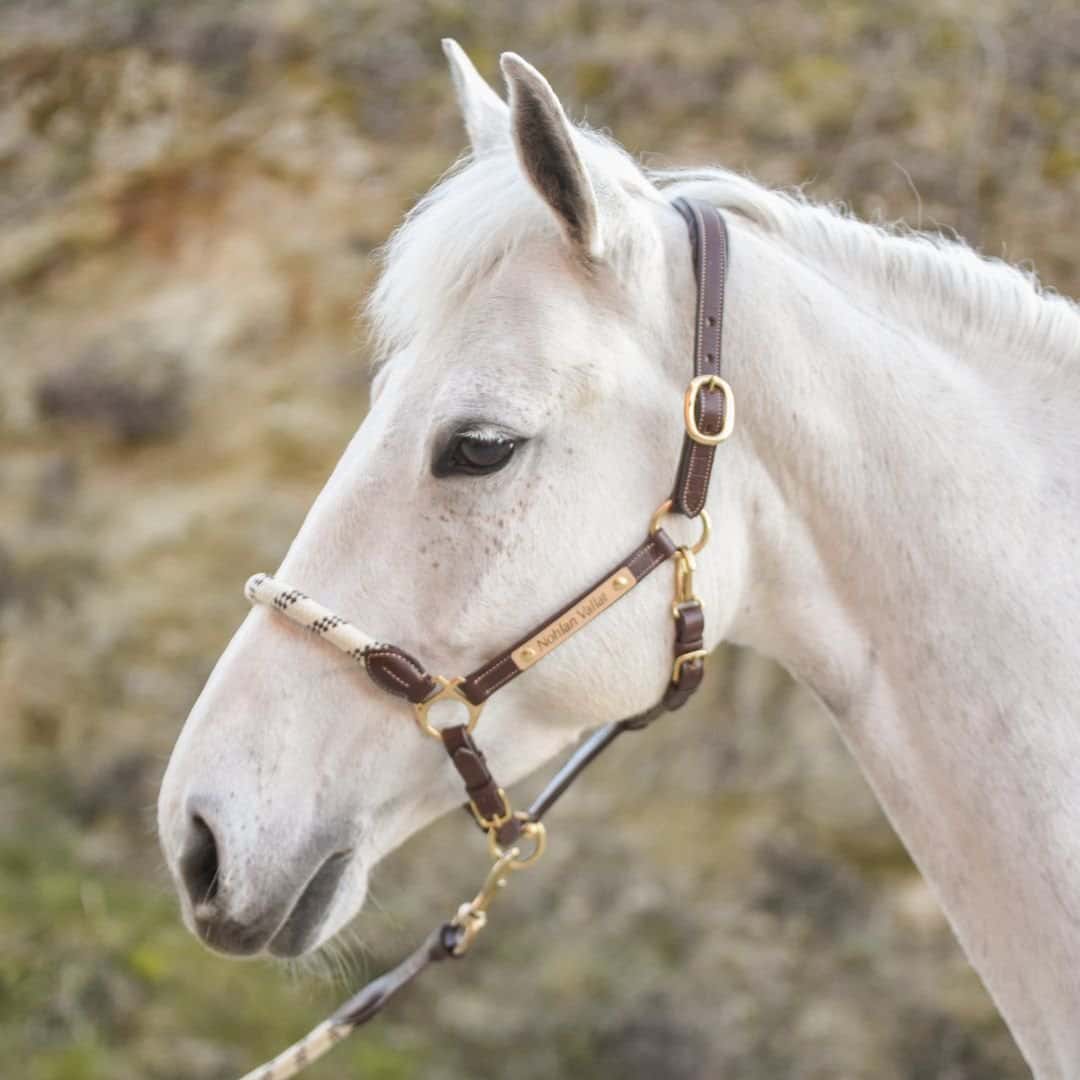
This leather and rope headcollar combines genuine cowhide with a rope nose section. Its straight headpiece is padded and lined. Double adjustment balances both sides of the horse’s head.
The plate carries custom engraving matched to the hardware. Leather comes in black or brown, with silver or gold coloured fittings. Personalisation identifies the horse without changing the fitting points.
This leather horse headcollar is intended for groundwork and leading. Rope gives a more precise contact than a flat noseband. The model is not recommended for tying up or transport.
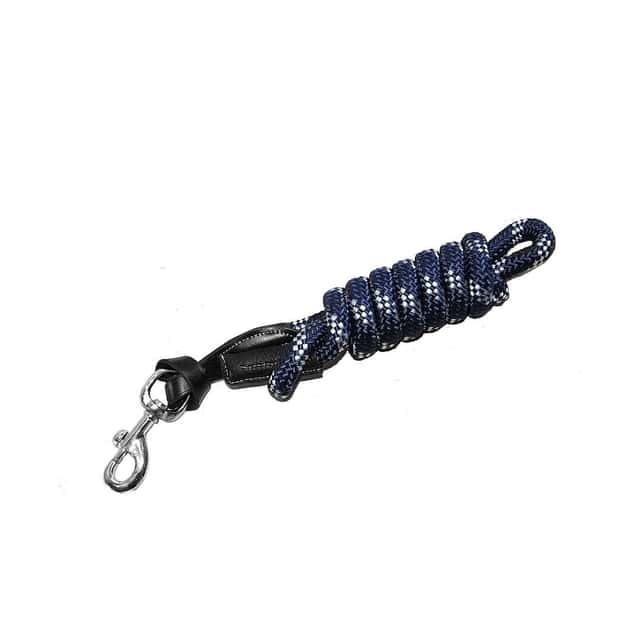
Pair it with the leather and rope lead for leading without wrapping the line around your hand. The size box gives a quick reference before configuration.

Compare full leather, leather and rope, and anatomical models
Choose by intended use and head shape. Leather and rope favours precise groundwork signals. Full leather provides more even contact. An anatomical cut changes how the headpiece passes around the ears.
The Soul PRO full leather headcollar supports yard orders and multiple engravings. The Neckfit leather and rope headcollar uses a shaped headpiece. Each page states the permitted uses.
For a very small head, the Little foal headcollar offers a dedicated size. Do not transfer a Mini setting directly to Shetland. Always check the nose section, cheekpieces and headpiece.
| Model | Headpiece | Adjustment | Recommended use |
|---|---|---|---|
| Leather and rope headcollar | Straight padded and lined headpiece | Bilateral headpiece, adjustable nose section, detachable throatlash | Groundwork and leading, without tying up or transport |
| Soul PRO headcollar | Padded and lined full leather headpiece | Adjustable headpiece and noseband with customisable plate | Yards and professional orders from the quantity stated on its page |
| Mont Blanc anatomical bridle | Padded bridge headpiece with offset bearing | U-shaped noseband and bilateral adjustment | Ridden work with a bit after a morphology check |
Leather and rope versus full leather: differences in use
A rope and leather headcollar concentrates more contact on its braided nose section. It therefore gives a clearer signal during in-hand work. Release each brief aid immediately after the response.
A full leather horse headcollar spreads contact across flat straps. It better suits routine handling when its product page permits that use. Never leave any headcollar on an unsupervised horse.
Fit matters as much as material. Keep the nose section on the bony part of the face. The headcollar fitting guide shows the reference points to inspect before every session.
When to prefer an anatomical headcollar
A shaped headpiece can follow a head with limited room behind the ears. Neckfit provides this alternative within the headcollar range. Check its stability in motion before choosing that cut.
The Mont Blanc is an anatomical bridle, not a headcollar. Its bridge headpiece is designed for ridden work with a bit. It illustrates a different distribution around the poll.
An anatomical cut cannot correct the wrong size. Pass one finger under the padded areas. If the headpiece twists or touches an ear, measure and adjust again.
How a rope headcollar is made and how to care for it
The nose section uses thick rope assembled in a braid. Its strands remain under even tension to keep a regular line. On this model, rope joins leather parts and adjustable hardware. It is not a one-piece knotted rope halter.
Brush or rinse the rope with clean water, then let it dry naturally. Wipe the leather with a damp cloth. Clean it with mild soap and condition as needed. The equestrian leather care guide explains suitable products and timing.
Frequently asked questions about leather and rope headcollars
What is the difference between leather and rope and full leather headcollars?
Leather and rope combines a leather headpiece with a braided nose section for precise in-hand work. Full leather produces more even contact.
How do you care for a leather and rope headcollar?
Rinse the rope with clean water and dry it away from direct heat. Wipe the leather, then use mild soap and suitable conditioner.