Key takeaways
- The ergonomics of equipment are based on the actual biomechanics of the horse: bearing zones, facial nerves, and the spinous processes of the withers.
- An anatomical bridle reduces pressure points on the poll and forehead by up to 40%, freeing the jaw and promoting relaxation.
- Back pathologies cost on average 3,000 to 5,000€ in surgery. Suitable equipment is a preventive investment that pays off in under 2 years.
Nearly 90% of equestrian equipment shows maladaptation defects visible through biomechanical analysis, and 94% of ridden horses show signs of back discomfort during their careers. Behind these figures lies a simple truth: ergonomic equipment is not a marketing argument; it's a system that respects the horse's anatomy, from the trigeminal nerve to the spinous processes of the thoracic vertebrae. In this guide, you'll find current scientific data, 2026 innovations, and concrete criteria for choosing a bridle, halter, or saddle that truly protects your horse.
Horse anatomy: the critical zones for ergonomic equipment
Truly ergonomic equipment begins with knowledge of the anatomical structures beneath the skin: nerves, bony prominences, and dense or fragile muscle areas. Three zones concentrate the majority of adaptation issues encountered in upholstery and saddlery.
The poll and the headpiece passage
The nape region concentrates sensitive nerve structures: the nuchal ligament, facial nerve, and synovial bursa of the ligament. A headcollar that is too thin, poorly shaped, or compressive creates a concentration of pressure at the base of the ears, where the facial nerve is most exposed. Affected horses often show reluctance to be bridled, head shaking during work, or unexplained rearing. The critical pressure threshold tolerated in this area is estimated at 35 kPa, beyond which tissue ischaemia becomes measurable.
The nasal bone, facial nerves and jaw
On the face, the trigeminal nerve emerges at several sensitive points that the slightest friction can irritate: the mental foramen, the maxillary nerve and the zygomatic processes. A flat or overtightened noseband compresses these structures and blocks the jaw movement that is essential to the horse's relaxation. Current guidelines require room for two fingers between the noseband and the nasal bone, about 1.5 cm, to preserve both position and tissue freedom.
The withers and the T10-T13 weight-bearing area
At the back, the spinous processes of vertebrae T4 to T5 form the withers, which rise 20 to 25 centimetres with width variations of 15 cm from one horse to another, even within the same breed. The optimal carrying area is located between vertebrae T10 and T13, where the dorsal musculature reaches its maximum density. At the sitting trot, transmitted forces can reach 2112 N (measurements from the Royal Veterinary College), making uniform distribution by the saddle panels or the bridle girth imperative.
Good to know: An adult horse can gain or lose up to 50 kg of muscle mass depending on the season, and a young horse's withers widen by 8 cm in 6 months. A bi-annual morphological assessment is essential in order to adapt equipment to these variations.
Ergonomic bridlery: why an anatomical snaffle bridle changes everything
The bridlework is in direct contact with the most innervated areas of the head. An ergonomic approach involves moving or hollowing out each piece to free these structures rather than compressing them. Measured differences between a classic bridle and a correctly designed anatomical bridle can lead to up to a 40% reduction in pressure points.
Cut-back headpiece and ear relief
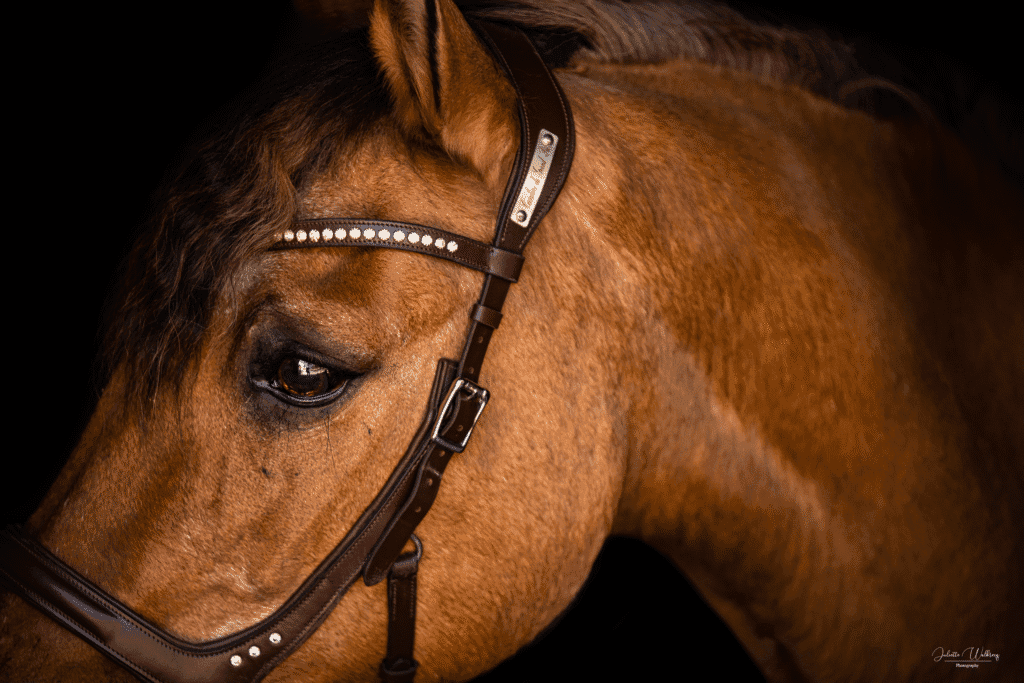
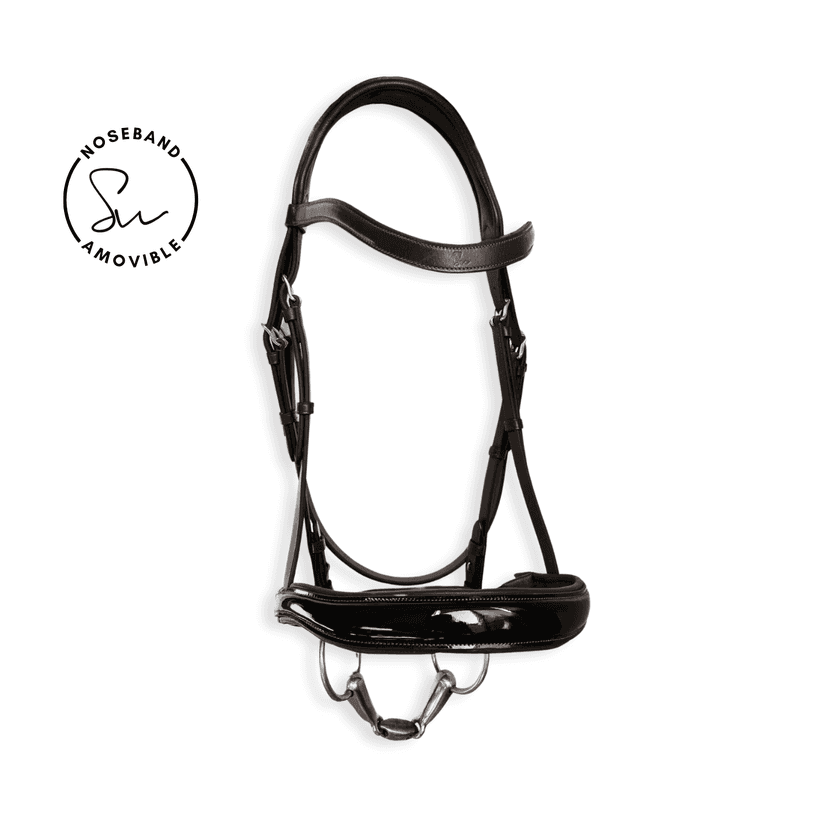
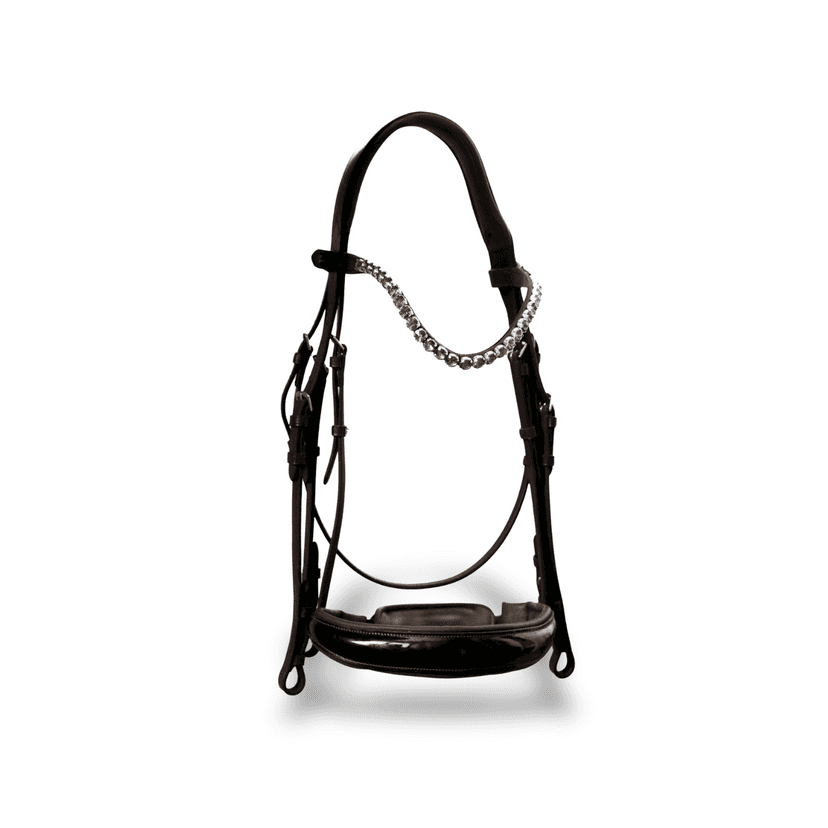
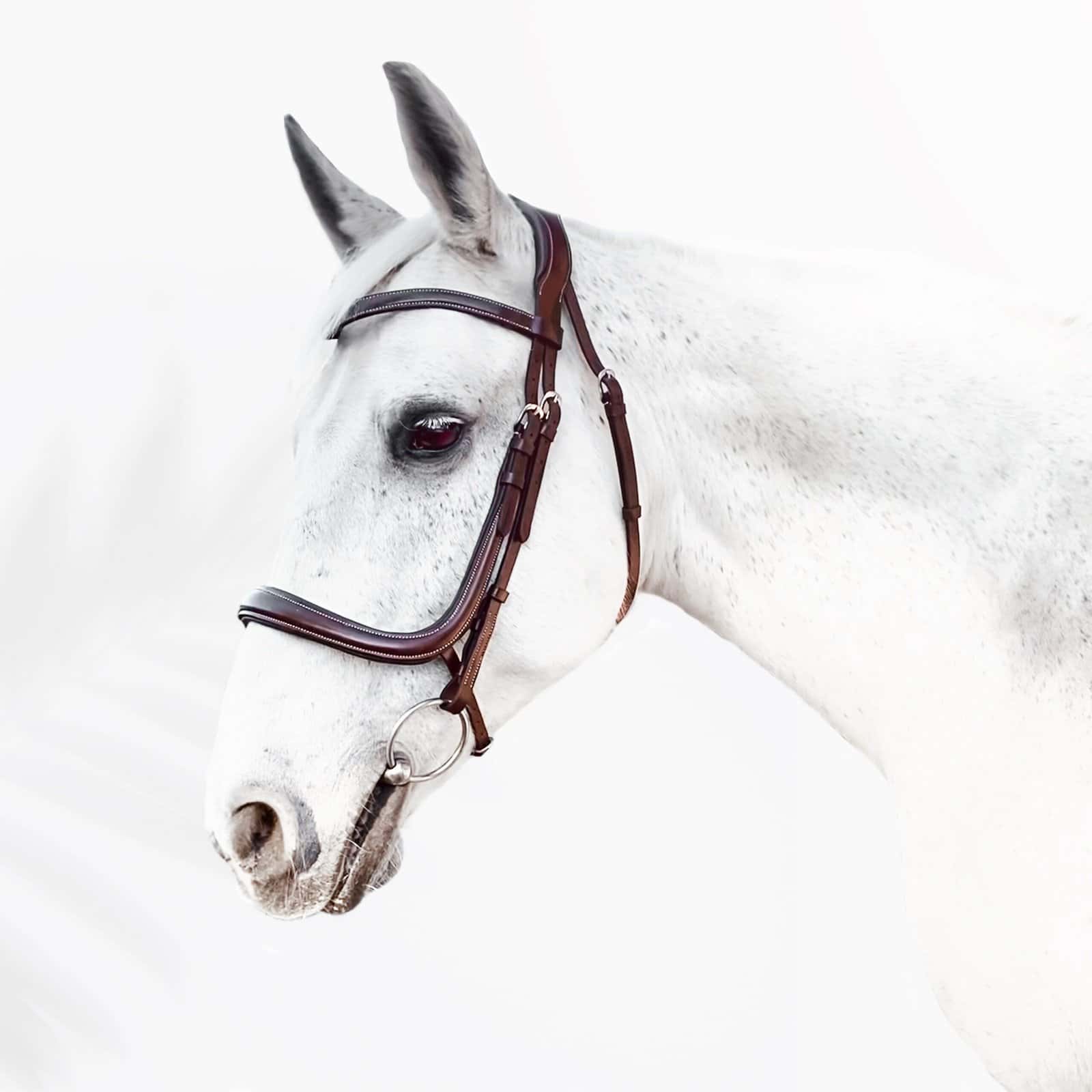
An anatomical headpiece features an arc-shaped cut at the base of the ears. This seemingly aesthetic detail addresses a physiological reality: the facial nerve runs just beneath the leather in this area. A straight headpiece, especially in stiff leather, exerts continuous pressure that translates into signs of discomfort during bridling. On some horses, switching to a cut-back headpiece resolves within a few weeks behaviors that were wrongly interpreted as temperament.
Curved noseband and offset cheek pieces
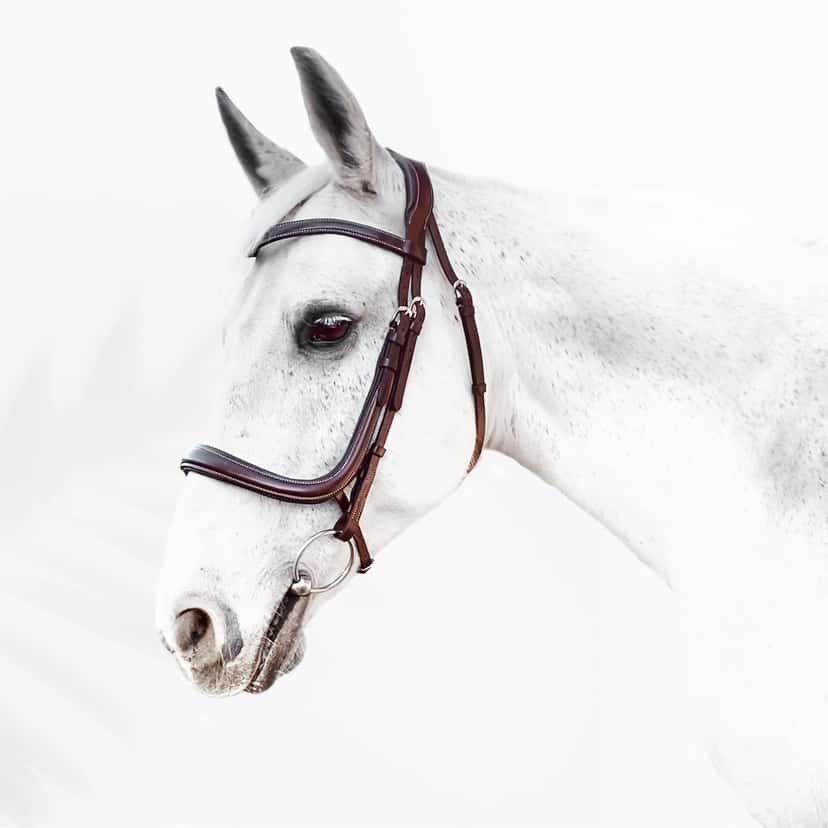
The anatomical cavesson is sculpted to follow the natural curve of the nasal bone, and its cheek straps are offset outwards to avoid pressing on the zygomatic arches. This geometry allows for a stable closure without excessive tightening, which preserves jaw movement. The two-finger rule is applied consistently, and the cavesson must never impede swallowing or nasal breathing.
Throatlatch and chin strap over sensitive structures
On the halter and bridle, the throatlash and the chin strap pass close to the jugular vein and the parotid gland. Leather that is too thin, too thick, or poorly positioned can create areas of irritation on these highly vascularised regions. Ergonomic components favour supple full-grain leather, rounded edges, and discreet padding in the contact zones, without any excess thickness that could hinder lateral flexion of the neck.
Ergonomic saddlery: back biomechanics and load distribution
While Smart Wag focuses on bridles, understanding the principles of ergonomic saddles remains essential for any rider concerned about their horse's comfort. The saddle is the most demanding mechanical interface in the system, and errors here are the most costly in veterinary terms.
Tree gullet, contact surface and cranial/caudal ratio
The gullet determines whether the saddle clears the withers and respects the shoulders. Recent studies show that 35% of saddles have an unsuitable gullet, either too narrow (acute pressure points) or too wide (instability and rocking). A correct gullet allows for 3 to 4 fingers to pass above the withers under weight. The contact surface area of the panels must exceed 1200 cm² to physiologically distribute forces, with an ideal ratio of 2.5:1 between cranial and caudal pressures.
Pressure measurements and thermography
Modern piezoelectric sensor mats integrate up to 900 measurement points and record 1000 data points per second, with an accuracy of 0.5 sensels/cm². These systems reveal that 84%of faeces show pressure asymmetries exceeding 20%, often invisible to the naked eye. Infrared thermography complements this diagnosis by detecting variations of 0.1°C, ten times more accurate than tactile examination. A variation of more than 2°C after 20 minutes of work is a clinical sign of maladjustment.
The hidden cost of back pathologies
Surgery for kissing spines costs between €3,000 and €5,000, with only a 60%% of returning to previous sporting levels. Repeated injections (€300 to €500 per session) only treat the symptoms. Over five years, the cumulative cost of maladjustment can reach €15,000 in veterinary fees, compared to an initial investment of €2,500 to €5,000 for appropriate equipment.
2026 innovations: materials, sensors and 3D printing
The progress of the last ten years has shifted saddlery and bridlery towards a logic of technical materials and objective measurement. A few 2026 innovations are worthy of attention for their measurable impact on equine comfort.
Technical materials and shock absorption
The new generation Bultex® foams offer superior air circulation to traditional foams and a reduction in contact temperature of around 1°C, which limits excessive perspiration. D3O technology, an elastomer that rigidifies on impact in less than a millisecond, allows for 40% superior shock absorption compared to conventional materials and reduces pressure peaks by 32.9% during jump landings. Japanese Betagel, a viscoelastic of industrial origin, completes the arsenal for the most exposed saddle areas.
Connected sensors and biomechanical analysis
Motion sensors such as the Seaver CEEFIT (47 grams) or Equestic SaddleClip measure heart rate, gait symmetry, and time spent on each rein in real time. Regular monitoring of these measurements can help identify asymmetries and prompt professional advice before discomfort becomes established. Equipped saddles (CWD iJump, for example) integrate six accelerometers and two gyroscopes directly into the tree for continuous biomechanical analysis.
3D printing and millimeter-level customization
3D printing applied to saddles produces structures weighing 2.5 kg compared to 6 kg for traditional glued-laminated wood models, with increased strength of 40%. 3D scanners capture the horse's morphology with an accuracy of 0.5 mm in under three minutes, and manufacturing times are reduced to 48 hours. This technology is beginning to spread in the custom bridle-making industry, where it allows headpieces and nosebands to be adjusted to the precise morphometrics of the head.
| Technology | Measured benefit | Indicative cost |
|---|---|---|
| Breathable Bultex® foam | Contact temperature -1°C | +200 to 400€ |
| D3O elastomer | Shock absorption +40% | +300 to 600€ |
| Pad with 900 sensors | Detects 84% of asymmetries | 800 to 1,500€ |
| Infrared thermography | 0.1°C precision, alert 2 weeks ahead | 200 to 400€/session |
| 3D-printed saddle tree | Weight -60%, strength +40% | +1,500 to 3,000€ |
The 5 mistakes to avoid when choosing ergonomic equipment
Ergonomics is a field where bad choices are costly, both financially and physiologically. Five mistakes systematically appear in the assessments of saddle fitters and bridle fitters.
To neglect morphological evolution
A horse's morphology is never fixed. An annual check-up is sufficient for a stabilised adult horse, but semi-annual monitoring becomes essential for young horses, horses in training, or those that significantly change in muscle mass. Without this, the equipment or the horse's temperament are wrongly blamed.
Choosing a tree gullet at random
For both the saddle and the bridle, an ill-fitting gullet or headpiece creates pressure points that are invisible when purchased but devastating in the long term. Interchangeable gullets (saddlery) and detachable headpieces (bridlery) are the most economical solutions for adjustment without replacing everything.
Putting the rider's comfort first
Nearly 40% of saddle purchases are guided by how the rider feels in the saddle, such as a deep seat or high cantle, at the expense of load distribution on the horse. The right choice balances both partners: each must be comfortable, never one at the expense of the other.
Ignoring early behavioral signs
Reluctance during girthing, tail swishing, excessive hollow back, refusal to canter on a particular lead: these signs appear on average 2 to 4 weeks before the first clinical symptoms. Early intervention resolves the issue in 95% of cases without after-effects.
Compensate instead of adapt
Adding numnahs or half pads to compensate for an ill-fitting saddle often creates more problems than it solves: changing the balance, lateral instability, excessive bulk. Accessories refine an already correct fit, they do not correct it.
Our Smart Wag recommendations for ergonomic bridlery
At Smart Wag, the ergonomics of the bridlery are at the heart of the design. Full-grain leather tanned in Europe, anatomical headpieces to free the facial nerve, sculpted nosebands, supple finishes without hard spots: each piece is designed to respect the horse's anatomy over time. Here are a few models to look at closely depending on your use.
For a high-end anatomical bridle, the Mont Blanc anatomical bridle combine a cut-away browband and a shaped noseband. For an ergonomic everyday halter, the Soul PRO Halter offers the suppleness of full-grain leather and the robustness of a professional bridle. For those looking to ride without a bit, the Sidepull Valkyrie distributes the pressure across the chamfer in a physiological manner.
If a part wears out or needs adjusting, our anatomical headrests, disassembled allow you to adapt an existing bridle without replacing everything. To find out more about choosing an anatomical headpiece, consult our Guide dedicated to the anatomical headboard.
Frequently asked questions
How to know if my horse's equipment is truly ergonomic?
Ergonomic equipment is recognised by several signs: no visible pressure points (white hairs, swellings), no behavioural reluctance (tail wagging, hollow back, refusal to be girthed), complete freedom of movement. For the bridle, check that two fingers can pass under the noseband and that there is no pressure on the facial nerves. For the saddle, three to four fingers of clearance above the withers when under load is essential. A thermographic check after twenty minutes of work should not reveal a variation greater than 2°C between zones.
What's the difference between an anatomical snaffle bridle and a classic snaffle bridle?
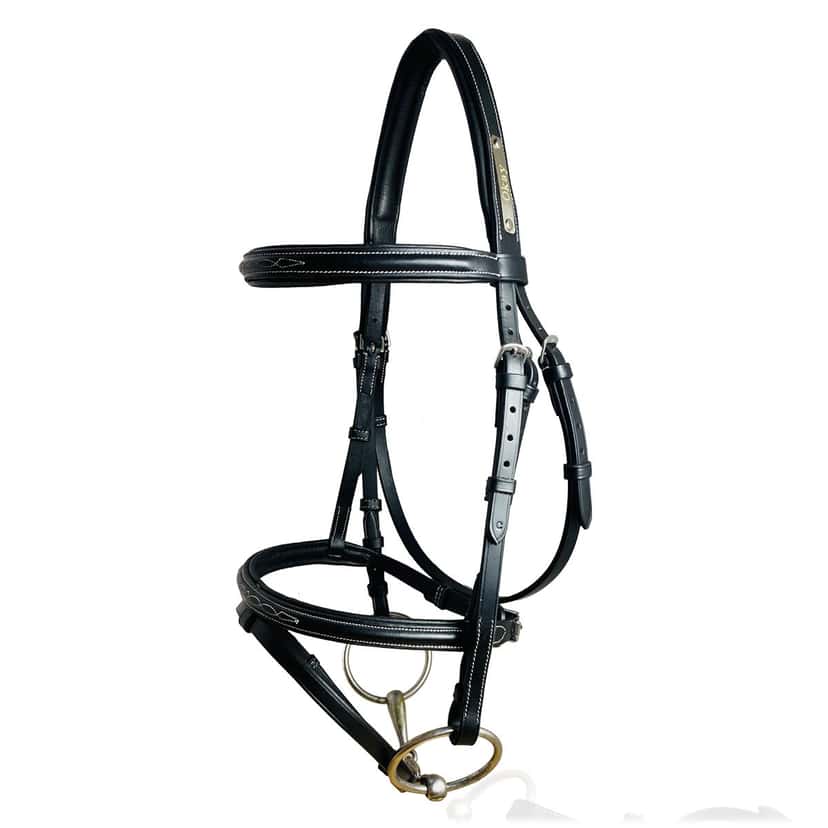
An anatomical bridle features a shaped headpiece to free the base of the ears and protect the facial nerve, a contoured noseband that follows the natural curve of the horse's face, and displaced cheek pieces to avoid direct pressure on the cheekbones. A classic bridle has a straight headpiece and a flat noseband that exert concentrated pressure. Biomechanical studies show up to a 40% reduction in pressure points with an anatomical model, leading to better relaxation of the poll and a freer jaw.
What budget should I plan for quality ergonomic equipment?
For tack, expect £200 to £600 for an anatomical bridle in full-grain leather, and £100 to £300 for an ergonomic headcollar. For saddles, entry-level ranges from £1500 to £2500, mid-range from £2500 to £4500, and high-end custom-made from £5000 to £8000. A higher initial investment pays off through reduced veterinary costs, as back pathologies can cost up to £5000 for a single surgery, and through a lifespan of 10 to 15 years with appropriate maintenance.
Are connected sensors and pads useful for an amateur rider?
For an amateur rider, an annual thermographic check-up with a professional is sufficient in most cases. Sensor mats and motion sensors like Seaver or Equestic become genuinely useful with regular competitive training or in cases of persistent doubts about the suitability of equipment. The entry price for a motion sensor is around 200 to 500 euros, and 800 to 1500 euros for a pressure mat. The investment is primarily justified if you are changing equipment or looking after several horses.
How do I care for ergonomic leather equipment to preserve its properties?
The technical leather of ergonomic equipment requires daily care: gentle cleaning after each use with glycerine soap, drying at room temperature away from any heat source, and storage at 15-25°C with 40 to 60% humidity%. Monthly greasing with a product suitable for the type of tanning (vegetable or chrome) maintains suppleness and waterproofing. A bi-annual inspection of seams and wear points prevents 90%%of premature deterioration. Properly maintained full-grain leather retains its ergonomic properties for 10 to 15 years.
Conclusion: Ergonomics as a long-term investment
Ergonomic equipment isn't a luxury; it's a precise response to the biomechanical stresses your horse endures every time it goes out. A shaped headpiece, a curved noseband, symmetrical panels, breathable full-grain leather: these are the design details that distinguish an ergonomic product from a mere marketing ploy. The result? More relaxed horses, fewer back problems, and equipment that lasts twice or three times longer.
At Smart Wag, every bridle, halter, and sidepull is crafted from full-grain leather tanned in Europe, with anatomically designed parts intended to respect the passage of facial nerves and jaw mobility. Discover our range of horse equipment, and personalisable with a free engraving and made to last.