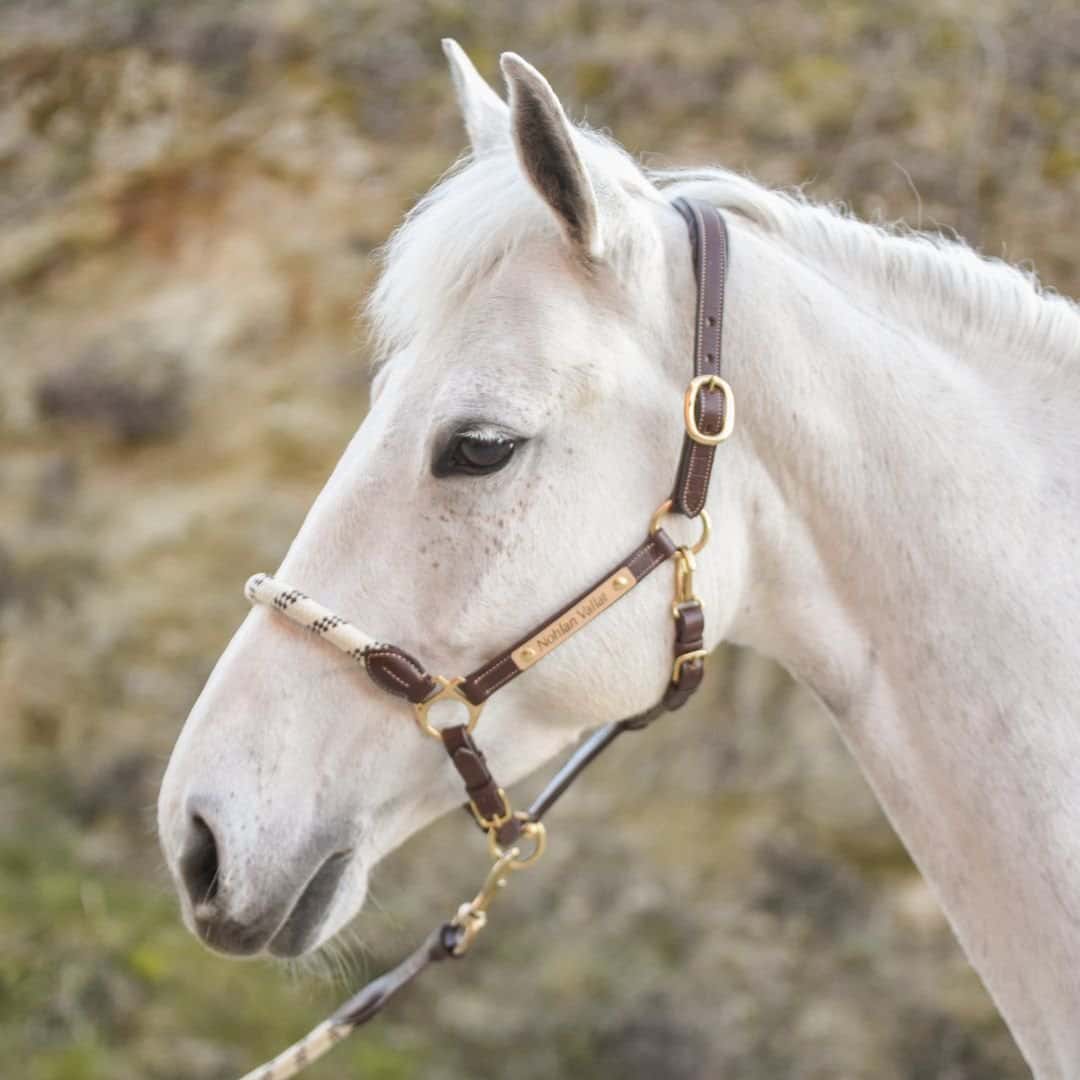
A halter is a headpiece used with a lead rope to lead a horse and hold it for care. It is distinct from a riding bridle. Tying requires a suitable model, a breakaway connection and supervision.
Choose a halter in a clear order: measure the head, check the fit, then select a material suited to the intended use. Breed and overall build are useful starting points, but they do not replace measurements: two horses of the same height can have very different head shapes.
Which horse halter size should you choose?
The right size keeps the halter stable without compressing the nose, catching the ears or creating friction. Take the three measurements shown in the diagram before using the chart.
The three measurements to take
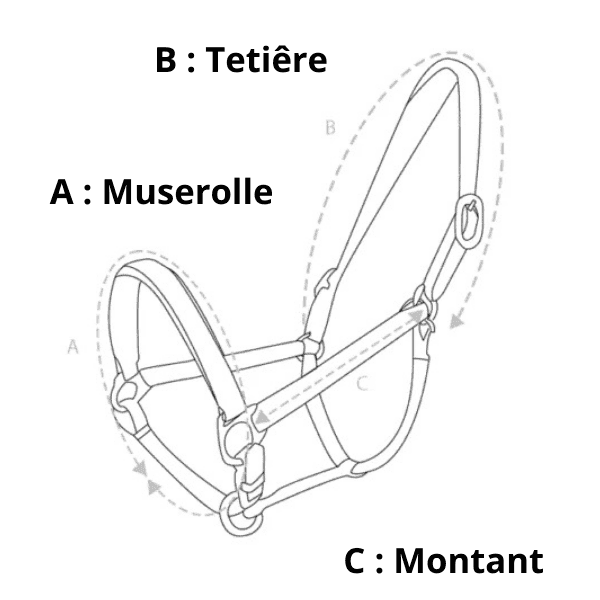
- Noseband (A): measure around the nose where the noseband will sit, about two finger-widths below the cheekbone.
- Headpiece (B): measure over the poll from one side to the other, passing behind the ears.
- Cheekpiece (C): measure the distance between the noseband and the headpiece along the side of the head.
Use a soft tape measure that touches the coat without pulling tight. If your horse already has a well-fitting halter, you can also lay it flat and compare the same three dimensions.
Mini, Shetland, Pony, Cob and Full size chart
| Size | Noseband (A) | Headpiece (B) | Cheekpiece (C) |
|---|---|---|---|
| MINI / FOAL | 38-44 | 36-42 | 9 |
| SHET | 46-50 | 44-58 | 12 |
| PONY | 50-60 | 48-62 | 16 |
| DOUBLE PONY / COB | 58-68 | 52-66 | 19 |
| FULL | 60-70 | 56-70 | 21 |
Check all three columns before choosing a size. The noseband or headpiece alone is not enough: a short cheekpiece pulls the noseband upwards, while a long one lets it drop and makes the halter unstable.
Cob or Full: how do you decide?
Cob and Full overlap at the noseband from 60 to 68 cm and at the headpiece from 56 to 66 cm. The clearest difference is the cheekpiece: 19 cm for Cob and 21 cm for Full in this chart.
Do not automatically choose Full ‘to be safe’. Select the size that contains all three measurements and keeps the adjustments near their middle range. If one measurement points to Cob and another to Full, compare the cut of the model or ask for advice with all three measurements; a different model may fit better than a larger size.
How do you check the fit on the horse?
- the noseband sits below the cheekbone without restricting breathing or chewing;
- the headpiece lies behind the ears without pinching them;
- the cheekpieces lie flat and do not pull the noseband upwards;
- the halter cannot slide over the nose when the horse lowers its head.
After a few minutes, check for ruffled hair, pressure marks or rubbing. Readjust if the halter twists, gaps widely or restricts jaw movement.
Which Smart Wag models are available in each size?
Once the size is confirmed, this table shows the models offered. Always check the currently available sizes and options on the selected product page.
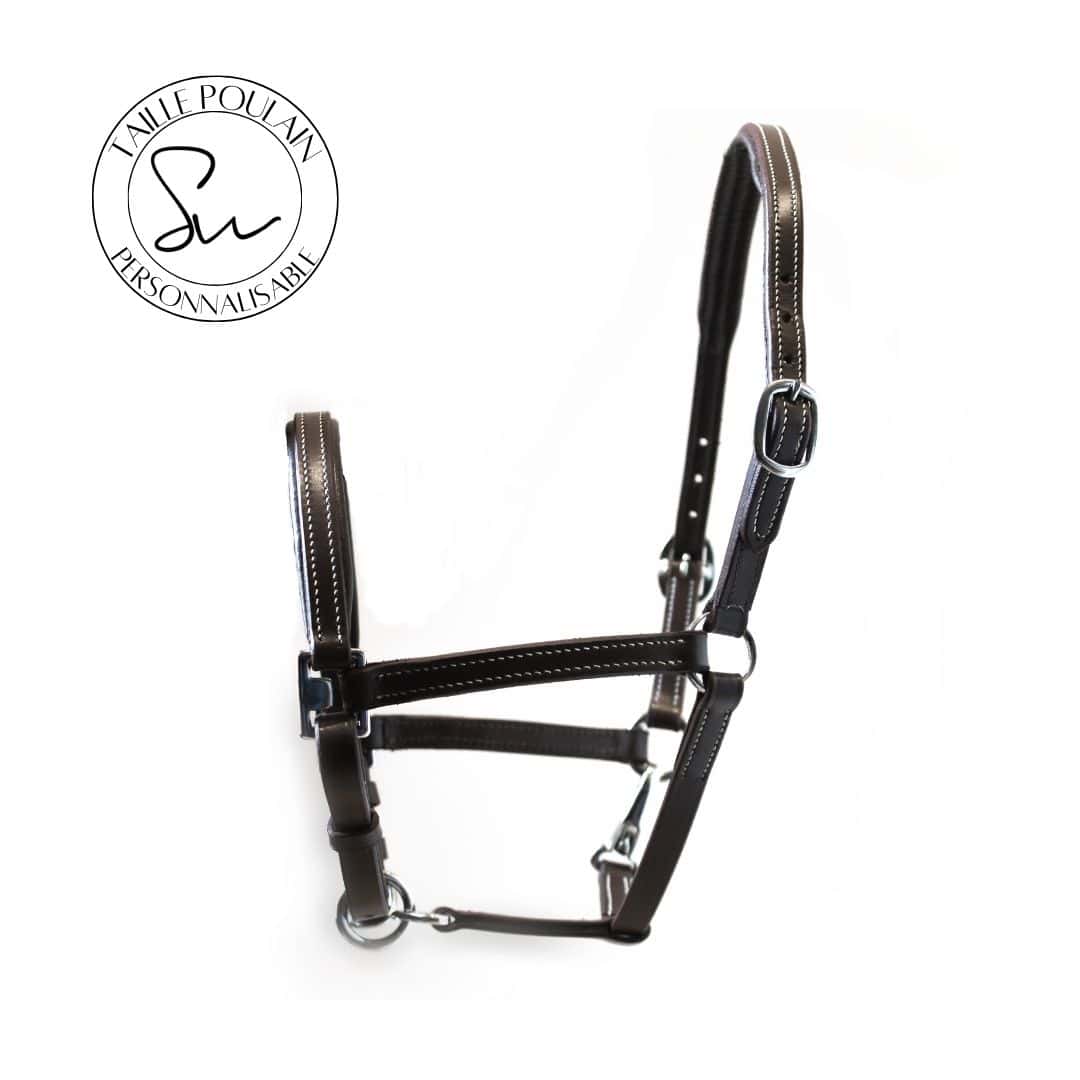 Little foal headcollar
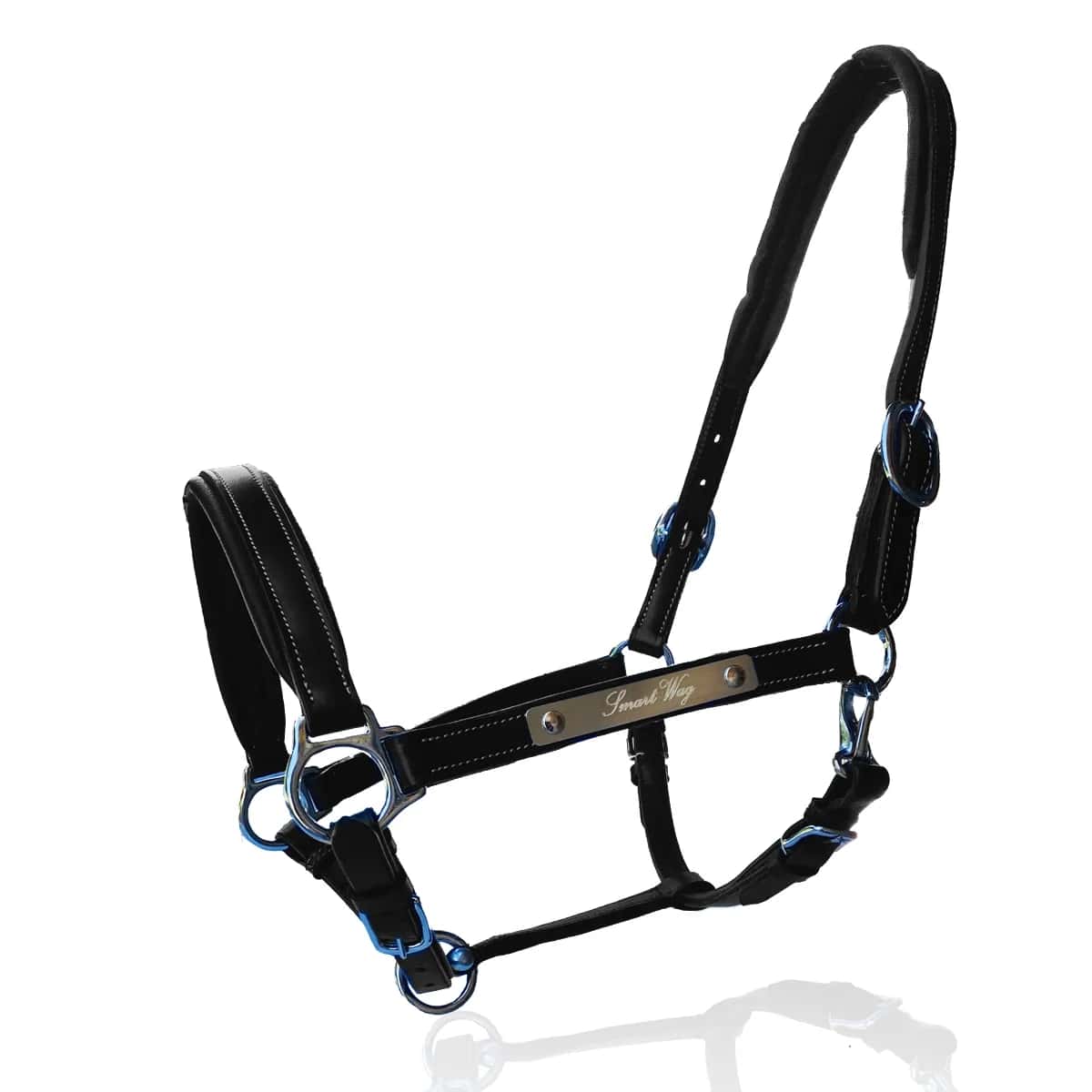 Soul leather headcollar
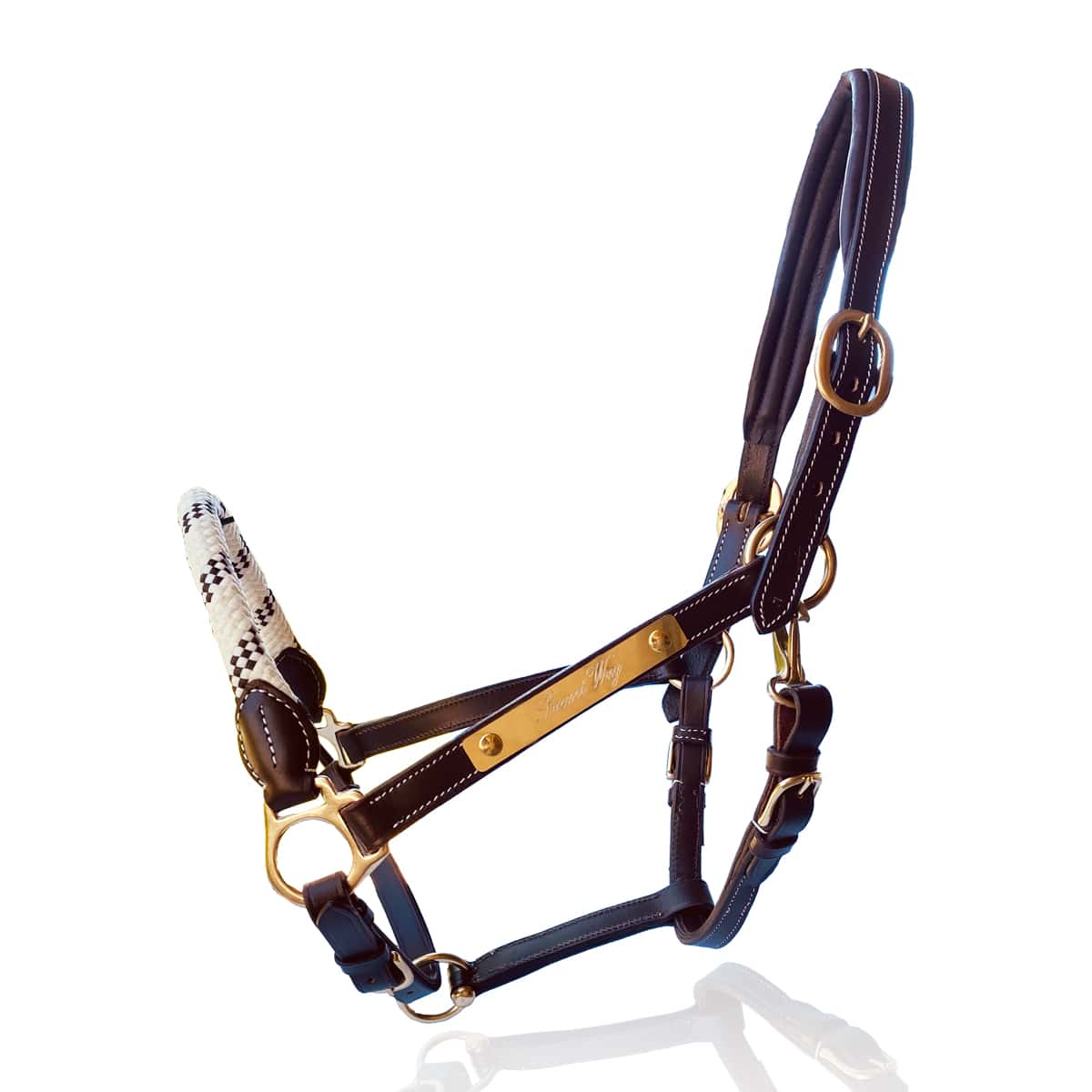 leather and rope headcollar
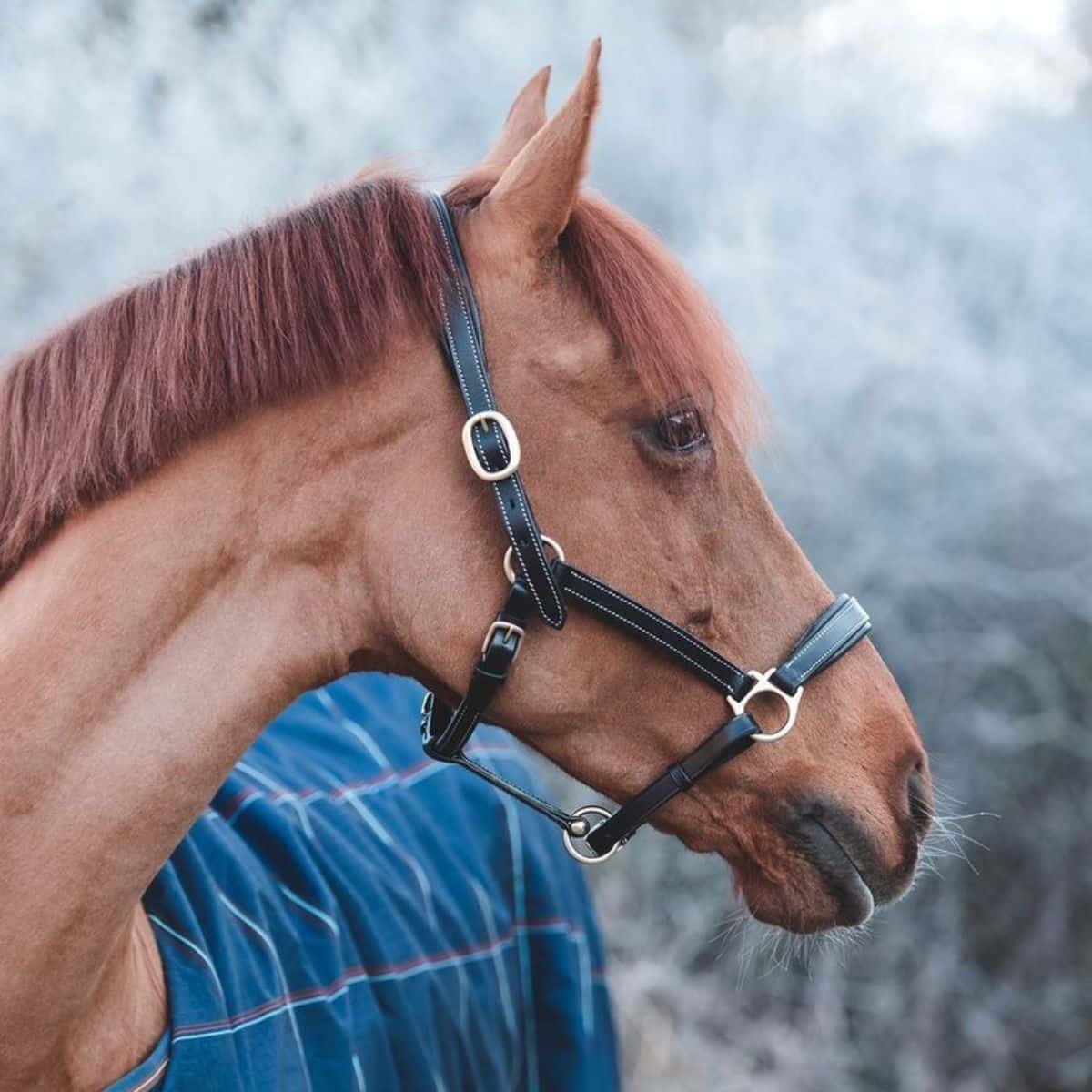 Soul PRO leather headcollar
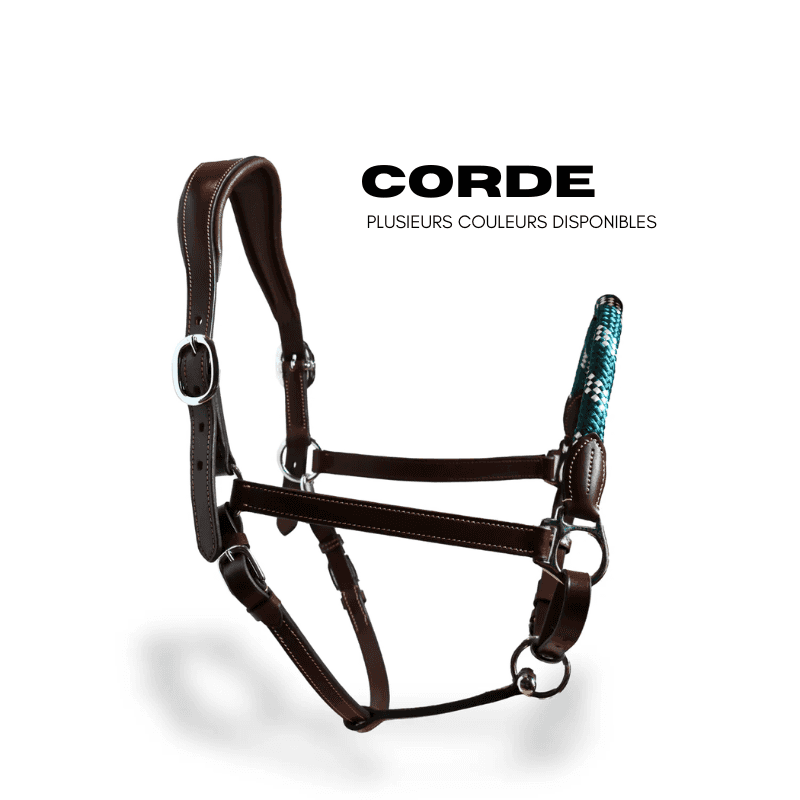 Neckfit leather and rope headcollar
Which type of halter suits each use?
Size answers the horse’s shape; halter type answers the job. A flat halter for routine care, a rope halter for supervised groundwork and a fine model for presentation are not used in the same way.
Flat leather or nylon halters
This is the versatile choice for leading, grooming and routine handling. Leather feels supple and has a refined appearance, but needs suitable cleaning and conditioning. Nylon is light and easy to wash; its stitching, buckles and rubbing points still need regular checks.
Rope halters
Their thinner construction creates more localised pressure. They are intended for groundwork with precise cues and experienced handling. Because they are not designed to release easily, they must not be used for tying or left on in the field.
Presentation halters
A finer cut highlights the head for in-hand presentation. Appearance does not change the essentials: the fit must remain correct, every fastening must be sound, and the model must provide the level of control required.
Leather, nylon or rope: a quick comparison
| Material | Strengths | Points to check |
|---|---|---|
| Leather | Supple, comfortable, refined appearance | Regular care; inspect stitching and buckles |
| Nylon | Light, washable, practical for daily use | May rub if poorly fitted; inspect wear |
| Rope | Precise cues for groundwork | More localised pressure; never use for tying |
What is a halter for, and how do you use it safely?
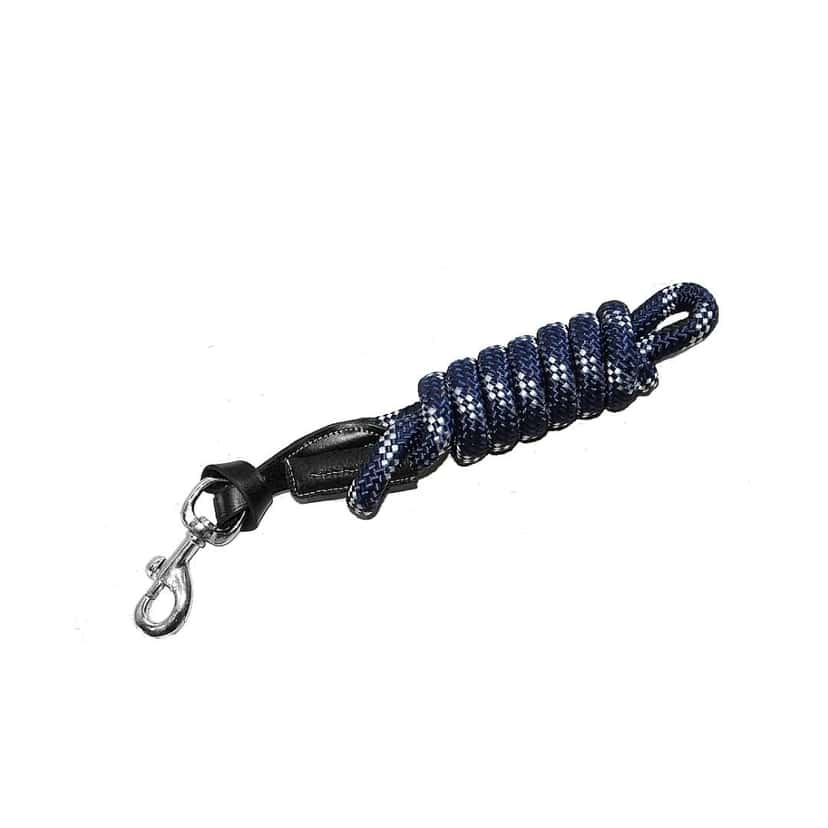
Used with a lead rope, a halter lets you lead a horse, hold it for care and, when the model is suitable, tie it for a short period. It is not a bridle for riding or equipment to leave on the head permanently.
Putting on a halter calmly
- Approach calmly towards the shoulder, speak to the horse and watch its response.
- Offer the noseband without knocking the eyes or folding the ears, then place the headpiece.
- Fasten the buckle and immediately check the position of all three parts.
Leading and tying correctly
Use a lead rope and never wrap it around your hand. Walk beside the shoulder rather than directly in front of the horse, keeping a safe amount of space.
For tying, use a solid purpose-built point at wither height or above, a quick-release knot and a suitable breakaway connection. Keep the rope short enough to prevent a foreleg becoming caught, without fixing the head in an unnatural position. A tied horse must remain supervised.
These principles follow guidance from Penn State Extension on tying height, rope length and quick-release knots, and the British Horse Society on quick release and breakaway points.
The most common mistakes
- leaving an ordinary halter on in the field, where it can catch;
- tying with a rope halter or without a quick-release system;
- choosing from breed alone instead of measuring;
- continuing to use a halter with damaged buckles, stitching or material.
Frequently asked questions
What is the difference between Cob and Full?
The ranges overlap, but the cheekpiece is 19 cm for Cob and 21 cm for Full in the Smart Wag chart. Always compare the noseband, headpiece and cheekpiece before choosing.
What halter size does a large horse need?
A large horse often wears Full, but not automatically. Head shape matters more than height at the withers, so confirm the choice with all three measurements.
What halter size does a foal need?
Start with Mini / Foal if the measurements match, then check the fit frequently as the foal grows. The Little foal headcollar is offered in this size.
Can you tie a horse with a rope halter?
No. A rope halter concentrates pressure and is not designed to release under load. Use a suitable flat halter, a breakaway connection and a quick-release knot for tying.
Can a horse wear a halter in the field?
As a general rule, remove it because it can catch on fencing, branches or other objects. If a management need requires a halter, use a purpose-designed breakaway system and inspect it daily.