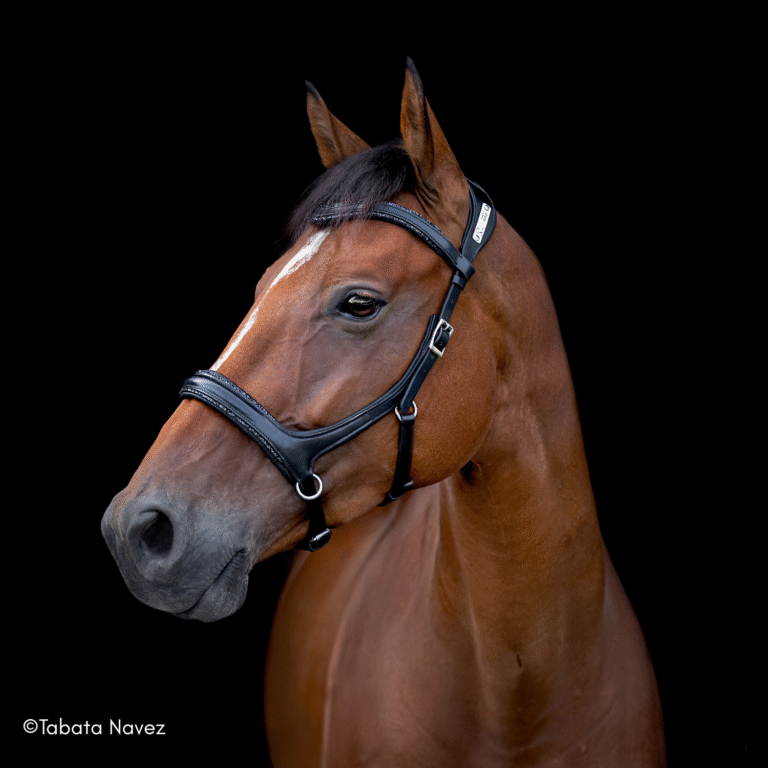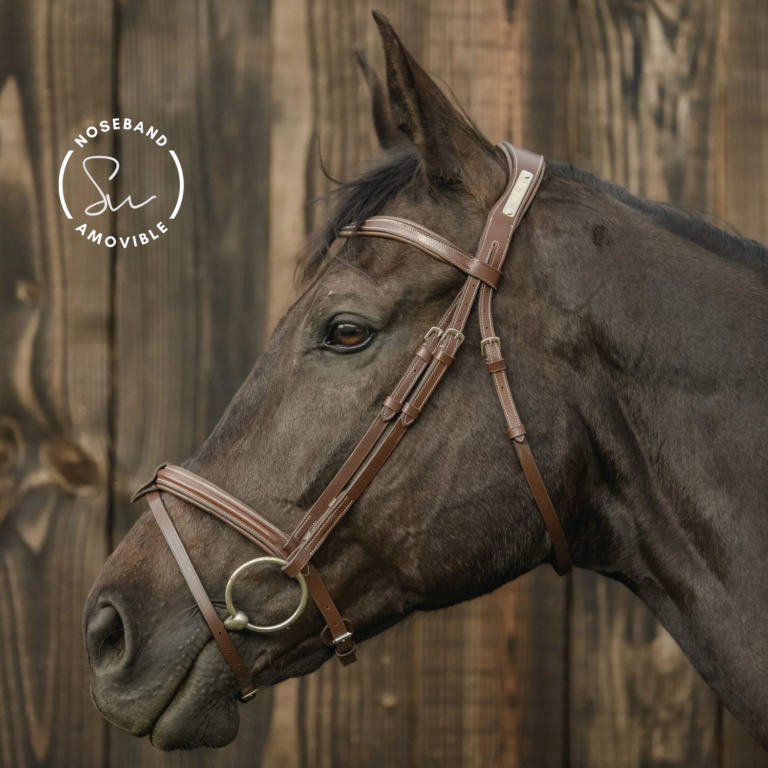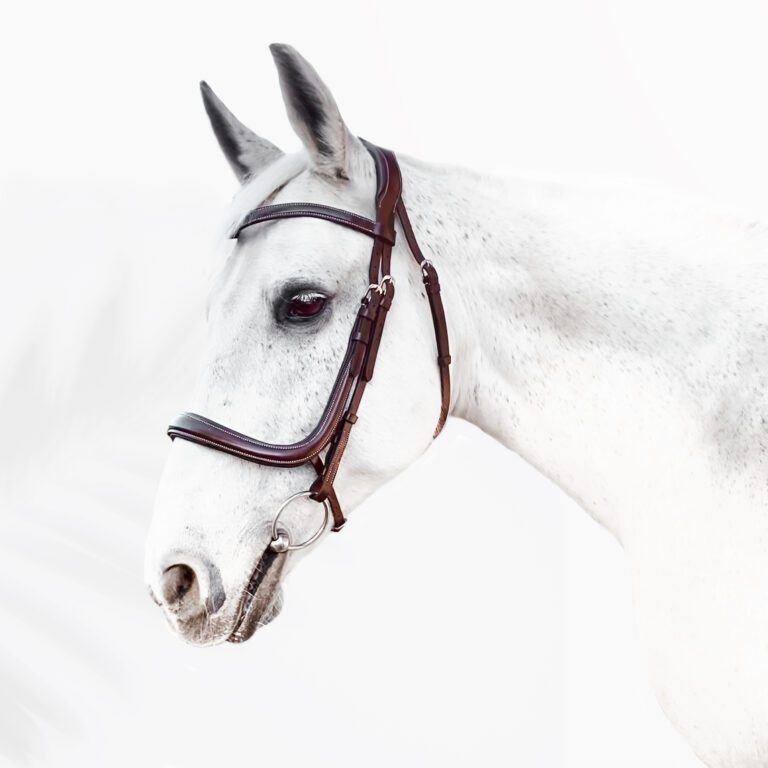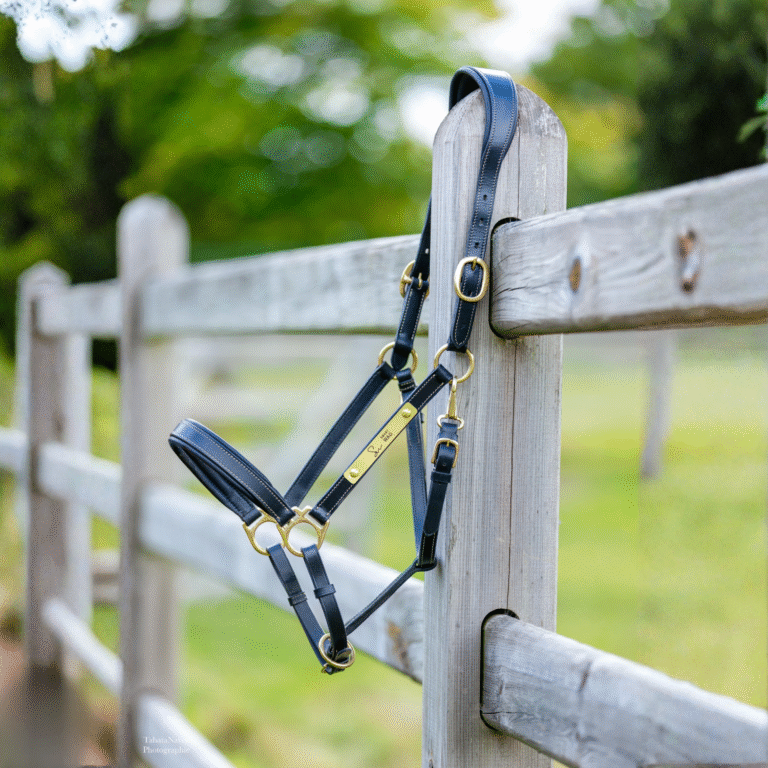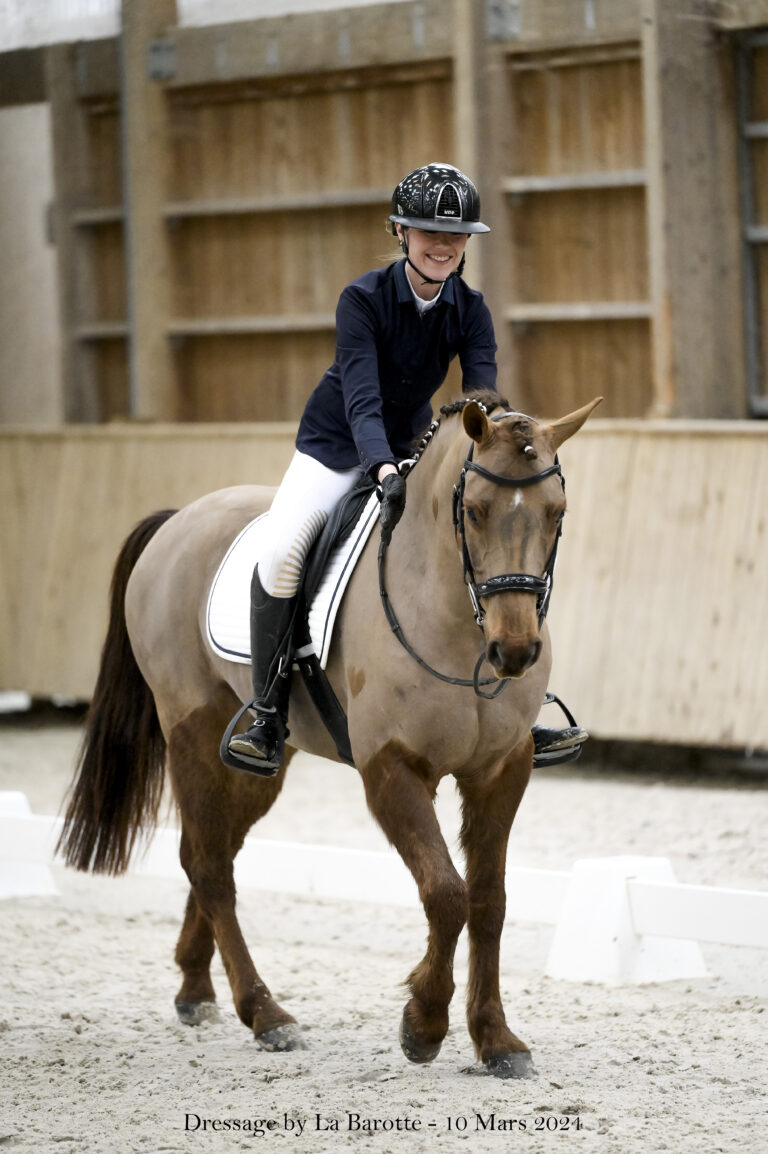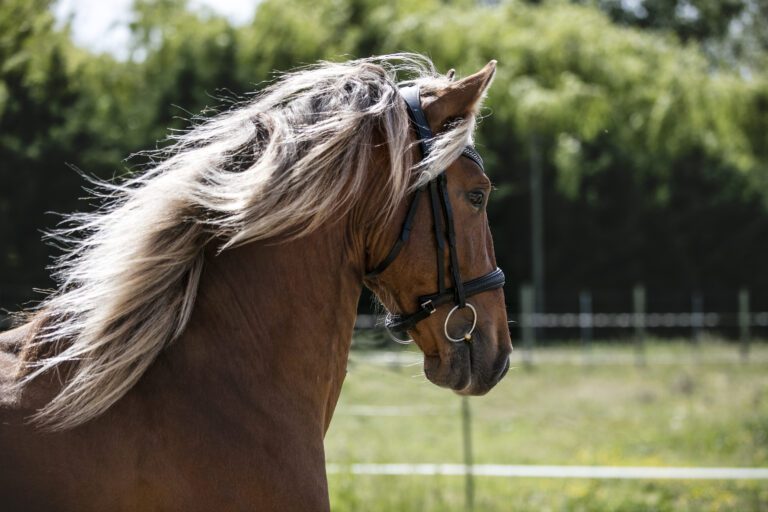
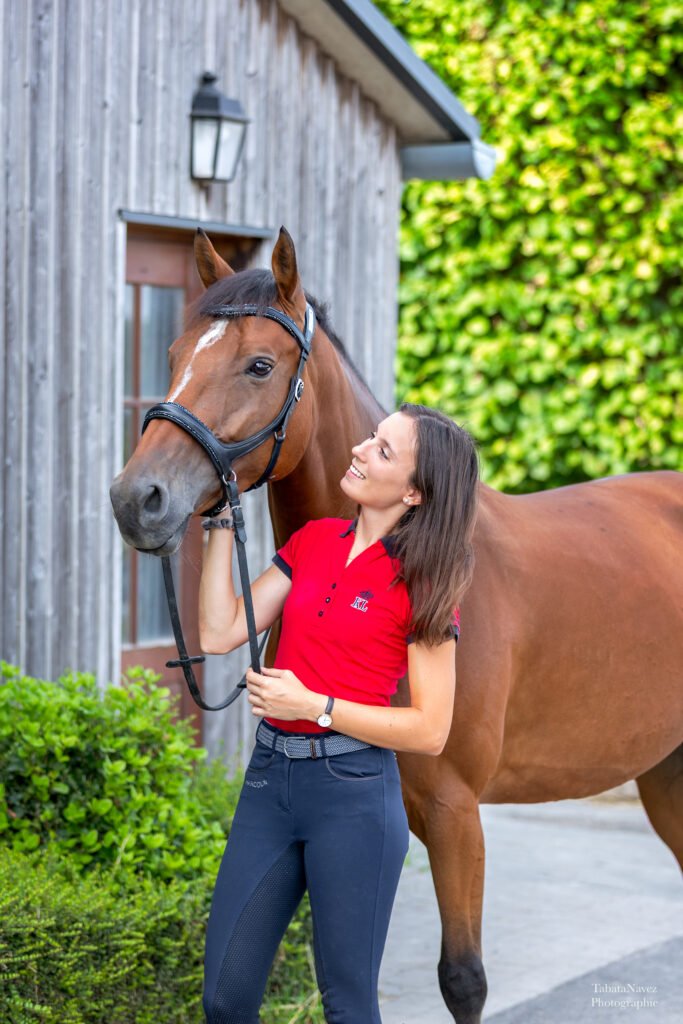
The sidepull is the simplest bitless bridle to understand: a noseband placed on the bridge of the nose, two side rings for reins, and direct action without leverage. It's often the tool used to start bitless riding because it replicates a contact logic close to that of a well-adjusted halter. This article explains how the sidepull actually acts on the horse's head, how it differs from the hackamore and other bitless systems, how to choose and adjust it, and how to conduct a gradual transition to bitless. For the strictly competition regulation part, our Guide to FFE and FEI Regulations on Bitting in Dressage Detail what is permitted, discipline by discipline.
What is a sidepull, concretely?
A sidepull is a bitless bridle composed of a headstall, a firm noseband placed across the bridge of the nose, a throatlatch (or gullet strap), and two rings attached laterally on each side of the noseband, to which the reins are attached. The English name says it all: side pull, «sideways traction». When the right rein is tensioned, the noseband exerts pressure on the right side of the horse's nose and guides the horse's head to the right; releasing the rein immediately removes the pressure.
The central point is the absence of leverage. The sidepull transmits rein aid in a ratio close to 1:1, unlike a mechanical hackamore where the shanks amplify the applied force. This is what makes it the most readable bit for the horse: the cause (rein tension) and effect (pressure on the nose) are direct, and release is immediate as soon as the hand gives. This clarity is precisely what we are looking for when teaching a horse to respond to contact on the bridge of the nose rather than in the mouth.
A sidepull is not a working halter cobbled together with reins. The noseband is designed to remain stable and distribute pressure on the nasal bone; a simple, more mobile flat halter delivers poorly located pressure and easily turns on the head. The geometry of the noseband and the quality of the fit make all the difference.
How the pressure acts: nasal bridge versus mouth
To understand the benefits and limitations of the sidepull, one needs to look at where the pressure is applied. With a bit, the action affects the mouth: bars, tongue, corners of the lips. The horse has some control: the tongue can momentarily deflect or cushion some of the forces. With a sidepull, the pressure is applied to the outside of the head, mainly the noseband. The horse cannot escape a harsh hand other than by raising or shaking its head.
In other words, whatever the tool, It is the rider's hand that determines the horse's comfort., ..., not the nature of the bit or the bitless bridle. A heavy hand on a sidepull can be more uncomfortable than a light hand on a bit, and vice versa. The sidepull is not a magic solution to discomfort: it is another tool for communication, the harmlessness of which depends entirely on the training and quality of contact.
What science really says about it
Contrary to a widespread belief, there is to date no scientific consensus establishing that riding bitless would, in itself, be more respectful or more comfortable than a bit. The literature is contradictory. Older studies (Cook and Mills, on a very small sample, described as preliminary by their authors) reported fewer conflict behaviours in bitless riding. However, more recent research published in the Journal of Veterinary Behaviour in 2021, on the contrary, they measured pressures markedly superior on the nasal bones in certain bitless models: a peak of up to approximately +147 % with a sidepull and +109 % with a cross-under, compared to a standard snaffle bit, under equivalent riding conditions.
The useful conclusion is therefore not «bitless is better» nor «bitted is better,» but that the question relates to the’individual rather than the species. A bridle fitter or bit fitter can conduct a trial session to determine which tool is best suited for a given horse. Regarding the respective regulations and comfort of the two families, our article Headcollar and bridle without a noseband: equine comfort or mere trend? Set forth the debate on facial pressure.
Sidepull, hackamore, bitless, natural horsemanship halter: the comparison
"Bitless" covers tools that are very different in their mechanics. Confusing them leads to the wrong choices and the wrong actions. Here are the four most common families and what sets them apart.
Sidepull
Direct pressure on the bit, no leverage, 1:1 action. The clearest and easiest for the horse to understand. Ideal for two-handed work, suppling, and developing straightness and engagement. This is the benchmark bitless bridle for starting bitless riding.
Mechanical hackamore
Side branches that create a Leverage effect The longer the shanks, the more the hand action is multiplied. Pressure builds up on the nose, chin (via the curb chain) and poll, on a principle similar to a bridoon bit. Rein tension should never be continuous. It's a demanding tool, to be reserved for riders with an experienced hand. Not to be confused with the Western bosal hackamore, which works without a lever.
Bitless bridle (cross-under)
Straps cross under the jaw and enclose the entire head: the system acts by «wrapping». Its known drawback is a sometimes slow or partial loosening under the jaw, therefore a less discernible action: the pressure does not always disappear instantly when the hand releases.
Natural horsemanship halter (rope)
First and foremost a ground tool. The knots deliver pressure very localised, the system is more mobile and less stable than a sidepull, and it calls for intermittent actions rather than continuous contact. Usable when ridden for familiarisation, but not precise enough for regular ridden work.
| Tool | Mechanism | Leverage | Clarity for the horse | Preferred use |
|---|---|---|---|---|
| Sidepull | Direct pressure on the nasal bridge | No (1:1) | Very high | Starting out bitless, two-handed ridden work |
| Mechanical hackamore | Leverage on nose + chin + poll | Yes, pronounced | Low if the hand is not experienced | Experienced rider, occasional action |
| Bitless cross-under | Crossed enveloping under the head | No, but pressures add up | Medium (sometimes slow release) | Leisure, horse already accustomed |
| Natural horsemanship halter | Localised pressure from knots | No | Variable, not very stable under saddle | Groundwork, familiarisation |
Choosing your sidepull well
Design and fit make for comfort and precision. Here are the points to check before purchasing, and then when adjusting.
The noseband
- It must rest on the bony part of the bridge of the nose, about two fingers (approximately 2 cm) below the zygomatic arch, the cheekbone.
- Flat and sufficiently thick to distribute pressure: avoid round leather or rope, which concentrate pressure on a narrow line.
- Too low, it encroaches on the soft cartilaginous area of the nose and can hinder the dilation of the nostrils, hence breathing; too high, it loses effectiveness and rubs the cheekbone.
- A padded cavesson (sheepskin, lined leather) improves comfort on the bearing area, provided it is not tightened to compensate for poor positioning.
The material: why leather
A quality full-grain leather sidepull offers a firm noseband that softens and gradually conforms to the horse's morphology, whereas a synthetic noseband remains stiff or, conversely, too soft. Well-maintained leather lasts for years, doesn't mark the skin like some synthetic straps, and ages while retaining its shape. For details on leather qualities and their maintenance, our Guide to Equestrian Leather Finishes Give the buying guides.
The headpiece and the sensitive areas
The headpiece must be adapted to the horse's morphology and clear sensitive areas, particularly the facial nerve pathways and the base of the ears. An anatomical cut, clear at the poll, limits pressure points. This is a criterion that is all the more important in bitless bridles as all the action is transmitted through the head, without being relayed by the mouth.
The chin strap
It should not be tight, but snug to prevent the sidepull from rotating on the head. A too-loose chin strap allows the headstall to pivot under the pull of a rein; too tight, it restricts without benefit.
Cheekpieces and rein attachments
- Avoid any hardware in direct contact with the skin of the head.
- Prioritising a rein attachment at the intersection of the noseband and the cheekpiece is the point that offers the most stability and the clearest transmission.
Two-finger rule for tightening: Once the noseband is correctly positioned, you should be able to slide two fingers flat between the noseband and the nasal bone. If it's too tight, you constantly restrict the horse and lose the benefit of a bitless bridle; if it's too loose, the noseband will move and muddle the aids given.
What the sidepull brings, and whom it suits
When used correctly, the sidepull offers concrete benefits: complete respect for the horse's mouth, a gentle transition for young or sensitive horses, clear aids for the rider (especially with two hands), and a favourable environment for working on relaxation, engagement, and straightness. However, it must be suitable for the horse and the training goals.
- Young horse being broken in: During dental renewal (around 3 to 4 years old), the mouth is particularly sensitive. The sidepull allows for training using aids without stressing a mouth that is still developing.
- Horse with an oral sensitivity or pathology lesions, dental problems, or previous pain. The sidepull relieves pressure on the mouth, but does not address the underlying cause; a horse that refuses the bit should first be examined by a vet or an equine dentist.
- Leisure and walk for relaxed riding, based on seat and bodyweight as much as on the hand.
- Endurance a discipline where bitless riding is permitted and where comfort over long distances is paramount.
Conversely, the sidepull is not suitable for a very strong or poorly trained horse that one would try to «hold» by force: without leverage, it does not compensate for a lack of responsiveness to the hand, and the solution is never to tighten the noseband more.
Successfully transitioning to bitless
Moving from a snaffle to a double bridle requires a period of adjustment for both horse and rider. The aim is to transfer the language of the aids: the horse should respond first to posture, seat, and legs, with the hands intervening only as a support. Here is a typical progression, to be undertaken step by step, with no imposed timetable.
- Ground handling: Familiarisation with the flat halter, then with the chosen tool. The horse learns to yield to pressure on the muzzle and to follow it.
- First indoor filming sessions: Arena or circuit. Transitions, circles, halts. We seek a refined response to the rider's posture, the use of the hands remaining a secondary code.
- On-the-flat consolidation: We refine the contact, we install straightness, we then begin the obstacle when the response is stable.
- Outdoor excursions only when the horse's response is light and consistent in a known environment. The outside introduces new demands that require control that has already been acquired.
The duration varies from a few weeks to several months depending on the horse and its prior education in weight and leg aids. We only move on to the next step when the previous one has been mastered, never out of impatience. Horse morphology and equipment fitting play a direct role in the quality of the contact here.
The sidepull in competition: what changes in 2026
The regulation has evolved and deserves to be cited precisely. The regulation of Dressage FFE 2026 opened the bitless riding (sidepull, rope halter, lunge line depending on the level) to certain events Club, Amateur and Pro, which represents a turning point compared to previous years. The hackamore, it, remains banned in dressage. The bitless bridle is also long-established in TREC, endurance riding, working equitation and pony competitions; in eventing, a bit remains mandatory.
At an international level, the FEI imposes a snaffle bit in dressage : the bitless is prohibited there. It is, however, permitted for FEI endurance. These rules regularly evolve and differ depending on the discipline and level, always check the current FFE regulations for the year of your commitment. The full detail is in our Guide to FFE and FEI Regulations on Bitting in Dressage.
Caring for your leather sidepull
A leather sidepull is looked after like any bridlework. The noseband, in direct contact with the sweat and dust of the nasal bridge, is the most demanded area.
- Cleaning Glycerin soap after messy sessions or in humid weather. It cleans and lightly nourishes the leather.
- Feeding: Balm or grease at regular intervals, to seal the pores, protect from friction and maintain flexibility. Spacing out treatments on protected-finish leather, bringing them closer together on unprotected full-grain leather.
- To avoid: drip dry on a radiator or in direct sunlight (cracking), over-greasing (permanent darkening, loss of breathability), using inappropriate household products.
detailed procedure by type of leather is in our Guide to the finishes and care of equestrian leather.
Three misconceptions about the sidepull
«A bitless bridle is bound to be gentler.» False, based on current knowledge: science hasn't settled it, and some bits apply greater facial pressure than a bit. It's the hand that makes it gentle.
«You can't do anything precise in sidepull.» Imprecise. A well-trained horse that responds to weight and leg aids will perform with great finesse in a sidepull. Precision comes not from the tool, but from the transfer of language between rider and horse.
«The sidepull replaces a faulty rein aid.» No: without leverage, he doesn't «hold» a horse. On a horse that is insufficiently trained, it reveals the shortcomings rather than masking them, which is precisely why it's a good tool for fundamental work.
The SmartWag choice: leather sidepulls designed for anatomy
The SmartWag sidepulls combine ergonomics, aesthetics, and comfort. Designed to respect the horse's anatomy, they offer clear and stable communication thanks to a firm, flat noseband, multiple adjustments, and full-grain leather that develops a patina with use. Three models cover all needs, from daily work to a showpiece, each customisable with a free engraving.
Frequently asked questions
Is a sidepull truly gentler than a bit?
Not necessarily. There is no scientific consensus establishing that bitless bridles are, in themselves, more respectful than bits. The research is contradictory: whilst some older studies report fewer instances of conflict behaviour, more recent research (Journal of Veterinary Behaviour, 2021) has, on the contrary, measured significantly higher pressure peaks on the nasal bones with certain bitless models, up to +147 % for a sidepull compared to a simple snaffle bit. The horse’s comfort depends far more on the rider’s control and the fit of the bit than on the mere presence or absence of a bit.
What is the difference between a sidepull, a hackamore and a bitless cross-under?
The sidepull acts with direct pressure on the noseband, without leverage: it is the simplest and clearest bitless device, akin to a well-adjusted halter. The mechanical hackamore acts via leverage through its shanks, which multiplies the effect of the hand and prevents any continuous tension. The bitless cross-under encloses the entire head with straps that cross under the jaw, and its release of pressure is sometimes less immediate, and therefore less clear to the horse.
Where should the noseband of a sidepull be placed?
On the bony part of the noseband, approximately two fingers (about 2 cm) below the zygomatic arch, the cheekbone. Never lower, where it would encroach on the soft cartilaginous area of the nose and could hinder nostril dilation and therefore breathing. The two-finger rule also applies to tightening: you should be able to slide two fingers between the noseband and the nasal bone.
Is the sidepull allowed in FFE competition?
The FFE Dressage 2026 rules have opened bitless riding (sidepull, rope halter, cord according to the level) to certain Club, Amateur and Pro classes; the hackamore, however, remains banned in dressage. Bitless is also allowed in TREC, endurance riding, working equitation and pony competitions. At international level, the FEI requires a bit in dressage. As these rules change regularly, always check the FFE regulations in force for your discipline.
How long does the transition to bitless take?
There is no fixed duration: it all depends on the horse, its training and the regularity of the work. Progression is made in stages, from groundwork to the first ridden sessions in an enclosed area, then to consolidation on the flat and finally to outdoor excursions. You only move on to the next stage when the horse's response is light and consistent, never by an imposed schedule. Allow from a few weeks to several months for a horse already well-trained to weight and leg aids.
How often should you care for a leather sidepull?
Cleaning with glycerin saddle soap after dirty sessions and regularly feeding the leather with balm or conditioner is enough to preserve suppleness and longevity. Glycerin saddle soap cleans and lightly nourishes, the balm seals the pores and protects against the rubbing of sweat. Space the care out on a protected finish, bring it closer together on lightly protected full-grain leather or in damp periods.
SmartWag sidepulls: full-grain leather, free engraving
Choosing a sidepull means choosing a refined style of riding, where control relies primarily on education and weight aids, and where the equipment is merely a support. However, quality support is essential: a firm and well-sized noseband, full-grain leather that lasts, and multiple adjustments for perfect balance. SmartWag sidepulls are made from full-grain leather, tested in real conditions, and personalised with free engraving. Discover the three models in our catalogue:
- Sidepull Verbier A versatile model in full-grain leather, for daily work.
- Sidepull Montreux — Smart bridle, firm and stable noseband.
- Sidepull Valkyrie — Characterful piece, finely crafted finishes.
Find the entire range in the Sidepulls, or explore our Customisable bridles If you're still hesitant about the bit.