Key takeaways
- The maintenance of riding leather relies on two actions: cleaning with glycerine soap (once a week) then nourishing with grease or balm (every two weeks).
- Well-maintained leather lasts 10 to 20 years – synthetic needs replacing every 3 to 5 years, often at an equivalent total cost
- The main cause of deterioration: horse sweat left on the leather — 2 minutes with a damp cloth after each use makes all the difference
To maintain your riding leathers, you'll need two products and 15 minutes per week: glycerine soap for cleaning, and a balm or grease for conditioning. Always in that order. This guide details the complete method — product by product, piece by piece — and helps you decide between leather and synthetic based on your actual usage.
Horse riding leather care products: role, frequency and dosage
Before you touch your leathers, you need to understand what each product does. Four references cover all needs – there’s no need to accumulate more.
Glycerine soap: the essential cleanser
Glycerine soap is your everyday product. It removes salty sweat, dust and ingrained residue from your horse without damaging the leather. Glycerine also leaves a fine protective layer that maintains the suppleness of the leather between conditioning sessions.
Frequency: Once a week for regular use. After each use if the horse has sweated a lot (summer, intensive work).
The nourishing balm: everyday hydration
The balm is a light product that spreads easily and penetrates without weighing down the leather. It is suitable for the regular maintenance of leather in good condition. It is the product to use as a priority for regular nourishment.
Frequency: Every 15 days. Once a week in winter or if the leather is exposed to moisture.
Leather grease: deep nourishment
Riding leather grease (based on beeswax, lanolin or tallow) penetrates deep into the collagen fibres. It is suitable for dry, stiff leather or leather regularly exposed to rain. Use sparingly: an excess will soften the leather and distort straps.
Frequency: Once a month, or as needed when the leather feels dry to the touch.
Neat's-foot oil: for specific cases only
Neat's-foot oil quickly softens new or very dry leather. However, it permanently darkens the leather and can make it excessively soft if used too often. Reserve it for softening a new bridle or for restoring leather that has been stored for a long time without care.
| Product | Role | Frequency | Precautions |
|---|---|---|---|
| Glycerine soap | Cleaning + light protection | Once a week | Damp sponge, not soaked |
| Nourishing balm | Standard hydration | Every fortnight | Thin layer, clean leather only |
| Leather grease | Deep nutrition | Once a month or as needed | Parsimony - Risk of softening |
| Neatsfoot oil | Softening new/dry leather | Occasionally | Harden the leather, excess = softening |
The Golden Rule Never feed dirty leather. Grease locks sweat and dust into the fibres. Result: the leather darkens, becomes sticky and deteriorates from the inside. Always clean with glycerine soap BEFORE feeding.
Caring for riding leather: the step-by-step method
The maintenance is broken down into three levels, depending on the frequency. Each action has a specific role – none are optional if you want your leather to last.
After each use: a quick clean (2-3 minutes)
As soon as you remove the bridle, halter or saddle, wipe all parts that have been in contact with the horse — throatlash, cheekpieces, browband, noseband, saddle flaps — with a slightly damp cloth. The aim is to remove saline sweat before it dries on the leather.
This is the most important step in the entire protocol. A horse's sweat is saline and acidic. Left on leather for 24 hours, it already damages collagen fibres, whitens surfaces and causes accelerated ageing. Two minutes with a damp cloth prevents the vast majority of common damage.
Once a week: cleaning with glycerine soap (10-15 minutes)
- Dampen a sponge slightly — it should not be dripping
- Rub the glycerine soap onto the sponge until a light lather forms
- Wipe over all leather surfaces, paying attention to contact areas: buckles, seams, folds, loops.
- Do not rinse — the glycerine needs to remain on the leather to protect it
- Air dry away from direct sunlight and heat sources
Saddler's tip: Once a month, completely dismantle your bridle before cleaning. This allows you to reach the areas hidden under the buckles and keepers – where sweat accumulates the most and where the leather deteriorates first.
Every 2 weeks: balm or grease nutrition (5-10 minutes)
- Check that the leather is clean — if necessary, wipe with soap first
- Take a small amount of balm or grease with a soft cloth
- Apply a thin layer in circular motions all over the scalp.
- Allow to soak for 15 to 30 minutes
- Wipe away any excess that hasn't been absorbed with a dry cloth.
The touch test will guide you: well-nourished leather is supple without being soft, smooth without being greasy. If it appears dry or the surface «pulls» when you bend it, it needs a feeding session.
Seasonal maintenance schedule
Leather's needs change with the seasons. Sweating is more abundant in summer, humidity more aggressive in autumn-winter. Adapt your routine accordingly.
| Season | Soap clean | Nourishing balm/grease | Specific gesture |
|---|---|---|---|
| Spring | Once a week | Every fortnight | Full inspection after winter, deep clean |
| Summer | Twice a week if intensive work | Once a week | Systematic wiping after each ride — maximum sweat |
| Autumn | Once a week | Once a week | Waterproofing grease for outdoor use in the rain |
| Winter | Once a week | Once a week | Dry storage, beware of mould in damp tack rooms |
As the season changes: Now is the perfect time for a thorough clean. Dismantle each piece, clean with glycerine soap, allow to dry, then apply a layer of nourishing grease. Check the seams, buckles and wear holes. Early repair by a saddler is inexpensive and prevents having to replace the whole thing.
Maintenance by equipment type
Each leather item undergoes different stresses. Here are the specifics to be aware of.
Bridle and halter in leather
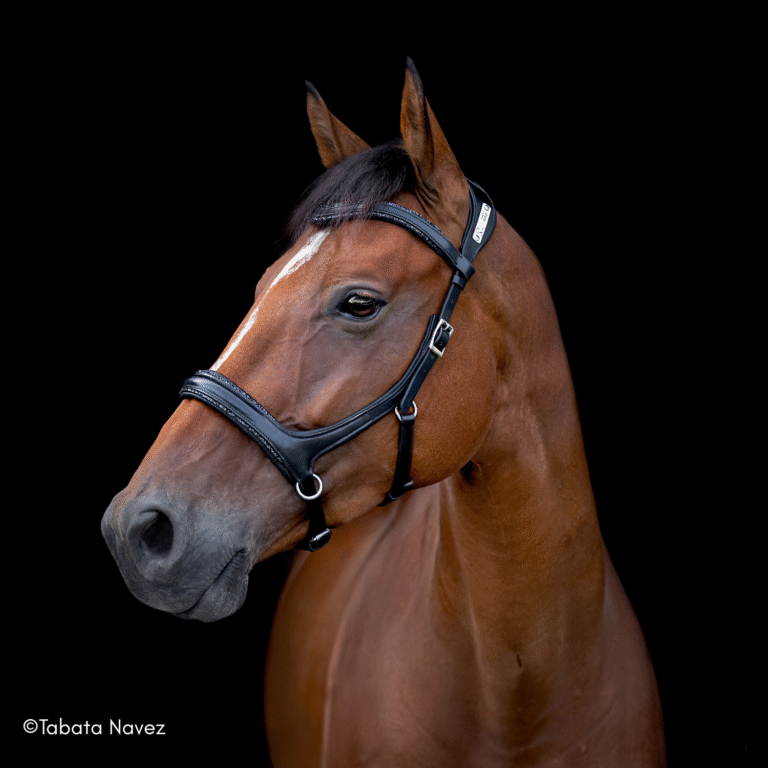
The bridle and the Leather bridle are the parts most exposed to the horse's head sweat. Critical areas: noseband, throatlatch, cheekpieces, and especially the poll behind the ears – the hottest area. Wipe these areas as a priority after each ride.
For a Quality bridle, complete monthly disassembly is recommended. Take this opportunity to check the wear on the buckles and the tension of the seams.
Leather satchel
The saddle receives sweat from the horse (via the saddle pad) AND from the rider. Clean the skirts, seat and girth straps with glycerine soap after each use in the summer. The stirrup leathers deserve particular attention: they undergo constant friction and are often forgotten.
Leather boots and half-chaps
Leather riding boots are exposed to mud, manure, leg sweat, and rubbing against the saddle's quarter. Specific protocol:
- After every outing: remove dried mud with a soft brush — never a direct jet of water
- Weekly cleaning Soaked in glycerine soap all over, including the bellows and the stem
- Nutrition Nourishing balm once a week during intensive periods, every fortnight otherwise
- Drying: outdoors only — if the boots are soaked, stuff them with newspaper
- Storage: Shoe trees or rigid rods to prevent sagging, store upright in a dry place
For half chaps: Same protocol, but add a gentle brush and a drop of silicone lubricant to the zips. These small touches considerably extend their lifespan.
The 7 mistakes that ruin your riding leathers
Most leathers that don't age well aren't due to a lack of maintenance — they're due to poor maintenance. Here are the most destructive mistakes, in order of severity.
- Grease a dirty leather. Grease traps sweat and dirt within the fibres. The leather turns black, becomes sticky, and degrades from within. Always clean with soap BEFORE conditioning – that is the fundamental rule.
- Dry near a radiator or with a hairdryer. Direct heat dries out collagen fibres and causes irreversible cracking. Always air dry at room temperature.
- Over-greasing. Too much grease softens leather, distorts straps and weakens seams. A thin absorbed layer is more effective than a thick surface layer.
- Using unsuitable products. Edible oils, shoe polish, household products: all will alter the tanning. Only use products specifically designed for saddlery leather.
- Neglecting to rinse off sweat. Horse sweat is saline and acidic. Left for 24 hours on leather, it already starts to degrade the fibres. A damp cloth after each use is sufficient to prevent this damage.
- Store in a humid environment. Stagnant moisture encourages mould, which penetrates leather deeply. Store in a dry, ventilated spot, ideally on a bridle rack or saddle rack.
- Ignore signs of wear and tear. Cracked leather, a loosening seam, a loose buckle: every sign is a warning. An early repair by a saddler costs €15-30 and avoids replacing a €200 part.
Leather vs. synthetic: the complete comparison to help you choose
The choice between leather and synthetic is not just about the purchase price. Horse comfort, lifespan, maintenance, and 10-year cost: here's a point-by-point comparison.
Full-grain leather: a living material that improves with age
Saddle leather is an organic material whose collagen fibres are stabilised by tanning. This structure gives it breathability, progressive suppleness and tensile strength that synthetic materials cannot replicate. The leather softens and moulds to the horse's head shape after a few uses, which reduces pressure points and chafing.
Synthetics: nylon, Biothane and derivatives
Nylon and Biothane (PVC or TPU coated polyester) are inert materials. They do not dry out, do not go mouldy, and are water-resistant. On the downside, they never soften and degrade under UV rays in 3 to 5 years. Once worn out, synthetic materials cannot be repaired – they must be replaced.
| Criterion | Full-grain leather | Synthetic (Biothane, nylon) |
|---|---|---|
| Horse comfort | Softens, conforms to the body shape | Stay rigid, constant form |
| Breathability | Excellent (microporous structure) | Low to medium |
| Lifespan | 10-20 years with interview | 3-5 years in daily use |
| Maintenance | 15-20 mins/week | Quick rinse with water |
| Weather resistance | Sensitive to prolonged damp | Water, mud, and UV resistant |
| Transmission of aid | Precise and progressive | More rigid, less nuanced |
| Repairability | Repairable by a saddler | Not durably repairable |
| Evolution over time | It ages and improves | Discolours and becomes brittle |
The true cost over 10 years
| 10-year scenario | Leather equipment maintained | Synthetic equipment |
|---|---|---|
| Initial purchase price | 150-250 € | 40-80 € |
| Replacements | 0 | 2 to 3 (80-240 €) |
| Cleaning products | ~€100 (soap + balm) | ~0 € |
| Estimated total cost | 250-350 € | 120-320 € |
| Status after 10 years | Slick, supple, functional | Replaced 2-3 times |
What material to choose depending on your use?
The right choice depends on your frequency of practice, your discipline, and your relationship with maintenance.
Opt for leather if...
- You ride regularly (3+ times a week)
- You compete in eventing (dressage, show jumping, eventing) – leather remains the standard in competitions.
- Are you looking for optimal comfort for your horse: the leather softens and moulds to the shape of its head.
- You want durable, repairable equipment that improves with age.
- Are you prepared to dedicate 15-20 minutes per week to maintenance
Opt for synthetic if…
- Are you looking for a turnout, travel or tying halter
- Your horse lives outdoors and the equipment is permanently exposed to the weather.
- You manage a riding centre with equipment shared between several horses.
- You occasionally ride and regular maintenance isn't a priority
The mixed approach: a pragmatic choice
The most common combination among experienced riders: a Leather bridle for daily work (comfort, accuracy of aids, aesthetics) and a synthetic halter for the paddock or transport. You invest in quality where it matters – contact with the horse's mouth and head – while keeping practical equipment for less demanding situations.
Maintaining synthetics: the bare minimum
Synthetic materials have a reputation for being «low maintenance». This is something of a simplification – they require less care than leather, but not zero care.
Nylon Rinse with clean water after each use to remove sweat. Nylon headcollars can be machine washed at 30°C in a wash bag. Air dry – tumble dryers weaken synthetic fibres.
Biothane: A damp cloth is sufficient. Biothane is not afraid of water, but it will fade in UV light after 2 to 3 years of continuous exposure. Store away from direct light.
Unlike leather, which ages and improves, synthetic materials degrade irreversibly. UV rays break down the polymer chains, causing the material to lose its colour and strength. A tear in nylon stitching is difficult to repair. On Biothane, the PVC coating can peel off. In both cases, replacement is often the only option.
Our SmartWag leather equipment: built to last
At SmartWag, we've been working with full-grain leather for over 11 years. Each piece is designed to fit your horse's body shape and age with them – provided you follow the care instructions described in this guide.
- Personalised engraving offered : your horse's name engraved directly onto the leather
- Full-grain leather natural suppleness, breathability and exceptional durability
- Delivery in 3 to 5 days Your personalised equipment delivered quickly to you
- Wide range : Custom licols, bridles, Sidepulls and accessories
High-quality leather, when well-maintained, is equipment that will accompany you for years. Whether you're looking for a Engraved halter with your horse's name Or a Handmade leather sidepull, Our range covers all the needs of the discerning rider.
Frequently asked questions
How often should riding leathers be maintained?
Wipe away sweat after each use (2 mins). Clean with glycerin soap once a week (10 mins). Condition with balm or grease every fortnight. In winter or damp weather, increase the frequency of conditioning to once a week. This 15-minute weekly ritual extends the lifespan of your leathers by 10 to 20 years.
Glycerin soap or leather grease: what's the difference and in what order?
Glycerine soap cleans: it removes sweat, dust and residues without damaging the leather. Grease or balm nourishes: it rehydrates the fibres and restores suppleness. The order is always the same: clean with soap first, then nourish with grease. Never grease dirty leather, or you risk trapping impurities in the fibres.
What product should I choose to maintain my riding leathers?
Three products are sufficient: a glycerine soap for weekly cleaning, a nourishing balm for regular moisturising every fortnight, and a balm based on beeswax or lanolin for deep monthly nourishment. Avoid food oils, shoe polish and household products that will damage the leather tanning.
Is synthetic leather more economical than real leather in the long run?
Not necessarily. A synthetic halter costs €40-€80 but lasts 3-5 years. Over 10 years, you’ll replace it 2 to 3 times (€120-€320 in total). A leather halter costs €150-€250, plus around €100 for maintenance products over 10 years, making it €250-€350 — but it will still be functional and have a patina after a decade.
How to maintain leather riding boots?
Brush off dried mud with a soft brush after each use. Clean with glycerine soap once a week. Condition with a suitable balm every 7 to 15 days depending on how often they are used. Always air dry, never near a radiator. Use shoe trees to maintain their shape and store upright in a dry, well-ventilated place.
Conclusion
Your riding leathers require three actions for maintenance: wipe down after each ride, glycerine soap once a week, and nourishing balm every 15 days. This 15-minute ritual protects an investment of several hundred euros and guarantees your horse's comfort for years to come. Well-maintained leather remains the most profitable investment – synthetic has its place in the field or during transport, but not in the hands of a discerning rider.
At SmartWag, every full-grain leather piece is designed to age with your horse, with custom engraving offered. Discover our personalised halters, bridles and Sidepulls, delivered in 3 to 5 days.