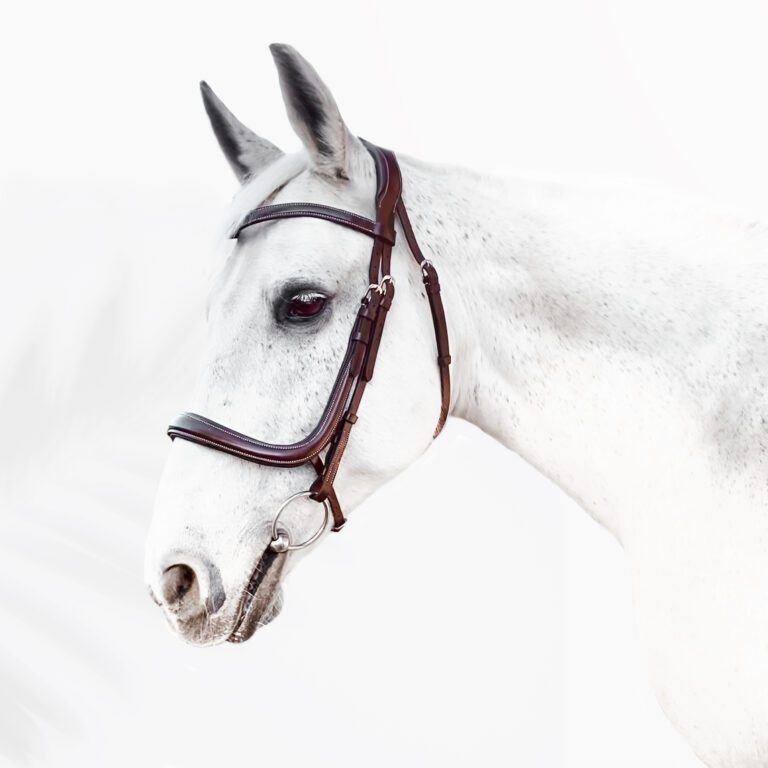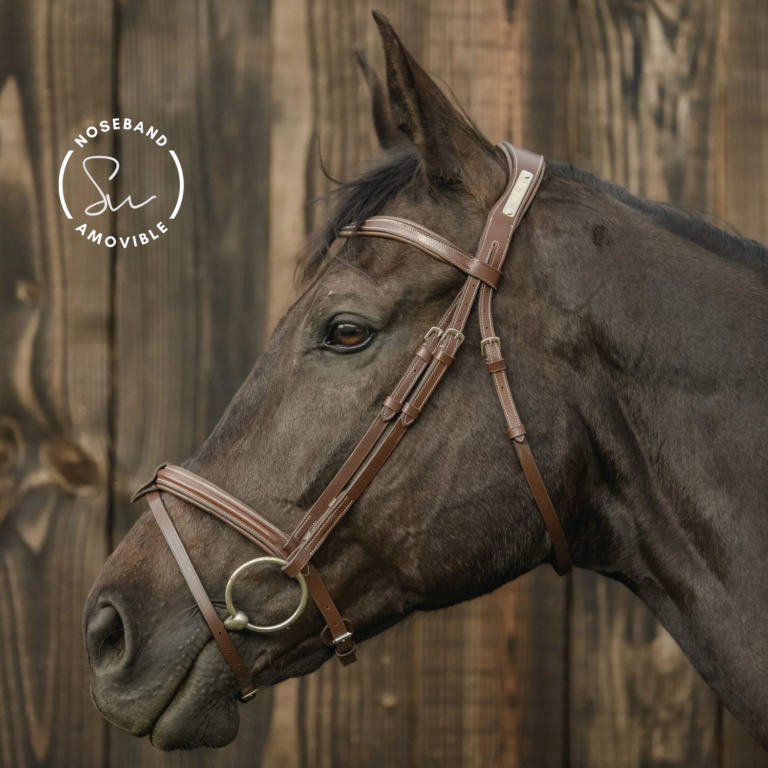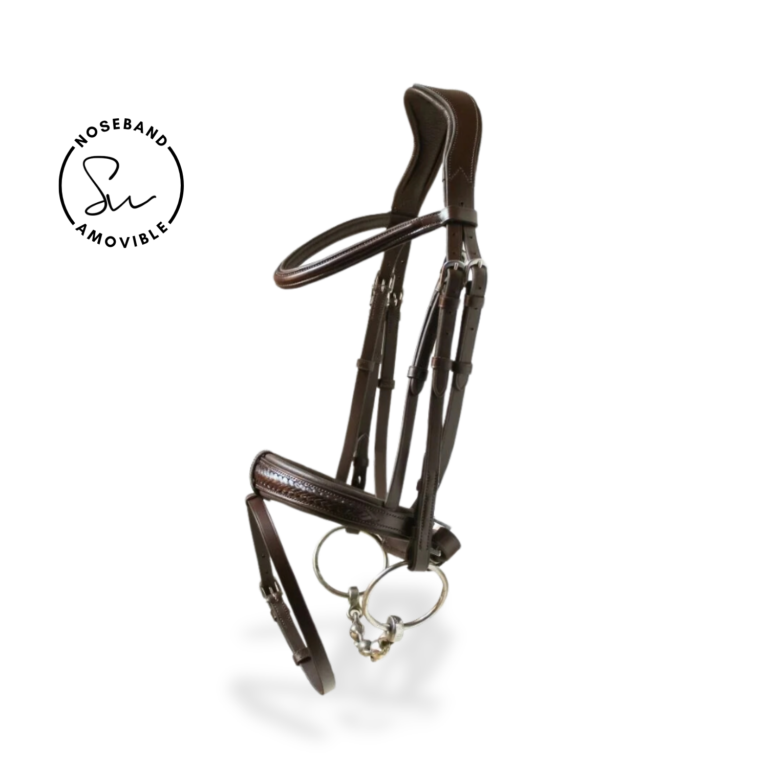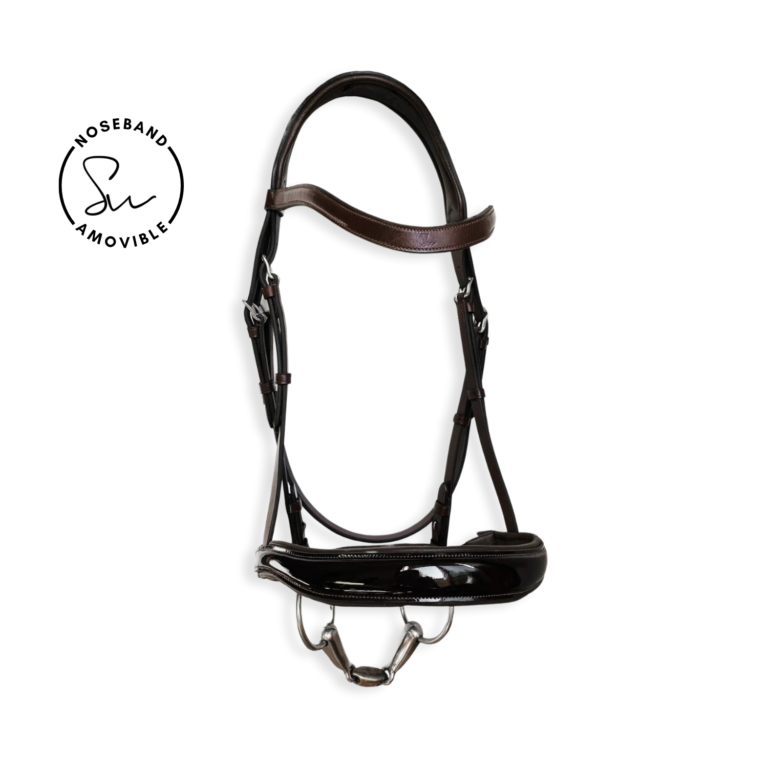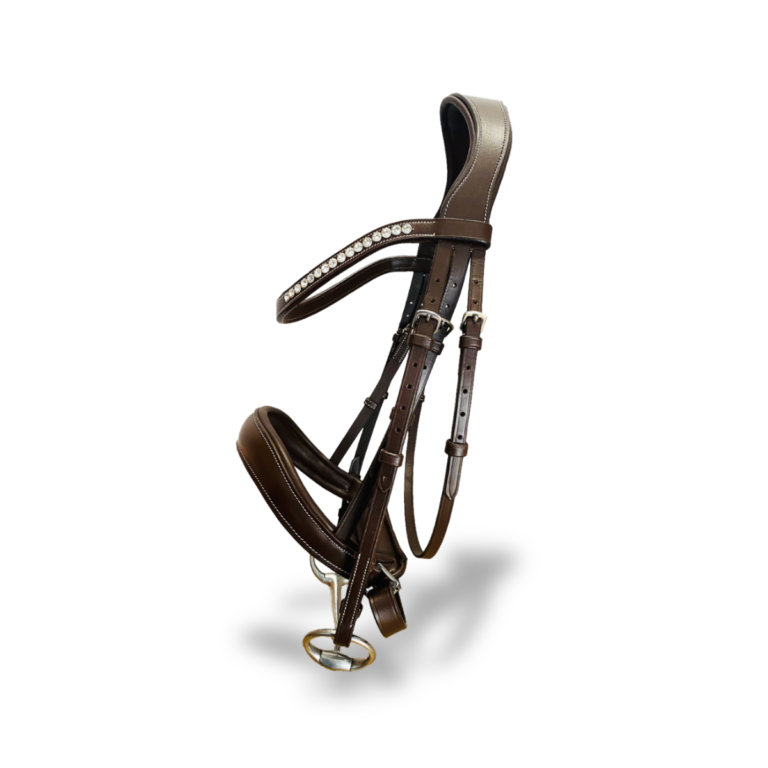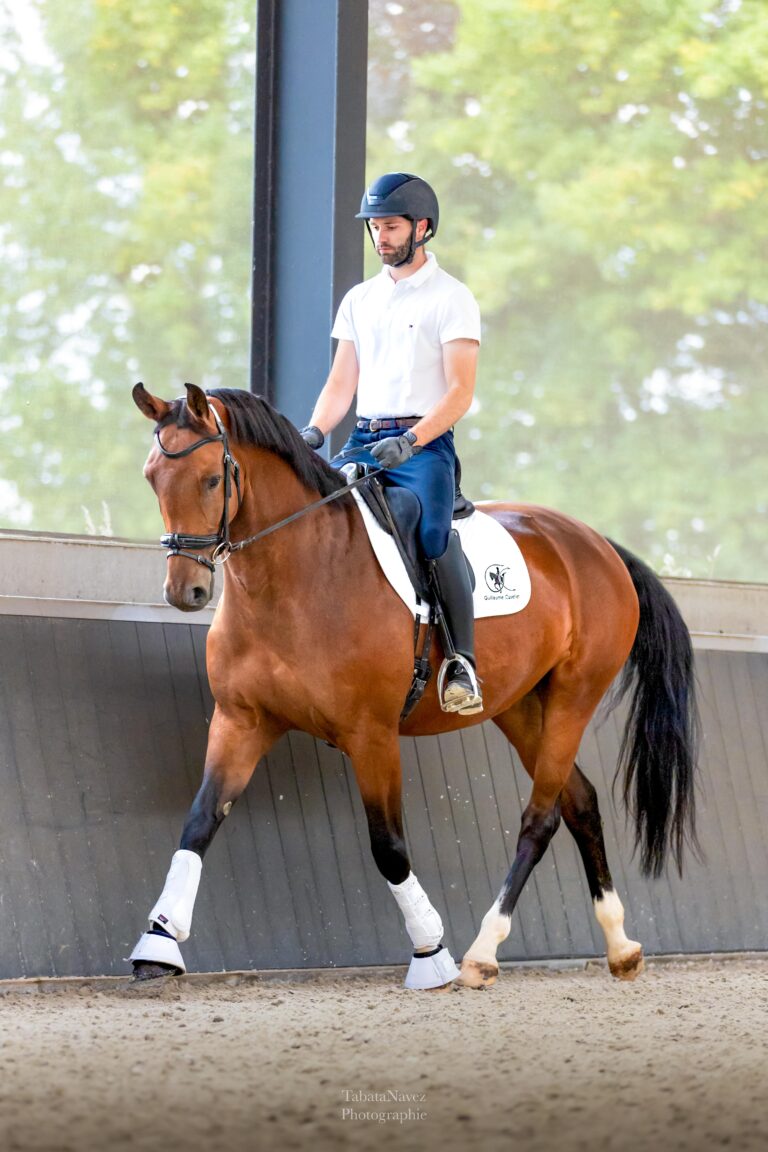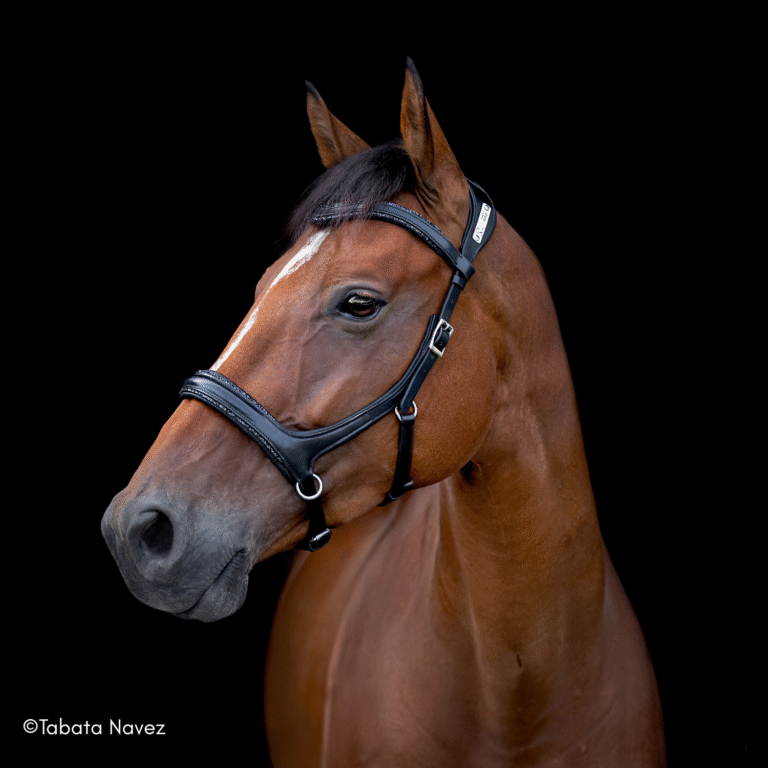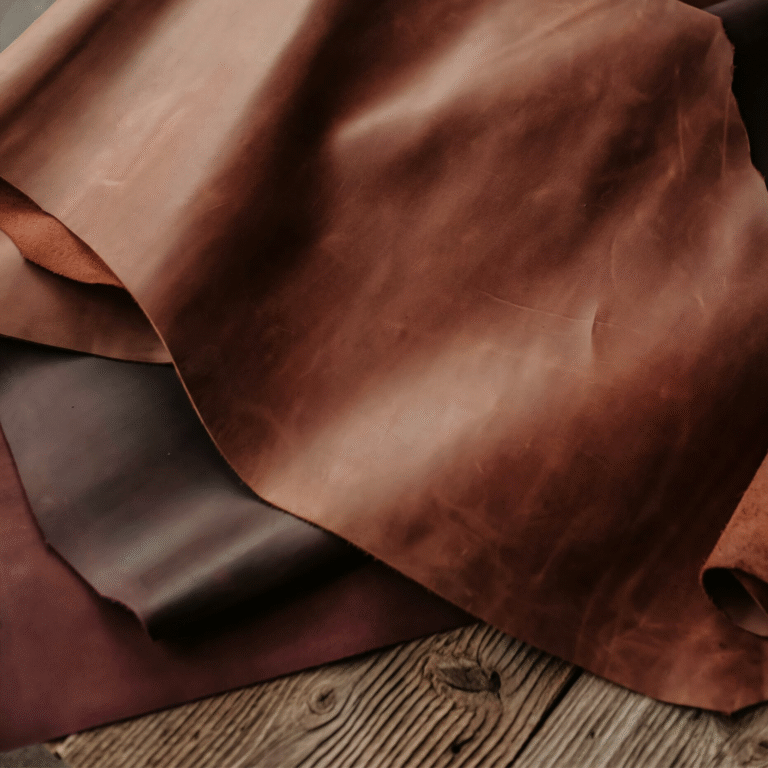
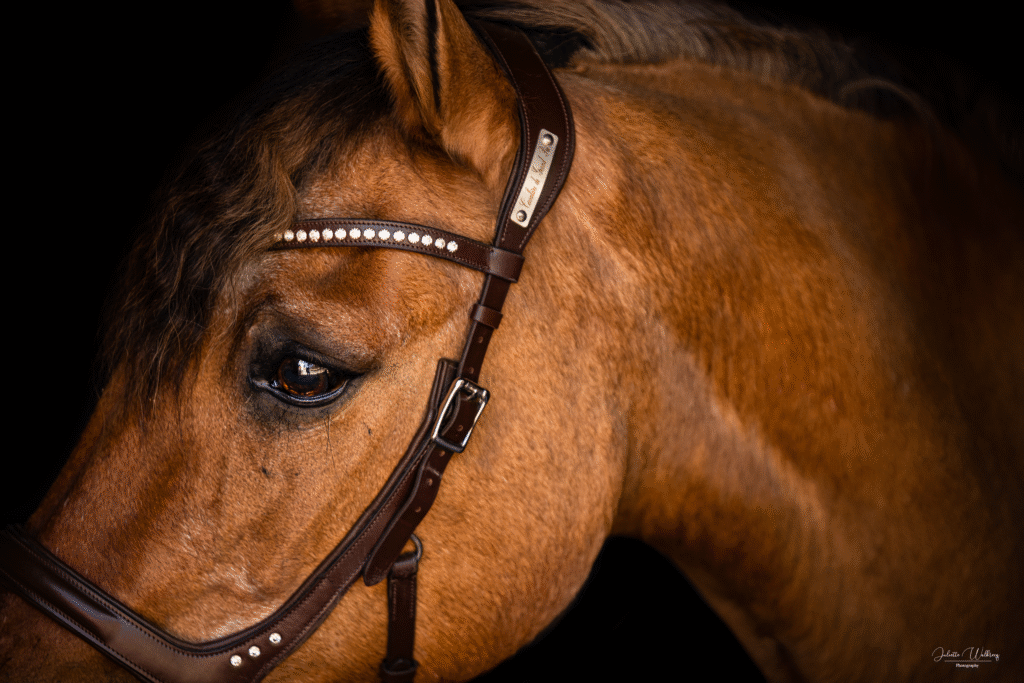
Choosing a bridle, saddle or halter made of leather is not just a matter of colour. Behind the visible aspect lies a series of technical choices (origin of the skin, type of tanning, surface treatments, stitching method) that influence the lifespan of the item, its comfort for the horse, and the maintenance it requires. This article reviews the main finishes for equestrian leather, what they concretely change in use, and how to judge them when buying. For details on products and maintenance steps to apply afterwards, our Expert guide to equestrian leather care The complete procedure is given.
The essential vocabulary: full grain, corrected grain, split
Before discussing tanning or surface finishing, a primary criterion underpins the entire quality of the leather: the layer of the dermis used. A hide, once fleshed and tanned, is generally split into several layers. The top layer (hair side) is the flower, dense et résistante. La couche inférieure (côté chair) est la crust, plus friable.
Full-grain leather
Full-grain leather retains the natural surface of the hide intact, with its irregular grain and any marks from life (scars, insect bites, growth lines). It is the highest quality because all the fibres of the grain are preserved. For traditional equestrian saddlery (bridles, stirrup leathers, leather girths, saddle seats), a thickness generally worked around 3 to 4 mm is chosen, depending on the item and the manufacturer. This thickness is not fixed by an official standard; it is a saddler's practice stemming from the mechanical constraints specific to each item.
Corrected grain
When the surface has too many defects (industrial farming, less carefully selected hides), the grain is sanded and then covered with a layer of pigment or embossed polymer to imitate a regular grain. The visual result is uniform, but the resistance and breathability decrease significantly. In high-end equestrian saddlery, this type of leather is rarely used for structural parts.
Split leather
The split is the lower layer of the dermis, more flaky, without the grain. It is sometimes coated with a polymer film to resemble grained leather (this is then called «split coated with polyurethane», often sold as "leather" in general retail). For bridlework, this material does not have the expected mechanical qualities. It quickly becomes brittle with use and when buckles are passed through it.
Quick buy test: Look at the slice of a piece of leather (the visible thickness on a cut edge). On full-grain leather, the fibres appear dense, tight, with no shiny polymer layer on the surface. On reconstituted or coated leather, you will distinguish a uniform coloured topcoat applied to a support that is often paler or more crumbly.
Vegetable tanning, chrome tanning: what really changes
Tanning transforms raw hide into stable leather, capable of lasting for decades without decomposing. Two families dominate the industry: vegetable tanning (the oldest) and chrome tanning (the most widespread today). Each produces a leather with distinct properties, and each has its place in equestrian saddlery.
Vegetable tanning
Vegetable tanning is based on tanning extracts derived from plants: oak bark, mimosa, quebracho, and chestnut. Hides are soaked in tannin baths, with the concentration progressively increasing. The duration varies from a few days for modern drum tanning methods to several months for traditional pit tanning. This process currently accounts for about 10% of global production leather.
The result: leather Firm, structured, dense, which patinates over time, taking on warm hues. It perfectly suits traditional saddle stitching, retains its shape under tension, and accepts hot or wet moulding. It is the reference leather for high-end bridles, stirrup leathers, and items that need to keep their geometry. Its initial stiffness requires softening through regular conditioning, but this density is also what gives it its exceptional longevity.
Chrome tanning
Chrome tanning uses chromium III salts (basic chromium sulfate) which bind rapidly to the collagen fibres. The modern process takes place in 24 to 48 hours in drums. It currently represents about 85% of global production leather.
The leather obtained is more flexible, more water-resistant, more economical, and accepts a very wide colour palette. This is why it equips a large proportion of modern saddles (seat, panels, girths) and soft everyday accessories. Its immediate suppleness eliminates the need for a long breaking-in period, but it takes on a patina less well and deforms more than vegetable-tanned leather under prolonged tension.
Combined tanning (mixed)
Many modern saddlery leathers are derived from Combination tanning (semi-vegetable, semi-chrome). The idea is to combine the strength and structure of vegetable tanning with the suppleness and dye-friendliness of chrome tanning. Large specialised equestrian tanneries such as Arnal Tannery (Aveyron, France, awarded the 'Entreprise du Patrimoine Vivant' label) or Radermecker (Belgium) master these three categories at the same site and adapt the tanning to the final product.
| Criterion | Vegetable tanning | Chrome tanning |
|---|---|---|
| Process duration | From several days to several months | 24 to 48 hours |
| Share of world production | ~10% | ~85% |
| Hold, structure | Firm, dense, keeps shape | Supple, fluid |
| Water resistance | Sensitive, requires protection | More resistant |
| Patina over time | Pronounced, warm tones | Limited, stable colour |
| Traditional saddle stitching | Ideal | Possible but less typical |
| Preferred equestrian use | Bridlework, stirrup leathers, tension pieces | Seat, panels, soft accessories |
Useful regulatory framework: Since the European REACH regulation (EU 301/2014, applicable since 1 May 2015), leather articles in contact with the skin cannot be placed on the European market if they contain Chrome VI at a concentration greater than or equal to 3 mg/kg of dry weight. Chromium III used in tanning is not affected but can oxidise into chromium VI under poor manufacturing or storage conditions (heat, UV, oxidising agents). This is one of the reasons why reputable European tanneries control their processes and storage conditions.
Surface finishes: aniline, semi-aniline, hot stuffed leather, patent leather
Once the leather has been tanned, dried, and curried, it comes to the surface finishing stage, which determines the final appearance and some of the wear resistance. The terms «aniline / semi-aniline / pigmented» originally come from the furniture and automotive upholstery industry, but they also apply to equestrian leather when referring to the dyeing and protection of the grain.
Aniline leather (transparent finish)
Aniline finishing involves dyeing the leather deeply with soluble dyes, without adding an opaque pigmented layer on top. Only superior quality hides are suitable, as any irregularities remain visible. The result is a leather with a Warm and alive to the touch, with maximum breathability and a patina that becomes very pronounced with use. This is the expected finish on high-end full-grain bridlework.
Direct counterpart: aniline leather is more resistant to stains and moisture. It marks easily (sweat, water, rubbing) and requires regular care. Weekly cleaning with glycerine soap followed by conditioning every two weeks (more frequently in winter and in damp weather) is the basic routine.
Semi-aniline leather
Semi-aniline leather receives the same deep aniline dye, plus a fine pigmented protective layer On the surface, much thinner than on full-pigment leather. The appearance remains natural, but resistance to stains and moisture increases. This is the most common compromise for items that need to last with regular use without requiring the almost daily maintenance of pure aniline.
Pigmented leather
Pigmented leather has an opaque layer of pigments and polymers applied to its surface, which covers the leather and masks the grain. Robust, uniform, and highly stain-resistant, it requires minimal care. Its drawback: the natural grain is no longer visible, the patina is weak, and the breathability is reduced compared to aniline or a well-nourished leather. In equestrian saddlery, it is more often found on parts where robustness takes precedence over appearance (certain protections, parts of straps, riding school accessories).
Hot stuffed leather (hot-stuffed, oiled, waxed)
Rather than applying a finishing layer on top, nourished leathers are deeply loaded with fatty substances (oils, tallow, waxes) during the currying process. This is typically the «hot stuffing» process used for traditional English leathers. The leather becomes deeply water-repellent without losing its breathability, ages with a patina, and is very resistant to the elements. It is an excellent choice for hiking, cross-country, and outdoor activities. The downside: the shade is harder to alter afterwards, and the leather can «bleed» grease in the first few weeks.
Patent leather
Leather varnish is a transparent or tinted finish layer that fixes the colour and provides strong shine. On a dressage snaffle bridle, patent leather offers impeccable presentation and protection against light rubbing. It requires specific care (soft cloth, suitable cleansing milk, never classic conditioner which dulls the shine) and tolerates marked thermal variations less well than hot stuffed leathers.
Edge work: a sign of saddler quality
The finishing of the edges (the cut edges of the leather) is a direct indicator of the care taken with the item. On low-quality leather, the edge is often simply dyed or left raw, which leaves the fibres exposed to moisture and accelerates ageing. On a quality saddlery item, the edges are worked in several stages:
- Progressive sanding to even out and seal the fibres.
- Tinting by hand, sometimes in several passes.
- Hot smoothing with a sanding iron, which seals the fibres and provides the characteristic shine of the «clean cut». This operation is repeated two to three times depending on the desired finish.
A neat, smooth, closed, and evenly toned slice is more resistant to moisture and mechanical wear as it passes through the loops. This is one of the quick inspection points to carry out when purchasing, as we detail in our Second-hand equestrian buying guide.
Stitching: machine, saddle stitch, hand-stitched
Sewing is not a surface finish in the strict sense, but it is what holds everything together over time. Three main families coexist in the equestrian market.
La industrial couture machine It is the fastest and most economical. It is solid in construction, but has a known drawback: if one stitch breaks, the seam can unravel in a chain reaction, because the top and bottom threads are independent.
The Saddle point, whether it's done by hand or using a saddler's machine, it uses two needles and a single thread that crosses through each hole. If one stitch comes loose, the neighbours hold it. On full-grain vegetable-tanned leather, it's the stitching that provides maximum longevity.
The Hand-stitched with a saddle stitch is the most accomplished form. The saddler works with waxed linen thread and two needles, passing through each hole, adjusting the tension of each stitch. It is slower, more expensive, but the piece ages much better and accepts subsequent repair. It is the standard for high-end bridles.
Choosing the finish suited to your practice
All the finishes discussed have their place, provided they are matched with consistent use. Here are the pairings that command consensus among saddlers and experienced riders.
Dressage and show competition
Leather Full grain, vegetable-tanned, aniline or semi-aniline finish, hand-stitched. The dressage tack must have impeccable presentation, a deep, stable colour, and accept regular care which will develop a patina. Patent leather is still used on certain items (nosesbands, browbands) for shine.
Show jumping and eventing
Full-grain leather, vegetable-tanned or combination-tanned, finished Semi-aniline or aniline leather. The material must withstand greater tensile and humidity stresses than in training, while maintaining a clean finish. Leather that is too fragile in contact with water quickly suffers on rainy courses.
Trail riding, outdoor, endurance
Deeply nourished leatheroiled, waxed, hot stuffedvegetable or combined tanning. The aim is resistance to weather, prolonged sweat and rubbing. The patina is pronounced, the appearance more rustic, and maintenance is less frequent.
Equestrian centre, shared use, novice
Leather finish Semi-aniline or pigmented, chrome or combined tanning. The material is used by several riders, individual maintenance is not guaranteed, and priority is given to robustness rather than maximum patina or breathability.
| Practice | Tanning | Surface finish | Stitching |
|---|---|---|---|
| Dressage / competition | Vegetable | Aniline or semi-aniline | Hand-stitched, saddle stitch |
| Show jumping / Eventing | Vegetable or combined | Semi-aniline or hot stuffed leather | Hand-stitched or machine saddle stitch |
| Trail riding / outdoor | Vegetable or combined | Oiled, waxed, conditioned | Machine saddle stitch |
| Equestrian centre / shared use | Chrome or combined | Semi-aniline or pigmented | Industrial or saddler machine |
Adjust the interview for the finish
Maintenance isn't universal: overly fatty food applied to patent leather dulls it, whereas unmaintained aniline leather will dry out in a few months. Here are some frequency guidelines shared by saddlers and confirmed by French maintenance product manufacturers.
- Full-grain aniline leather Glycerine soap cleaning every week, balm or grease food every two weeks for regular use (weekly in winter and in damp weather).
- Full-grain semi-aniline leather or treated leather Weekly cleaning, food every two to four weeks depending on usage.
- Pigmented leather Weekly cleaning is sufficient, feeding spaced further apart (every six to eight weeks) as the protective layer limits fat evaporation.
- Oiled chicken / hot stuffed Weekly cleaning with soap, deep re-oiling once or twice a year with a product suitable for the type of original oil.
- Patent leather Regular dusting with a soft cloth, specific cleaning milk, never use classic grease or balm which dull the varnish.
Four mistakes to avoid, whatever the finish: Soaking leather in hot water (fibres shrink and lose suppleness), drying on a radiator or in direct sunlight (cracking), over-oiling (permanent darkening and loss of breathability), using unsuitable household products (alcohol, industrial degreasers, bleach) which destroy the surface finish.
For details of compatible products according to the type of tanning and the step-by-step procedure, please consult our Complete guide to equestrian leather care.
Judging leather finishing by hand: inspection points
Whether you're buying new or second-hand, a few simple steps allow you to evaluate a part in a few minutes.
Look at the slice. On full-grain leather, the fibres are dense and tight. On corrected-grain or reconstituted leather, you can distinguish the uniform topcoat laid over a backing that is often paler.
Touch the surface. An aniline or full-grain leather that has been nourished has a warm feel and an irregular grain under the finger. A pigmented or coated leather has a smoother, colder, more uniform feel.
Fold the piece at 90 degrees. A living leather returns to its shape without cracking or whitening. Dry leather cracks visibly, a poor-quality patent leather cracks the varnish at the crease.
Smell the room. Genuine leather that has been cared for releases a characteristic organic smell. A strong chemical or plasticky odour signals coated leather or poorly stored leather.
Inspect the seams. A regular, tight saddle stitch, with a raised thread and well anchored in the leather, indicates careful workmanship. An aligned industrial stitch that sinks into the leather, or slack stitches, are signals to take into account. For the purchase of second-hand items in particular, these checks are detailed in our Used Equestrian Buying Guide.
The SmartWag choice: full grain, vegetable tanning, hand-stitched
At SmartWag, our bridles, sidepulls, and halters are made from vegetable-tanned full-grain leather, with a semi-aniline finish for the majority of our catalogue, and sewn using the saddle stitch method (by hand or with a cobbler's machine, depending on the item). Vegetable tanning and our careful selection of hides allow us to guarantee several years of regular use, and to offer a four-year workshop warranty in addition to the legal guarantee of conformity.
On certain display pieces, we also offer specific finishes: braided leather (exceptional artisanal work) or patent leather for training. Each serves a precise purpose, to be chosen according to your practice and the importance you place on patina, maintenance, and visual appearance.
Frequently asked questions
How do you recognise quality full-grain leather?
Three converging signs: a visible and irregular natural grain, immediate suppleness at the bend without cracking, and an organic smell linked to tanning. On the cut borders (edge), the fibres appear dense and tight. Specialised tanneries such as Arnal (Aveyron) or Radermecker (Belgium) supply a large share of high-end European saddlery and guarantee leathers with intact fibres.
What is the difference between vegetable tanning and chrome tanning for saddlery?
Vegetable tanning uses plant extracts (oak, mimosa, quebracho) and produces a firm, structured leather that develops a patina over time and is ideal for saddle stitching. It accounts for around 10% of global production and takes anywhere from a few days to several months, depending on the method. Chrome tanning uses chromium III salts and produces, within 24 to 48 hours, a leather that is more supple, more water-resistant and more economical. It accounts for around 85% of global production. For high-end bridles, vegetable tanning remains the standard; for straps, panels or flexible components, chrome or a combined tanning process is often chosen.
Which leather finish to choose according to my discipline?
For bridlework training and competition, hand-stitched vegetable-tanned full-grain leather offers the expected support and elegance. For show jumping and versatility, a supple leather (often vegetable-tanned or combi-tanned, waxed finish) offers a good balance of flexibility and support. For hacking and use in wet conditions, deeply oiled leather is more resistant to the elements. For riding school and intensive shared use, a more protected leather finish prioritises ease of care over patina.
How often should equestrian leather be conditioned?
Here's a general rule of thumb: clean with glycerine soap once a week and condition with balm or grease every two weeks with regular use (in winter and in damp weather, increase to once a week). For daily and intensive use, a deep conditioning three times a year is still sufficient if the weekly cleaning is adhered to. Unprotected aniline leathers require more frequent care than leathers with a factory-applied wax or oil finish.
Can patent leather be used for saddlery?
Yes, for show and dressage competition snaffle bridles and nosebands, where depth of black and shine are sought. Varnish is a finish layer applied over tanned leather that stiffens the backing and fixes the colour. It requires specific care (soft cloth, suitable cleansing milk, never classic leather conditioner which dulls the varnish) and tolerates marked thermal variations less well than hot stuffed leathers.
The SmartWag range: full grain, vegetable tanning, hand-stitched
A well-chosen leather finish is one that suits your practice and the maintenance you are willing to provide. At SmartWag, each bridle is made from vegetable-tanned full-grain leather, with a semi-aniline finish for the majority of models, hand-stitched saddle stitch, and personalised with a free engraving. The four-year workshop guarantee is in addition to the legal guarantee of conformity.
Discover a few examples from the catalogue, each illustrating a specific finish:
- Mont Blanc anatomical bridle Full-grain leather, semi-aniline finish, anatomical cut for horse comfort.
- Bridon New Soul — Versatile contemporary design, full-grain leather, saddle-stitched.
- Braided leather bracelet from Basel — Hand-braided, exceptional finish on full-grain leather.
- Patent leather bridle Zurich — varnished finish for training and presentation.
- Bridon Shambord — Timeless classic, hand-stitched full-grain leather.