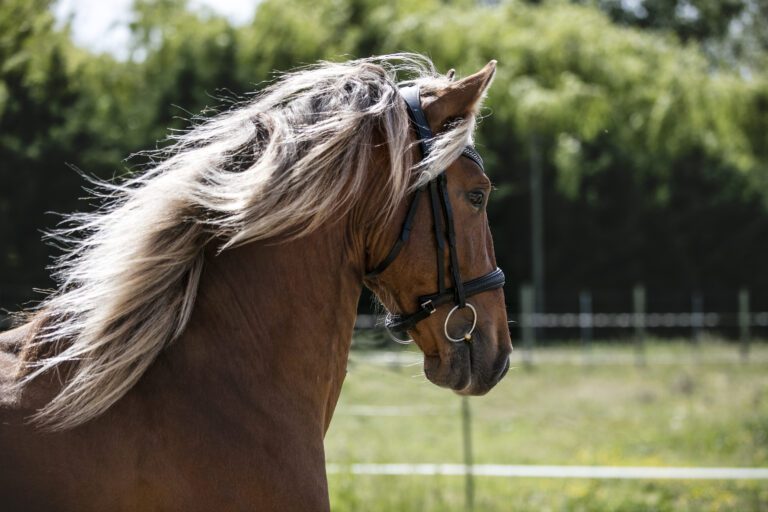
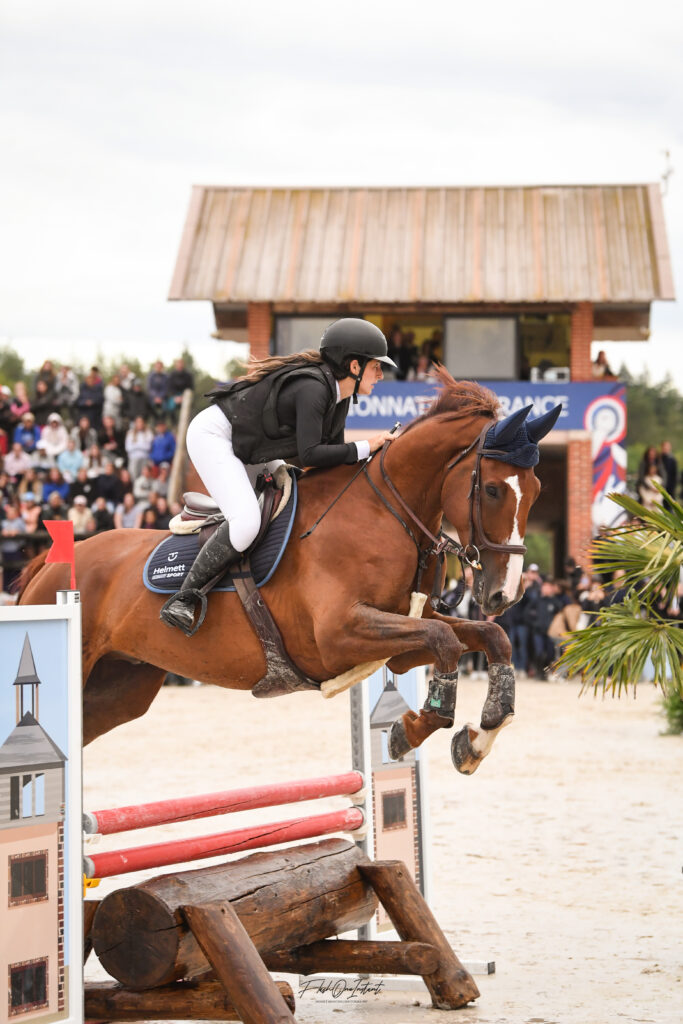
In Show Jumping, every detail counts. The quality of the locomotion, the precision of the aids, the mental availability of the horse... and at the heart of it all, an often underestimated element: the bridle.
Much more than a simple harness, the bridle is one of the main points of contact between rider and horse. Ill-chosen or ill-fitting, it can disrupt communication, generate tension and have a direct impact on performance. Properly designed, on the contrary, it becomes a real ally of the rider/horse pair, while respecting comfort and current regulations.
It's easy to get lost between the different types of noseband, notions of anatomy, preconceived ideas and FEI/FFE rules.
 We take stock.
The bridle: role and importance in show jumping
The bridle is made up of all the elements necessary for steering and communicating with the horse:
- the headrest
- the noseband
- the amounts
- the reins
It is through this system that the helping hands pass. Its role is not to coerce, but to transmit clear, detailed and coherent information, while respecting the horse's physiology.
Why is the choice of bridle strategic in show jumping?
In show jumping, the horse must be :
- available in its contact,
- free in the back of his neck,
- able to move his body with flexibility and power.
An unsuitable or overly restrictive bridle can lead to :
- tension in the jaw and neck,
- respiratory discomfort,
- impaired locomotion,
- a loss of relaxation... and therefore of performance.
A good bridle accompanies movement, not hinders it.
The main types of bridles and nosebands for show jumping
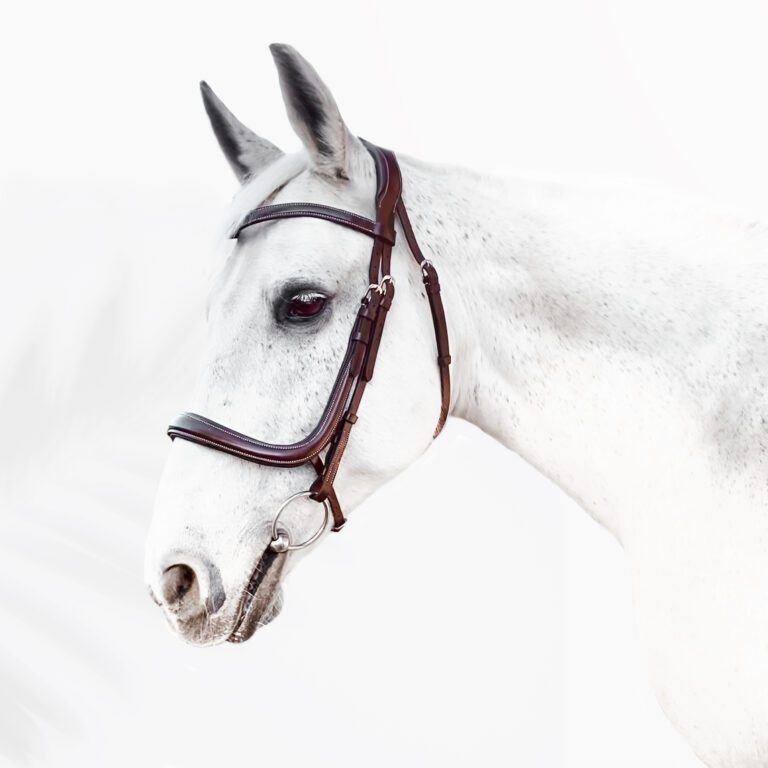
The French noseband
This is the most common type of jumping, and not by chance.
- It frames the mouth without excessively blocking the jaw.
- It allows the horse to swallow, move the jaw and relax, These are key elements in the proper functioning of the musculoskeletal system.
- Well-adjusted, it respects the anatomy and promotes stable contact.
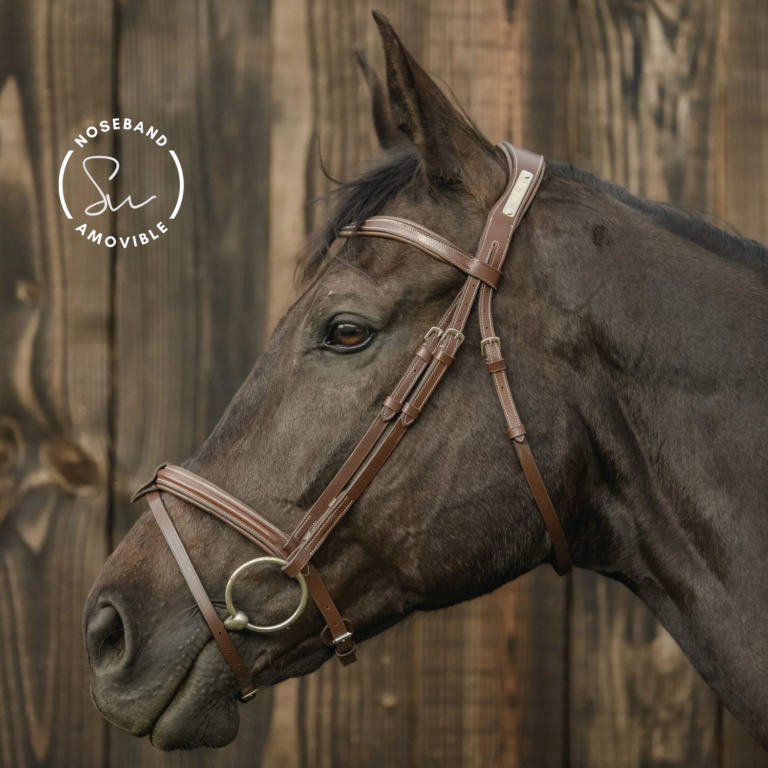
Mexican noseband (crossed)
Often associated with effort and breathing, it :
- leaves the nostrils wide open,
- but can severely restrict jaw mobility.
Combined noseband (with noseband)
She adds a noseband under the bit, with the aim of :
- stabilise the bit,
- limit mouth opening.
But be careful: Excessively reducing the mobility of the tongue and jaw can disrupt the hyoid system, This is essential for good use of the forelegs and for the horse's overall balance.
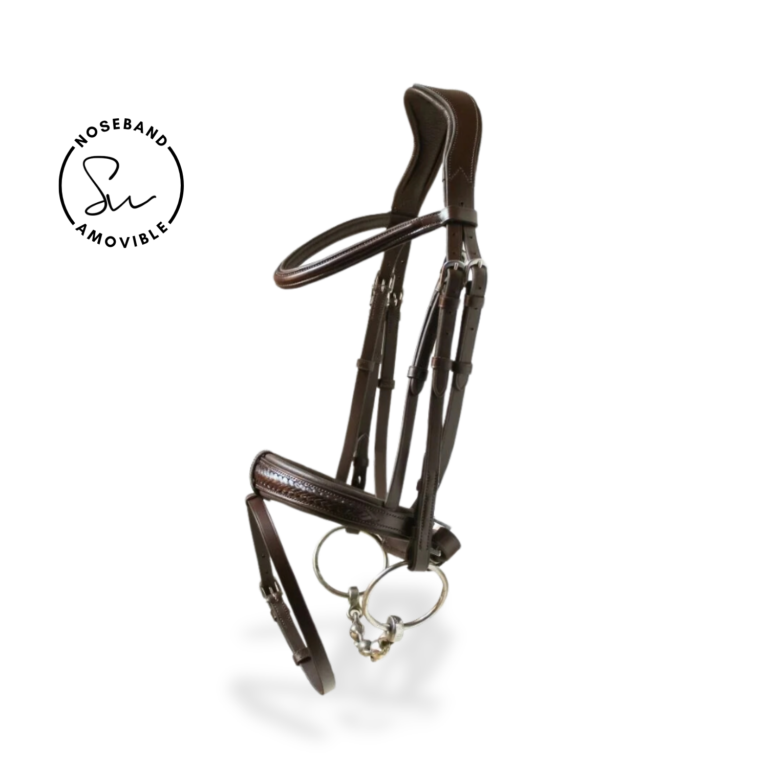
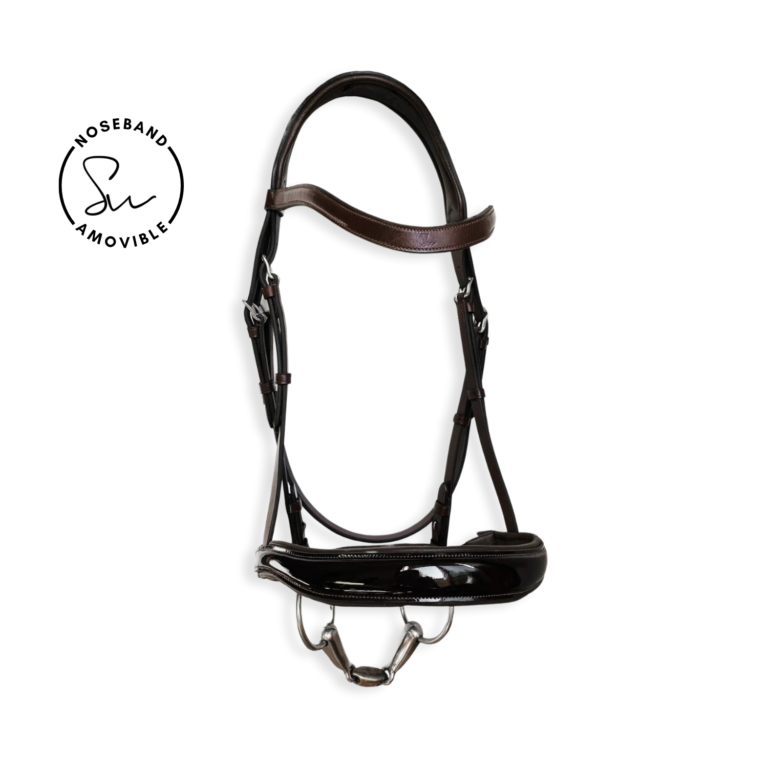
At Smart Wag, The bridles are designed with fully detachable nosebands. Their use must remain punctual and justified, ideally under the guidance of a bitfitter.
Bitless bridles (hackamore, side-pull)
Still not widely used in show jumping but authorised, they work by applying pressure to the nose and certain sensitive areas of the head.
They require :
- specific education of the horse,
- a particularly fair hand.
FEI & FFE regulations: key points to remember
FEI Rules - Show Jumping
The FEI authorises the majority of traditional bridles, provided that :
- the equipment is correctly adjusted,
- it does not compromise the horse's well-being.
 The jury always retains the right to ban a piece of equipment, even if it is authorised on paper, if it is deemed to be detrimental.
FFE Rules - National Show Jumping
In France, the national rules are largely aligned with those of the FEI:
- compliant equipment,
- in good condition,
- without dangerous or abusive elements.
In practice: what is acceptable in FEI is generally acceptable in nationals, provided that sporting ethics and common sense are respected.
How to choose the right bridle for show jumping
Always base yourself on the horse
Each horse has a unique morphology: head shape, length of nose, nervous sensitivity, tolerance to contact.
A bridle, even said « anatomical » is not really ergonomic if it corresponds to the morphology of the horse concerned. There is no universal solution.
How do I choose a noseband?
Once you have determined if your horse needs a noseband , or if you choose to use one by preference, the choice should never be made at random.
The noseband must be selected as required, but also the precise morphology of the horse's nose.
- A short nose does not lend itself well to a wide noseband.
- A nose with a high nasal cartilage also requires special attention to avoid any discomfort or unnecessary pressure.
Width and positioning
La width of noseband must be consistent:
- with the size and shape of nose,
- but also with the position of the bit rings.
Ideally, the noseband should not pass under the bit rings. When the thickness of the noseband pushes the rings outwards, this can disrupt their function ( in particular with loose rings (chantilly type)) and alter the quality of the contact.
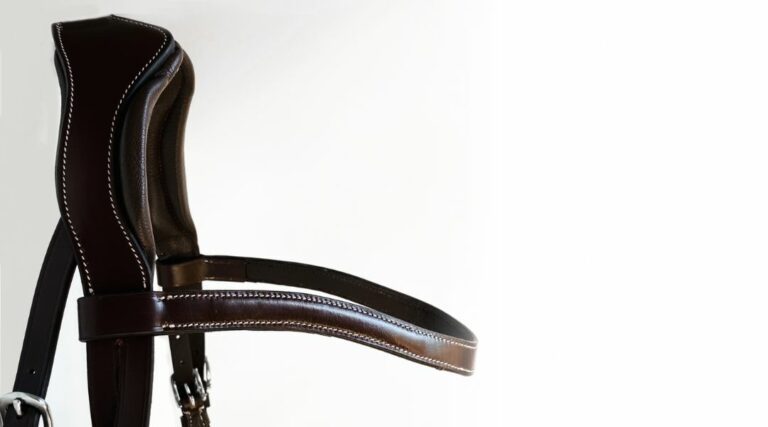
The lining: a detail that counts
If the noseband has a lining, its location is a criterion of choice in its own right.
La lining can help avoid sensitive areas, These include the dental ridges of the maxillary arches.
As a reminder:
- l’maxillary arch (upper jaw) is wider than the mandible,
- this discrepancy creates a “bone ”crest on the sides of the cheeks, often sensitive to pressure.
A lining that stops before these peaks This frees up more space above them, making the horse more comfortable, even when jumping.
Putting comfort first
A well-fitting bridle means : a noseband that leaves 1 to 2 fingers of space, no excessive pressure on the nose or facial nerves, a headrest that frees up the ears and neck.
A noseband that is too tight can cause stress, defences and tension, exactly the opposite of what we're looking for in show jumping and riding in general.
Precise adjustment
- Headrest : stable, frees the ears.
- Noseband Fitted, never tight.
Our tips for combining comfort and performance
- Test The same horse may react differently to different models.
- Surround yourself with qualified professionals bitfitter, osteopath and trainer.
- Staying informed Regulations are changing regularly, particularly with regard to animal welfare.
Conclusion
Choosing the right bridle for show jumping is not a question of fashion or regulatory constraints.
It is a strategic choice, At the crossroads of comfort, performance and respect for the horse.
A bridle adapted to your morphology Precise, well thought-out adjustment Consistent use with FEI & FFE rules
A good bridle won't do everything... But it will allow the horse and rider to express their potential. with greater precision, fluidity and harmony.