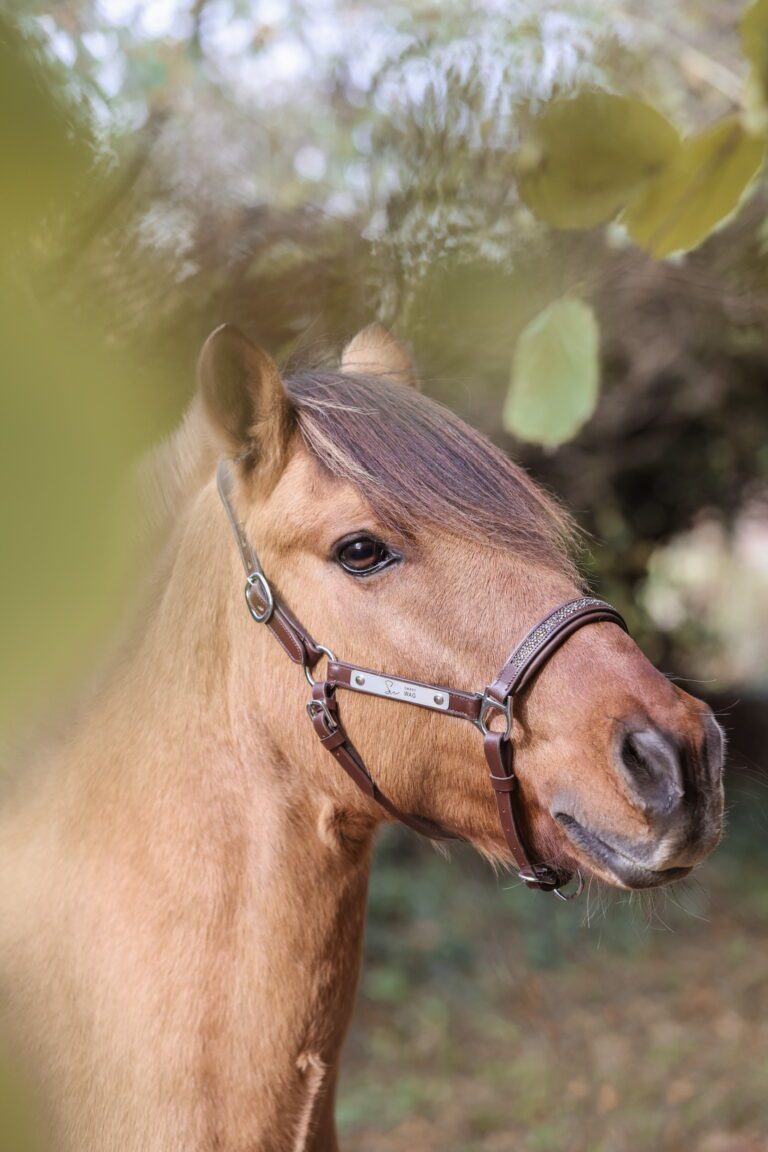
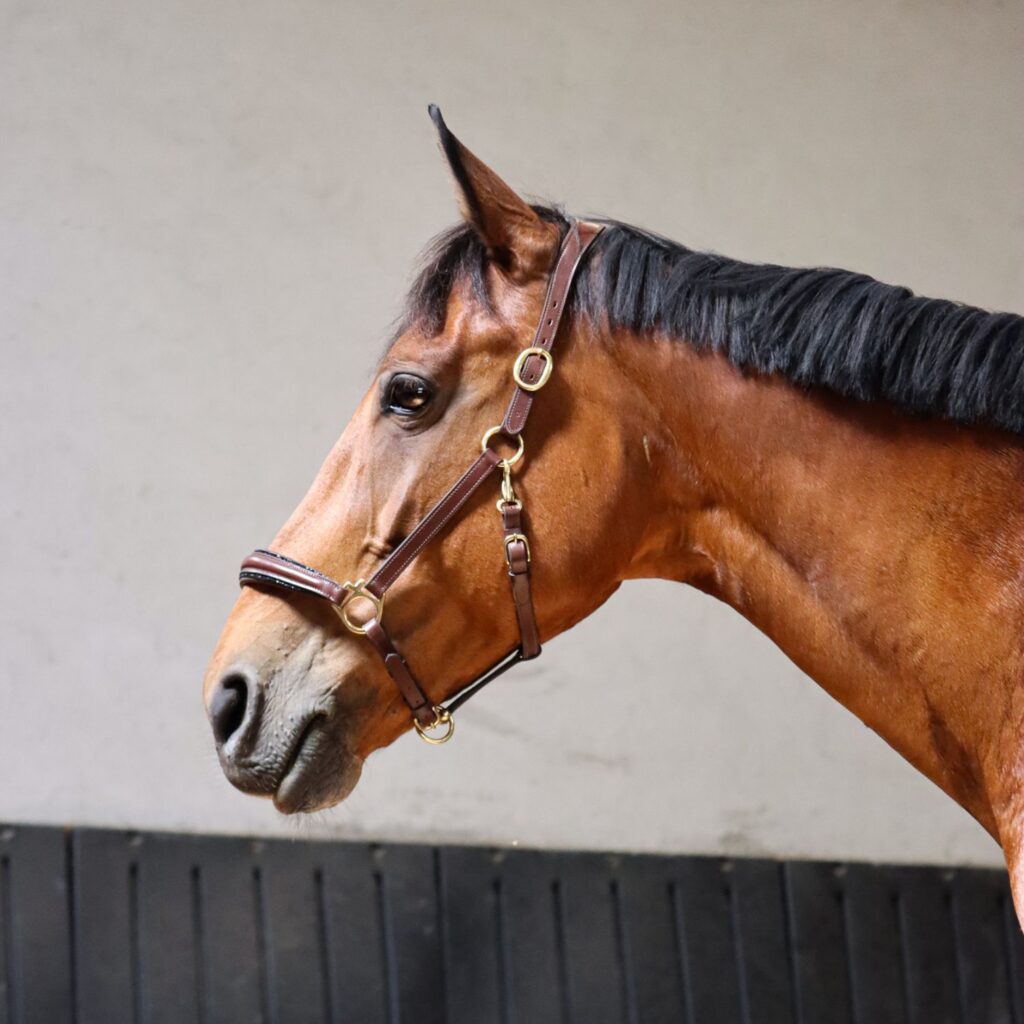

The halter: essential equipment for all riders
The halter is probably one of the first pieces of equipment you learn to use when you start riding. This accessory, which is often underestimated by beginners, is nevertheless the basic tool for any harmonious relationship between rider and horse. But do you really know what a halter is for and how to use it correctly?
Contrary to what many people think, the halter is not just used to «hold» the horse. It is a real communication tool which allows you to establish a relationship of trust and mutual respect with your mount.
The halter's main functions
Leading and securing your horse
The primary function of the halter is to enable you to lead your horse in complete safety. Whether in the meadow, the paddock or the stable, the halter allows you to bond and communicate with the horse without the risk of hurting your hands or injuring the horse.
Unlike a simple rope around the neck, the halter distributes the pressure evenly over several points on the head, which is more comfortable for the horse and safer for you.
Directing and leading
The halter is the essential tool for managing horses in hand. It allows you to :
- Getting your horse from A to B
- Controlling your movements during treatment
- Working on basic floor exercises
- Carrying out veterinary procedures
Combined with a lanyard, it becomes a veritable extending your arm which allows you to maintain a safe distance while staying in control.
Tie up safely
The halter allows you to tie your horse securely for :
- Daily grooming
- Preparation before work
- Veterinary care
- The farrier
- Transport
⚠️ Attention Not all halters are suitable for tying! Rope halters/ethical halters), for example, should never be used to tie a horse as they do not give way in the event of panic.
The different types of halter and their specific uses
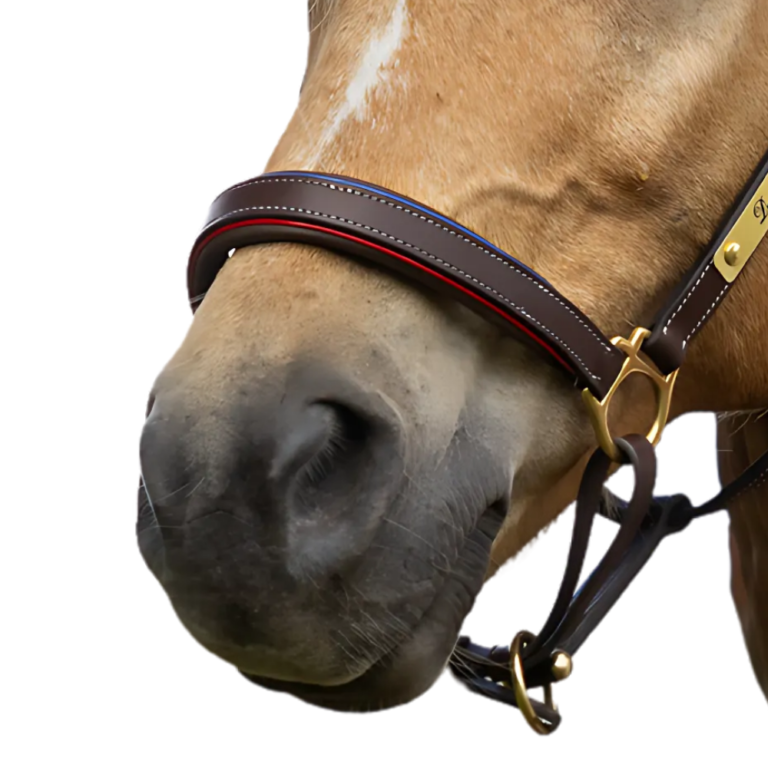
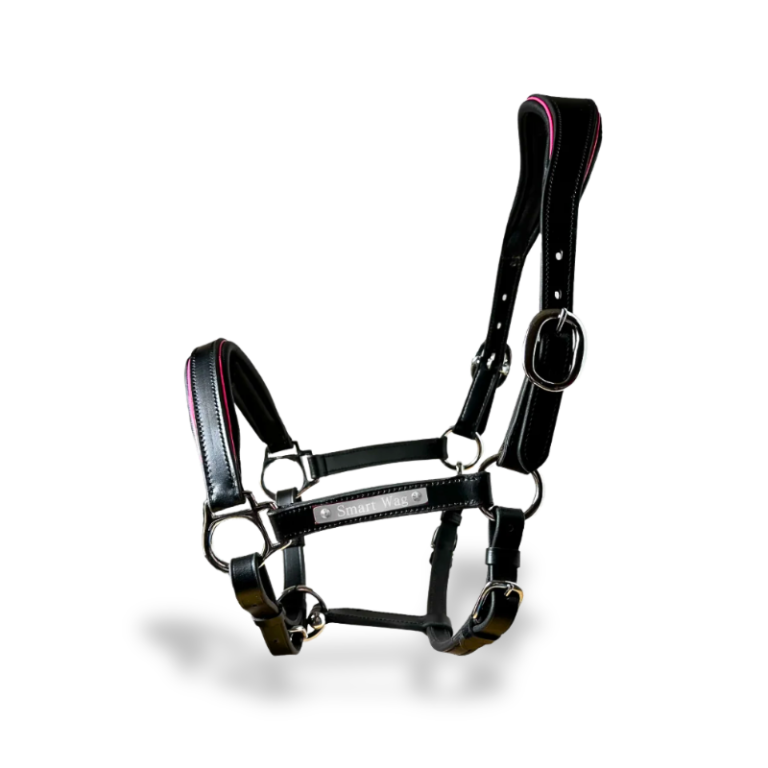
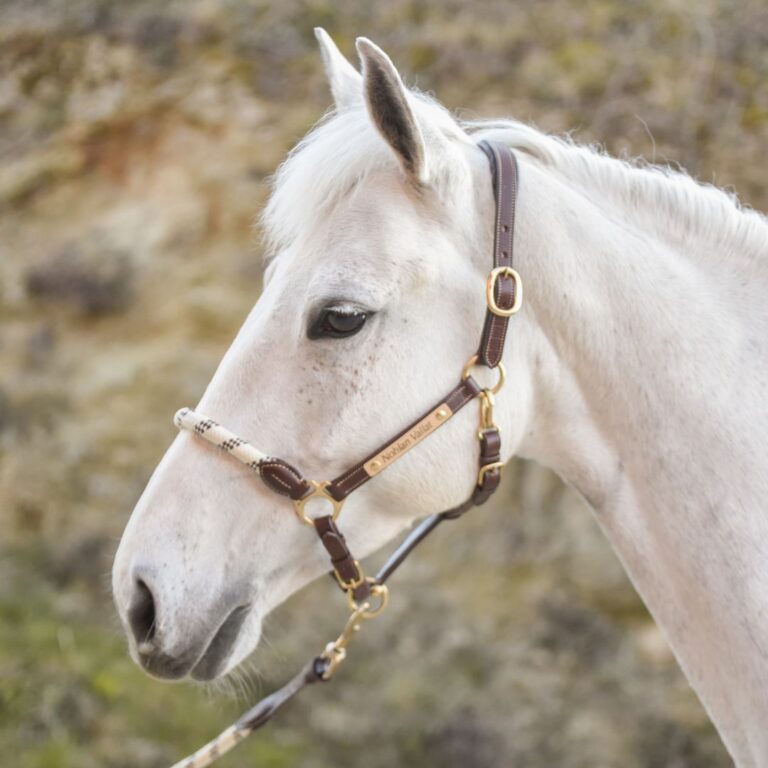
The classic halter (leather or nylon)
This is the halter most commonly used in stables. Versatile and secure, It is suitable for most situations:
- Leather halter Elegant, durable but requires regular care and maintenance
- Nylon halter practical, easy to maintain and less expensive
These halters are fitted with breaking points which give way under strong traction, preventing serious injury.
The rope halter /ethological
Designed for educational groundwork, This rope halter works by applying pressure to the horse's head. It is particularly useful for :
- Training young horses
- Behavioural re-education
- Working on foot
- Behavioural equitation is one of its key tools.
⚠️ Important This halter must NEVER be used to tie a horse as it does not break under tension. The horse could be seriously injured.
Presentation halter
Specially designed for competitions and presentations, This halter enhances the horse's head. Available in several styles:
- Show halter for Arabian thoroughbreds (very fine and discreet)
- Western halter with decorative plates
- Paces and patterns halter
How to choose and use your halter
Choosing the right size
An ill-fitting halter can injure your horse or compromise your safety. Here are the standard sizes:
- Shetland (SHET): for Shetland ponies and small ponies.
- Pony for medium-sized ponies
- Cob for small horses and large ponies
- Horse (FULL): modern saddle horses
- Extra horse ( X-FULL): for horses with large heads and draught horses
The halter must allow pass three fingers between the horse's underside and the skin, at the level of the throat. .
Techniques for safe use
Putting on the halter correctly
- Approach calmly, at an angle to give the horse a chance to see you, with a reassuring voice.
- Present your hand to the horse to let it identify you
- Present the halter to the side, let the horse slide its nose through or gently slide the noseband through, observing the horse's attitude.
- Slide the headband behind your ears.
- Check the fit.
Tie up safely
- Always use a attachment knot which is rapidly unravelling
- Tie at the height of the horse's chest
- Leave a loin length of about 50 cm
Common mistakes to avoid
Leaving the halter in the meadow
Many owners leave the halter on their horse in the pasture in order to «to be able to catch it more easily». This is a dangerous mistake which can lead to :
- Serious injury if halter snags
- A risk of strangulation
- Premature wear of leather/nylon
- Making flying easier
The solution? Teach your horse to let himself be caught with a simple rope around his neck or teach him to come towards you (so you have to learn to be interesting for him!). .
Using an unsuitable halter
Each halter has its own specific function. Never use :
- An ethological halter for tying
- A halter that's too big or too small
- A damaged or worn halter
- An unkempt leather halter
Conclusion: the halter, your daily ally
The halter is much more than a simple accessory: it is the fundamental tool of your relationship with your horse. Whether for daily care, ground work or safety, choosing the right halter and knowing how to use it correctly is essential for any amateur rider who wants to develop a harmonious relationship with their horse.
Never forget that safety comes first A properly fitted and used halter protects you and your horse, while making your daily work easier. Investing in a quality halter tailored to your needs is a wise choice that will serve you well for years to come.