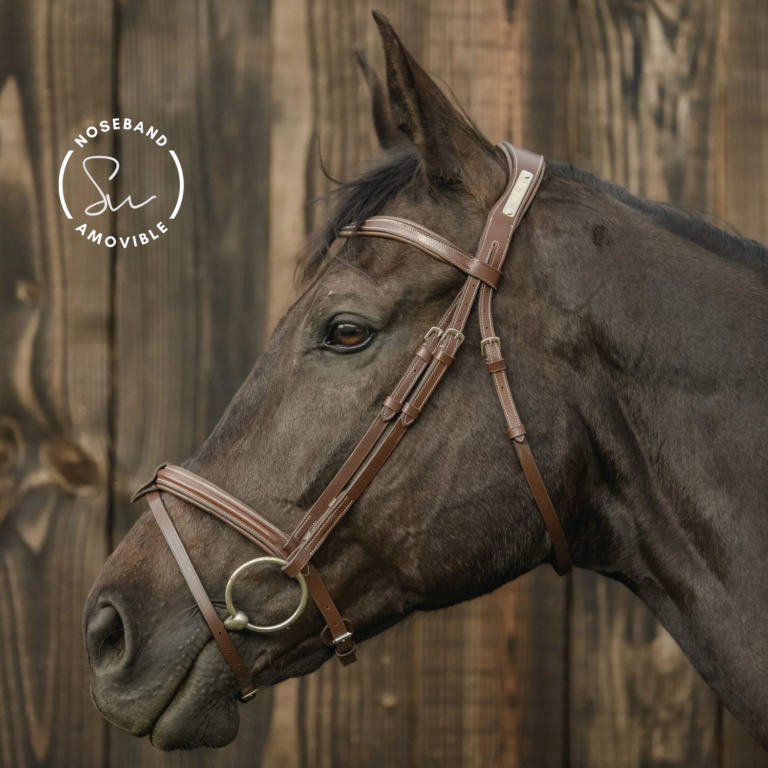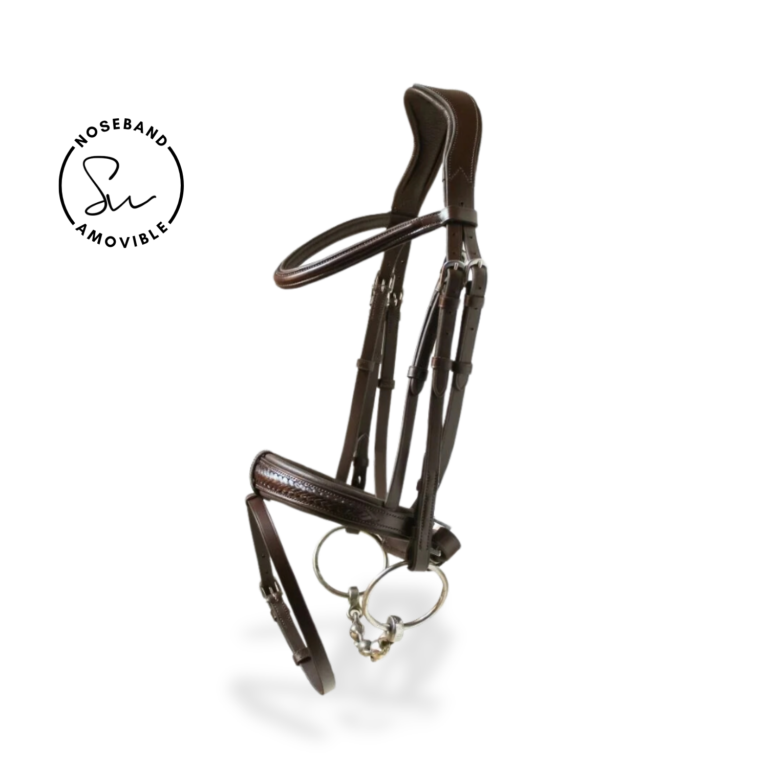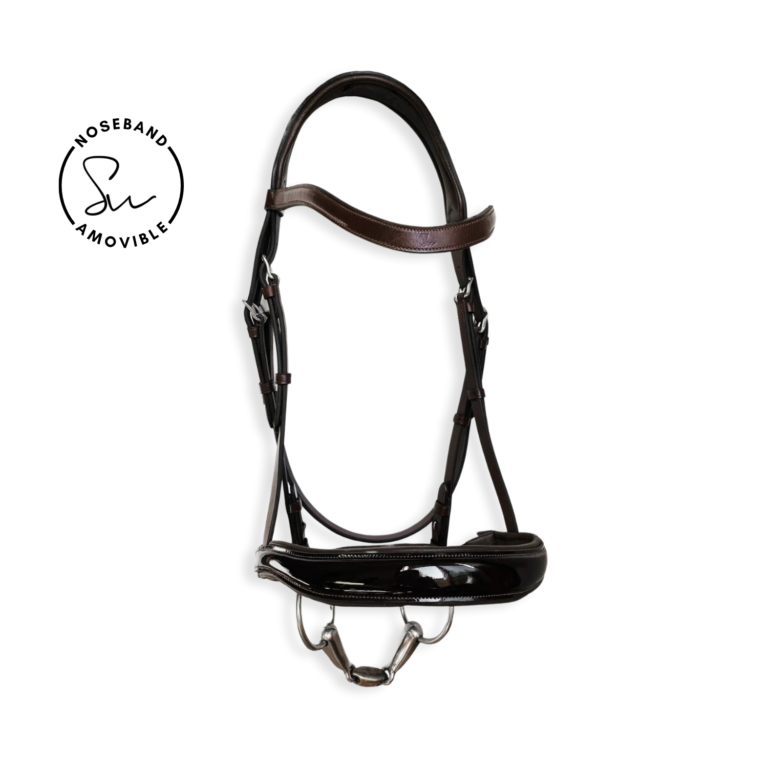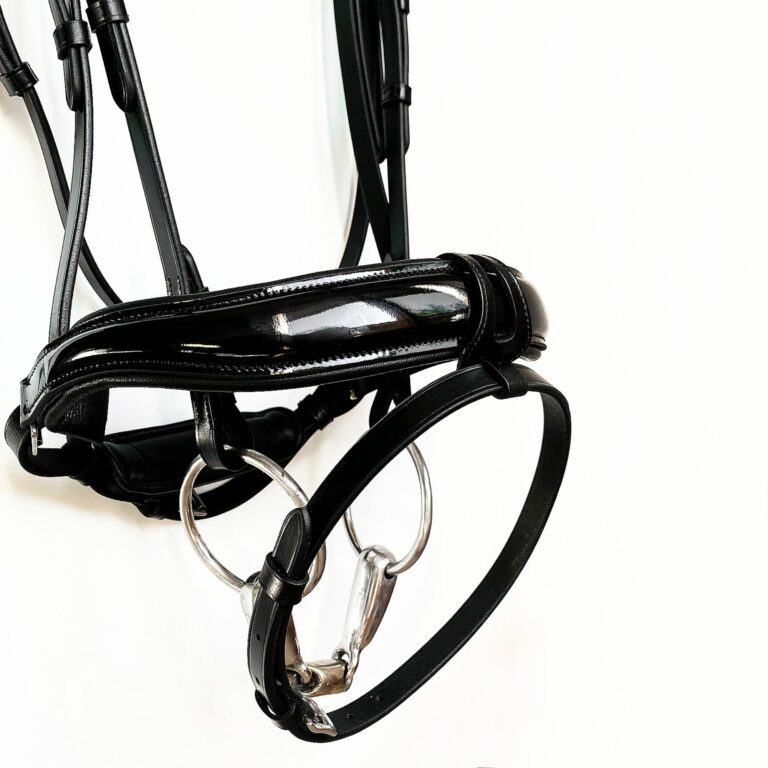

The nosebandless snaffle: fashion or ergonomic evolution?
In recent years, the growth in the use of net without noseband illustrates a wider movement towards equine comfort and well-being. This trend is appealing to many riders who are keen to limit material constraints and give the horse's mouth greater freedom of expression.
However, while the marketing rhetoric surrounding the “noseband-free” solution is gaining in visibility, scientific research remains much more cautious. The studies available focus mainly on the deleterious effects of over-tightening, but very few directly compare the advantages or disadvantages of the noseband-free solution with traditional bridles. In this context, it is essential to distinguish between what has been demonstrated from which is an unverified assertion.
This article therefore offers a clear and well-argued assessment of the current situation, divided into three sections:
- The scientific and practical data on the pressures exerted by the noseband and their effects on the horse.
- The limits certain unsubstantiated assertions circulating in the equestrian and marketing world.
- From pragmatic recommendations, These are based on science and experience in the field, to guide the choice between a noseband or nosebandless net.
The aim is not to make dogmatic decisions, The aim is to open up a debate that is reasoned, respectful of the horse and informed by the facts.
Scientific background
The noseband, an element of harnessing often perceived as secondary, is in fact at the heart of a scientific and ethical issue.
Although its use has been standardised for centuries, few studies have really looked into its physiological and behavioural impact.
- Physiological effects of overtightening
Research by Fenner & McGreevy (2016) are a benchmark. By testing different levels of tightening, they observed that :
- La heart rate increases significantly in horses constrained by a too-tight noseband.
- La heart rate variability (HRV) - often considered to be a fine indicator of well-being - decreases, reflecting a decline in resilience to stress.
- La eye temperature, measured by thermal camera, rises, a sign of negative emotional activation.
In other words, a simple adjustment of a few centimetres can tip the horse from a neutral situation to a situation of measurable stress.
Bridle without noseband to relieve local pressure under the noseband
Recent work by Robinson & Bye (2024) add a mechanical dimension: the noseband exerts variable pressures depending on the type, setting and hand action. They measured peaks of up to 8.06 N/cm² of water, These are levels comparable to those causing discomfort in other animal species. These pressures, even punctual, can contribute to local sensitisation and alter the jaw's freedom of movement.
It is on the basis of these data that the use of the noseband is sometimes totally disregarded, without any nuances considering proper use and adjustment as important variables in these results.
Official recommendations for the use of the noseband: the two-finger rule
Faced with these facts, organisations such as the FEI or the’International Society for Equitation Science (ISES) insist on a simple, universal rule: let the world go by. two fingers between the nasal bone and the noseband.This rule aims to strike a balance between :
- Functional efficiency The noseband helps to stabilise the bit and channel certain resistances.
- Respect for comfort It should not completely block the mouth or prevent physiological movements (chewing, swallowing).
The bit-fitters' opinion: nosebandless snaffle or not?
The use of a noseband is generally accepted by bitfitting specialists.
- The noseband must not be used to mask the horse's resistance. (e.g. mouth opening), but it must be understood in terms of communication and comfort.
- The setting must take account of the the unique morphology of each horse : width of the nasal bone, shape of the head, location of the apophyses. A noseband that is too low or badly adapted can generate direct pressure on sensitive areas, increasing the risk of injury or discomfort.
- The snaffle without noseband is an option which is always tailored to the unique needs of each horse.
In this way, science and practice converge towards the same conclusion: the problem is not the noseband itself, but its inappropriate or excessive use.
Practical recommendations
Scientific and empirical data are used to draw up clear recommendations that can be applied in the field:
✅ Respect the two-finger rule This principle, although sometimes seen as “symbolic”, is actually based on sound physiological considerations. It allows sufficient space for breathing and chewing.
✅ Avoid «cosmetic» tightening» Many riders tighten the noseband for aesthetic reasons or because they associate a closed mouth with a better “grip”. In reality, this choice can preventing the horse from expressing its discomfort and mask underlying problems (hands too hard, unsuitable bit, dental pain).
✅ Observing the horse's signals A horse that tries to stick its tongue out, contracts its neck or foams continuously may be showing discomfort linked to the bridle. These signals must be taken into account as inappropriate setting indicators.
✅ Don't demonise the noseband, but remain critical Some people advocate the systematic removal of the noseband. However, in some cases, a correctly adjusted noseband can stabilising the bit and communication.
✅ Encouraging scientific research Nets without nosebands currently lack robust comparative data. It would be useful to carry out large-scale trials, objectively comparing heart rate, facial movements, contact quality and behavioural feedback.
Nosebandless net: the conclusion
At the end of this analysis, one thing is clear: the problem of the noseband cannot be reduced to a binary choice between “with” and “without”. Scientific data show that tightening the noseband is harmful, This leads to stress, discomfort and a loss of well-being. They also remind us that the two fingers remains the benchmark for adjusting to reconcile efficiency and respect for the horse's physiology.
However, the benefits of without noseband are not currently supported by robust evidence.
The most reasonable approach is to :
- Assessing each horse and rider pairing individually,
- Testing different configurations, With or without noseband,
- Draw on the expertise of professionals (bitfitters, bridle-fitters) to guide this choice,
And above all, observe the horse carefully, because that's the only way to get the most reliable answers.