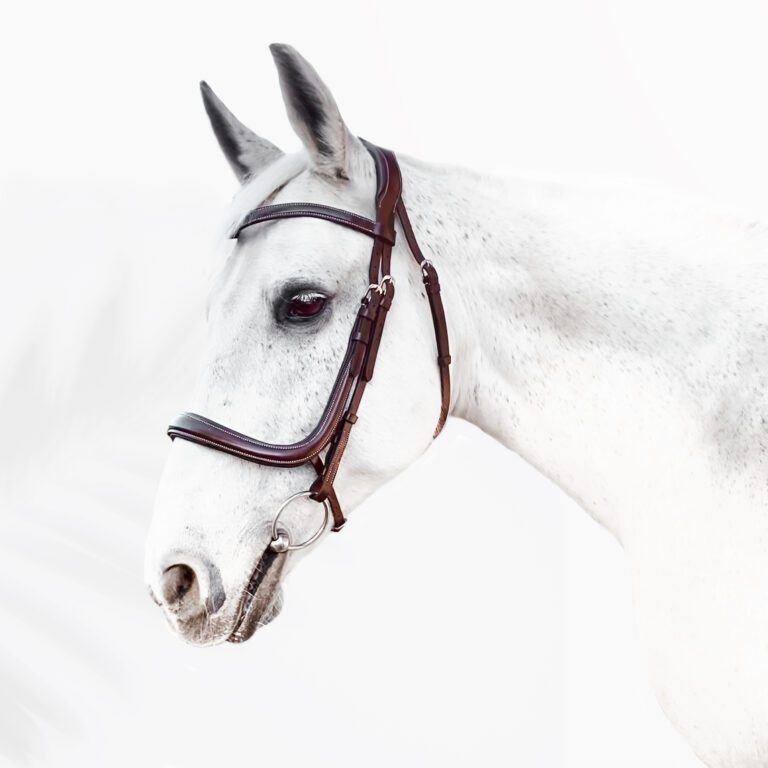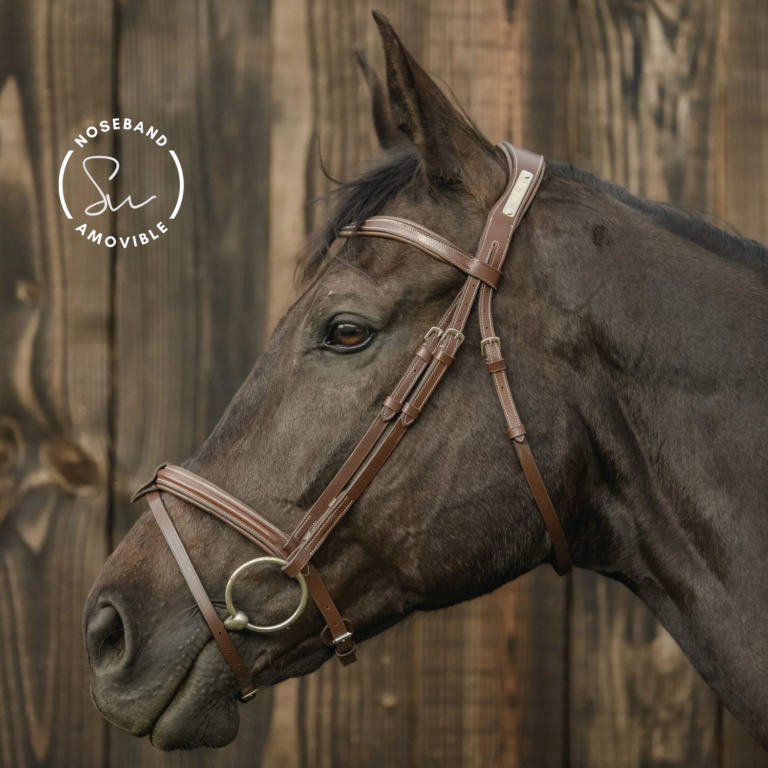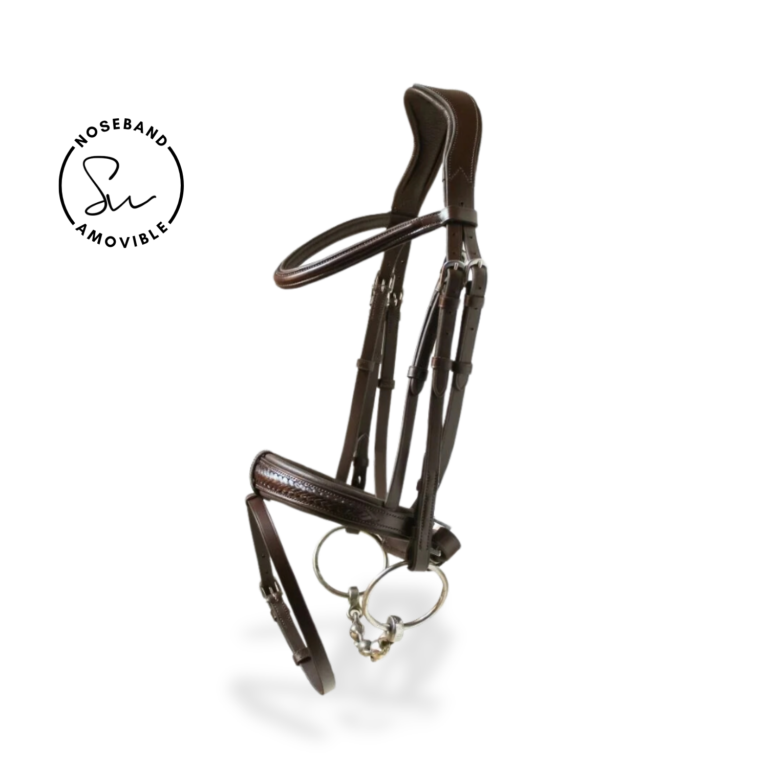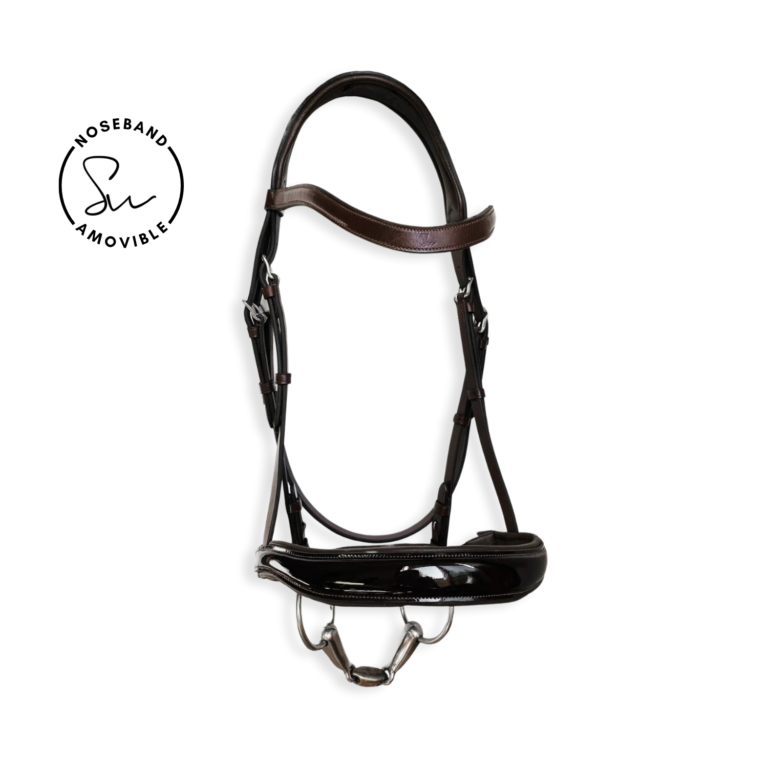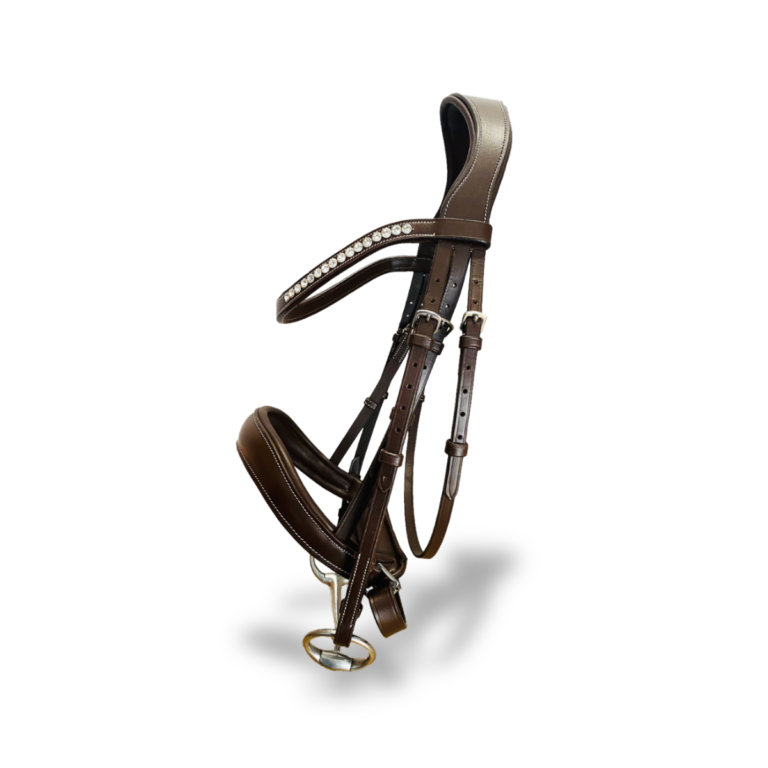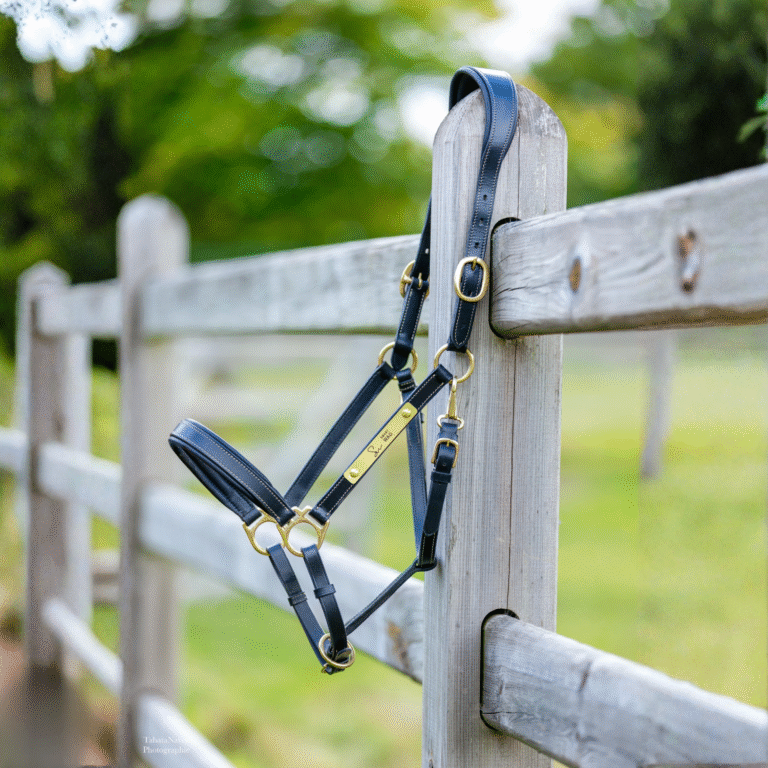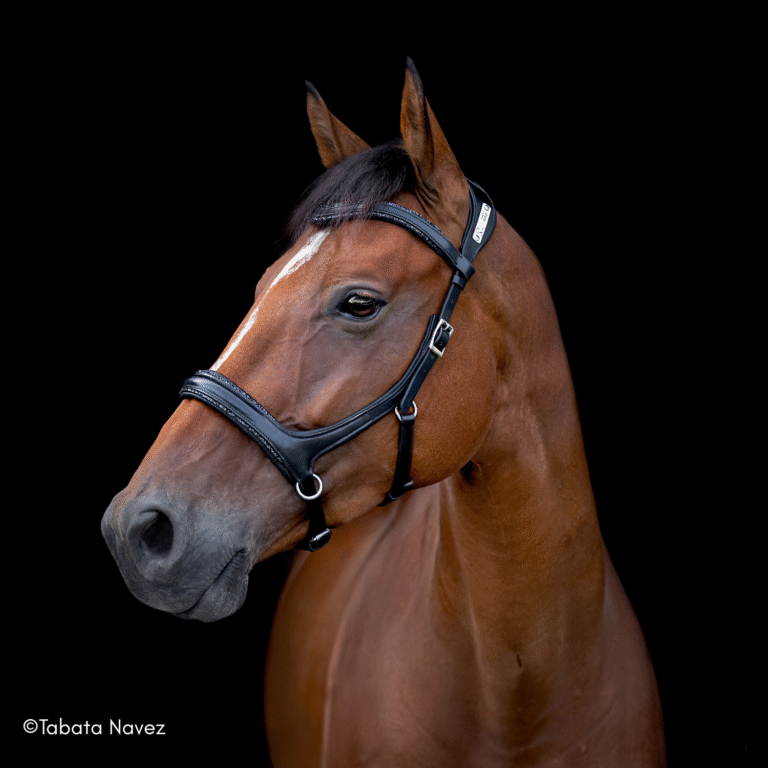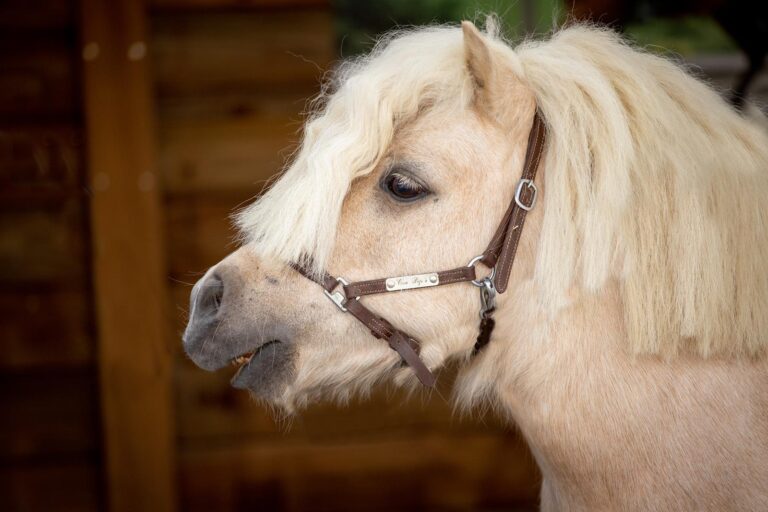

Fitting a bridle to a pony is not simply a matter of using a smaller version of a horse’s bridle. A pony’s head is more compact, its proportions differ and its skin is often thinner, which has a practical impact on the choice of size, the width of the leather straps and the fit. With just over a million equines in France, including around 8,100 ponies, and ponies accounting for nearly half of the licences issued by the French Equestrian Federation, this is a subject of great interest to many riders, particularly younger ones. This guide covers all sizes, from Shetland to D-class ponies: how to assess the horse’s build, choose the right size, identify sensitive areas, select the right material and adjust the bridle safely.
Pony morphology: what changes compared with a horse
Before discussing size, we must understand why a miniaturised horse bridle is not sufficient. Morphometric studies of the equine skull confirm that small breeds, starting with the Shetland, have a distinctly shorter and narrower head than large horses – and not merely in scale: the proportions themselves differ. In practical terms, this translates into several particularities to take into account.
- A more compact and rounded head the chamfer is shorter, bringing the noseband closer to the eye and the cheekpieces.
- A smaller distance between the ganaches the throatband and the chinband should be proportionally shorter.
- Skin often thinner on certain hardy breeds, which do not tolerate stiff, thick, or poorly finished leathers well.
- A sometimes convex front, especially in the Shetland, which makes the forehead and the passage of the ears particularly sensitive.
This diversity is further accentuated by the breeds. To delve deeper into morphological reading applied to equipment, our Breed morphology guide Detail the measurement method and the adjustments race by race.
Marked specificities depending on the breed
Some breeds call for particular attention when choosing a snaffle bridle:
- Welsh often a fine muzzle associated with a broad forehead. It is frequent to have to combine elements of different sizes (a headstall of one size, a noseband of another) to obtain a correct fit.
- Shetland Short head, proportionally wide bevel and domed forehead. Reins short but well-proportioned in width, bridle carefully adjusted not to press on the base of the ears.
- Connemara proportions closer to the horse, generally simpler adaptation, but skin that remains sensitive and calls for supple and well-worked leathers.
- French Saddle Pony variable morphology according to the lineages, which requires a case-by-case approach rather than a simple size correspondence.
Sizes and categories: from the Shetland to the D pony
Pony categories according to the FFE (French Equestrian Federation)
In France, ponies are divided into four official categories by the French Equestrian Federation, based on their height at the withers (measured without shoes). Be aware of a common confusion: this A/B/C/D classification is French (FFE), and not a classification by the Fédération Équestre Internationale. It serves as a first reference point, but it describes the size of the animal, not the shape of its head.
| FFE category | Height at the withers | Usual snaffle bridle size | Indicative head circumference |
|---|---|---|---|
| Shetland (often cat. A) | up to 1.07 m | Shetland | 85 to 95 cm |
| Pony A / B | up to 1.30 m | Pony | 90 to 105 cm |
| Pony C | 1.31 to 1.40 m | Cob | 100 to 115 cm |
| Pony D | 1.41 to 1.48 m | Cob or Full | 110 to 120 cm |
Head circumference values are indicative orders of magnitude, to be confirmed by measurement and trial: according to manufacturers, the sizing varies, and the same pony can fall «between two sizes». For a complete overview of sizes and correspondences, consult our Horse and pony size guide.
How to take the measurement
The benchmark measurement for choosing the right size is head circumference: start at the corner of your mouth, pass the tape measure behind your ears (where the headrest sits), and then bring it back down to the other corner of your mouth. Complete with two useful indicators:
- The length of the chamfer, from the corner of the lips to about two centimetres below the eye, which determines the placement of the noseband.
- The distance between the ganaches, which determines the throatlatch and the pony's freedom to flex its neck.
The réflexe to keep: The labelled size is only a starting point. Two ponies in the same FFE category can have very different heads. It is always the actual fitting, element by element, that validates a bridle – not sticking to a theoretical match.
Pressure points and sensitive areas
A snaffle bridle acts on areas where superficial nerves and vessels run, with little protection from the tissues. On a pony, whose head is more compact and skin often thinner, these areas are concentrated on a smaller surface: a poor adjustment therefore has quicker consequences. Four regions deserve particular attention.
Priority surveillance zones:
- The nape (of the neck), where the headboard passes: it's a major support point, never to be overloaded.
- In front of the facial ridge, where a branch of the trigeminal nerve emerges from the skull — an area known for its sensitivity.
- Ganaches and jaw joint, which the noseband and the throatlash must not constrict.
- The chamfer, where the nasal bones are thin and close to the surface.
It’s not just a question of comfort. Vets link some chronic headshaking behaviours to hypersensitivity of the trigeminal nerve, which can be exacerbated by ill-fitting pressure on the bridle, poll, forehead, or jaw. Some horses only show these signs in a bridle, and not in a rope halter, which illustrates just how much fitting matters. A pony that shakes its head, constantly opens its mouth, or refuses contact is sending a signal that needs to be listened to before trying to «correct» it with a tighter adjustment. To understand this mechanism, the’UC Davis School of Veterinary Medicine Propose a reference summary on trigeminal-mediated headshaking.
Materials: choose according to the pony's intended use
The material directly influences the comfort, weight, and upkeep of the bridle. On a small conformation, lightness and suppleness are even more important than on a horse: a bridle that is too stiff or too heavy unnecessarily fatigues the neck muscles and marks the thin skin.
| Material | Characteristics | Recommended pony use |
|---|---|---|
| Full-grain leather, vegetable tanning | Structured, durable, develops a patina, holds up over time | Regular use, competition, seeking a good finish |
| Hot stuffed / oiled leather | Supple, water-repellent, weather-resistant | Outdoor riding, trail riding, damp environments |
| Synthetic (BioThane type) | Light, waterproof, minimal maintenance, high strength | Pony club, young riders, intensive shared use |
The full-grain vegetable-tanned leather remains the benchmark for quality upholstery: it retains its shape under tension, develops a patina, and lasts for years with regular maintenance. The deeply nourished leather (oiled, waxed) gain water resistance and are better suited for outdoor use, at the cost of a more rustic appearance. The synthetic materials such as BioThane They do not warp in humidity, can be cleaned with a single wipe of a sponge, and offer resistance comparable to, or even superior to, leather in terms of traction - a real asset in pony clubs where equipment is shared and individual maintenance is rarely guaranteed. Their downside: they do not develop the patina or feel of fine leather.
Matching the leather width to the size
Beyond the padding, the width of the leather headpiece should be proportionate to the pony's head. If it's too wide, a headpiece looks unsightly and weighs down the overall appearance; if it's too narrow, it concentrates pressure on a small band and risks marking the skin. The general principle:
- Shetland and mini Fine leathers, but never too tight, to avoid a «cutting thread» effect on fine skin.
- Ponies A to B: intermediate widths, good compromise between lightness and pressure distribution.
- Pony C to D: widths close to standard horse sizes, adapted for a more developed head.
Fitting the snaffle bridle safely, especially for young riders
Riding is an activity where falls are frequent and fractures represent a significant proportion of injuries treated in emergency rooms. Children are particularly exposed, with a majority of girls among young accident victims, and a more pronounced severity before the age of eleven according to French epidemiological studies. In this context, a well-fitting bridle is not a mere comfort detail: it is a safety element, because a pony that is comfortable in its head is a calmer and more predictable pony. This issue takes on its full meaning as major events like the Generali Open de France ponies in Lamotte-Beuvron, which brings together thousands of young riders every summer, approach.
The five-point adjustment protocol
To be systematically checked:
- Muzzle You should be able to slide two fingers between the noseband and the nasal bone. It must never impede chewing or rest too low on the nasal bones.
- Death it forms a slight crease at the corner of the lips, neither too tight nor too slack.
- Throat strap Leave the space of a fist (proportionately tighter on a small pony) to allow for flexion of the neck.
- Frontal no traction on the base of the ears; it must be long enough not to pull the headrest forward.
- Amounts: Symmetrical, vertical, without creases or twists, jaws at the same height on both sides.
The «two-finger» rule under the noseband is a useful guideline, but not an absolute truth: it should be judged according to the pony's conformation. A pony with a narrow bridge of the nose doesn't have the same needs as a pony with a broad muzzle. Observation takes precedence over theoretical rules.
Common mistakes to avoid
Common pitfalls at pony club and at home:
- The forgotten winter coat: It thickens the head in cold weather and often requires loosening by one notch. Think about seasonal readjustment.
- The growth of a young pony: Its head evolves quickly. A monthly check of the settings avoids silent friction.
- Vocabulary confusion: In France, «filet» often refers to a bridle without a noseband. This distinction avoids many misunderstandings when purchasing.
- The bridle on the pony Even when the measurements «pass», the proportions don't match and the fit remains approximate.
The case of the Shetland and very small ponies
The smallest ponies are a case apart. Their very compact head, short nasal bridge and often domed forehead make miniaturised horse snaffle bridles frankly unsuitable: cheekpieces too long, a browband that presses on the ears, a poorly placed noseband. A Shetland deserves equipment designed for it, with short cheekpieces, leathers that are fine yet well sized, and a carefully chosen browband.
Because this case warrants a full treatment, we are dedicating a special article to it: if your mount is a Shetland, read our guide Shetland fillet, a miniature rig, which complements this cross-cutting guide with points specific to very small sizes. This article remains your reference when comparing different pony sizes or when kitting out a pony in categories A to D.
The SmartWag approach for pony bridles
At SmartWag, adaptation to morphology comes first. Our Customisable leather bridles They are made from vegetable-tanned full-grain leather, hand-stitched using the saddle stitch, and available in several sizes to fit ponies right up to horses. A personalised engraving of your pony’s name is included with each item, and our Swiss artisanal craftsmanship allows us to adjust the components to best fit a pony’s head, rather than simply offering a scaled-down version of a horse model.
For a pony "between two sizes" — a Welsh with a broad forehead and a fine muzzle, for example — being able to combine compatible elements or play with the adjustments makes all the difference between a snaffle bridle that "fits" and one that is genuinely comfortable.
Frequently asked questions
How do you choose the right snaffle bridle size for a pony?
Measure the head circumference starting from one corner of the mouth, going behind the ears, and returning to the other corner: this measurement will indicate the bridle size (Shetland, Pony, Cob). The height at the withers and the FFE category (A to D) provide an initial guide, but are not sufficient: two ponies of the same height can have very different heads. If in doubt between two sizes, choose the larger one, which you can adjust with the buckles, and always try it on before confirming the purchase.
Can a horse snaffle bridle suit a large D pony?
It's not ideal. Even when the head circumference seems to match, a pony's proportions differ from those of a horse: a more compact head, shorter distance between the jowls, and often thinner skin. A Cob-sized bridle is generally better suited than a Full for a D pony. The most important thing remains the actual fit on the animal, piece by piece, rather than the size label.
My Shetland shakes its head — should I tighten the noseband?
No. Tightening the noseband masks the symptom without treating the cause and can worsen discomfort. Head shaking often reflects discomfort: a noseband or browband that is too tight, a browband pressing on the base of the ears, or pressure on sensitive areas of the face (poll, in front of the frontal bone, jaw joint). First, check each adjustment and for any painful pressure points. If the behaviour persists, consult a veterinarian: chronic head shaking can be a sign of trigeminal nerve disorder.
Does a Shetland pony need a specific snaffle bridle?
Yes, very small ponies warrant dedicated equipment rather than a simple miniaturisation of a horse's bridle. A compact head, short noseband and a sometimes bulging forehead call for short cheekpieces, a well-sized browband and appropriately sized leather widths. We detail this particular case in our article on the Shetland bridle, which complements this broad guide.
Which materials should you favour for a pony snaffle bridle?
For regular use and a beautiful finish, vegetable-tanned full-grain leather remains the benchmark: structured, durable, it develops a patina over time. For outdoor use and humid environments, a deeply nourished leather is more resistant. For a pony club or young riders, a BioThane-type synthetic offers lightness, water resistance, and minimal maintenance. In all cases, leather widths adapted to a smaller physique distribute pressure better than an oversized horse bridle.
How often should you check the fit of a young pony's bridle?
More often than for an adult horse. A young pony grows and changes shape; its winter coat also thickens its head in cold seasons. A monthly check of the fittings is a good practice, with systematic readjustment when the seasons change. Look for marks of rubbing, areas of worn hair, and any signs of discomfort, which indicate that a fitting needs to be reviewed.
Customisable snaffle bridles, designed for every morphology
A good pony bridle is, first and foremost, a well-fitting bridle: the right size, made from leather suitable for the skin and intended use, and carefully adjusted. At SmartWag, each bridle is crafted from vegetable-tanned full-grain leather, saddle-stitched, and personalised with a complimentary engraving of your pony's name. Our Swiss artisanal expertise and various sizes allow us to fit ponies from categories A to D, as well as horses.
Discover some models from our range of Customisable leather bridles :
- Mont Blanc anatomical bridle — anatomical cut to clear the sensitive areas of the head.
- Bridon New Soul — Versatile contemporary design, full-grain leather, saddle-stitched.
- Bridon Shambord — Timeless classic, hand-stitched full-grain leather.
A doubt about the size or a pony «between sizes»? Contact us: we will help you choose the most suitable fit for your mount.