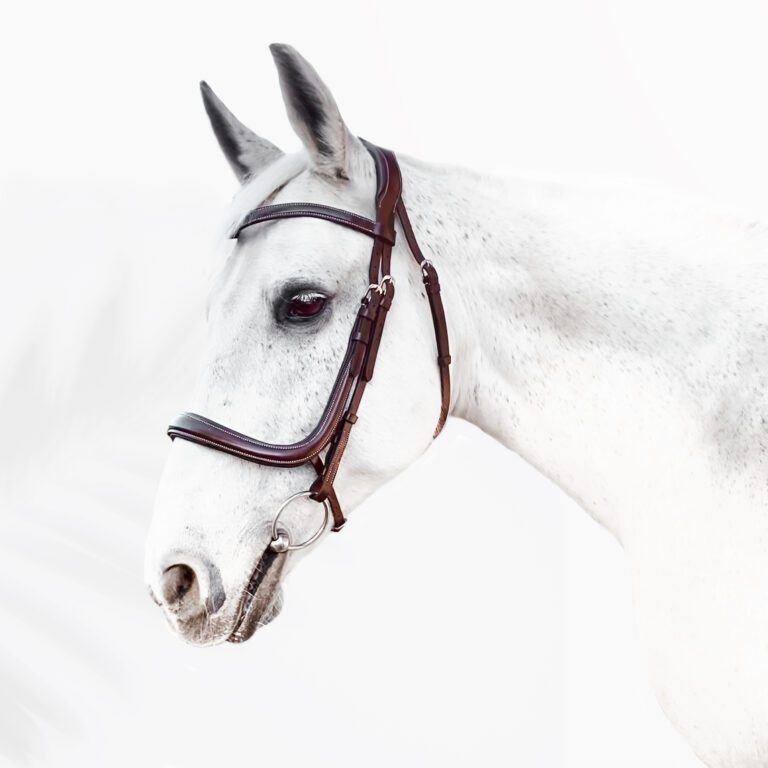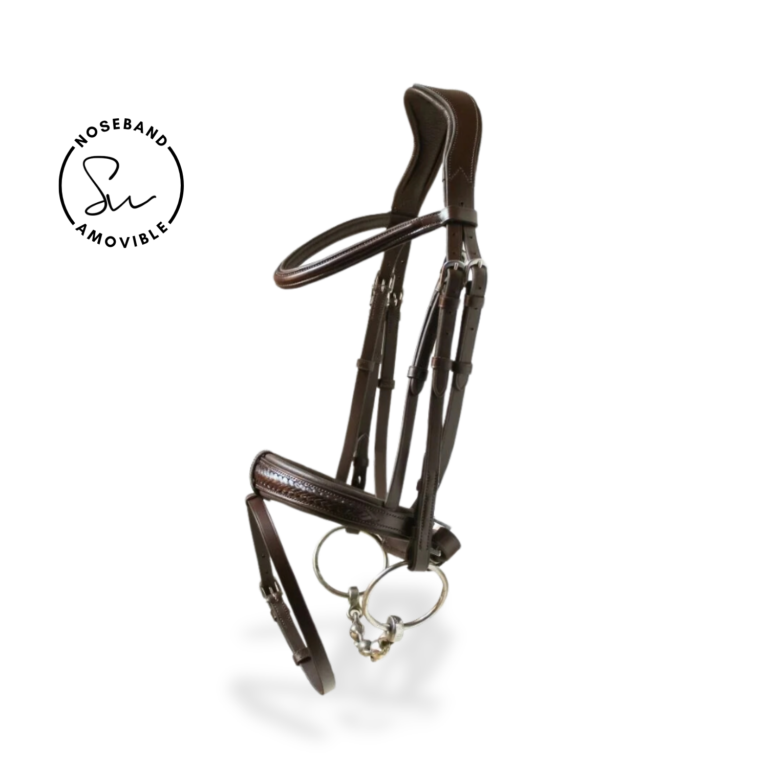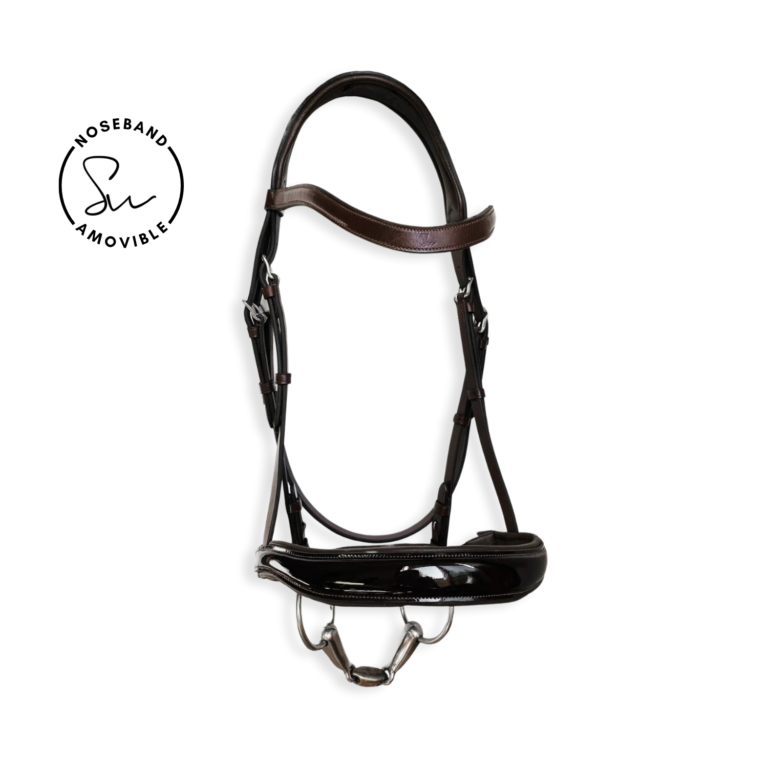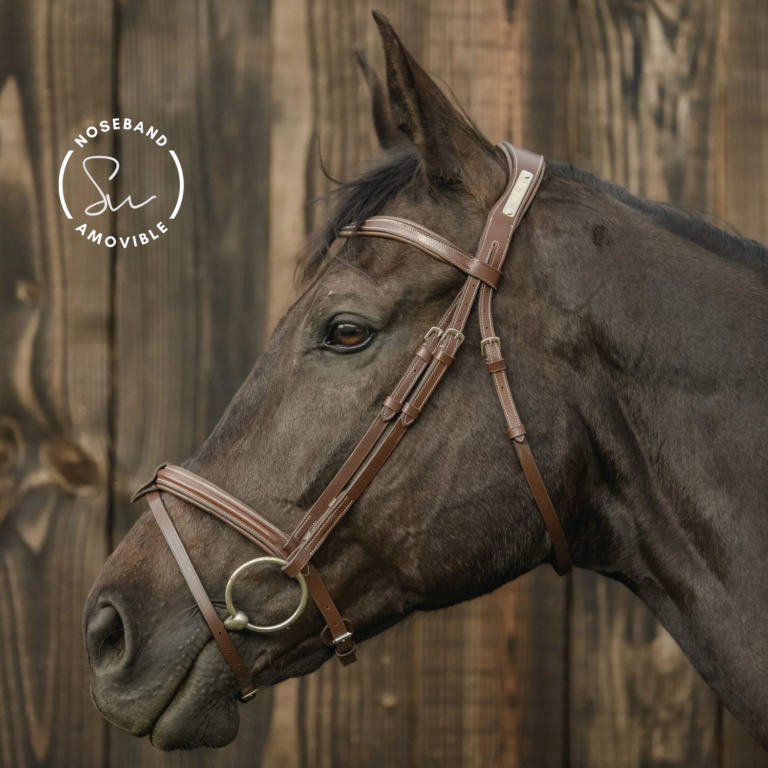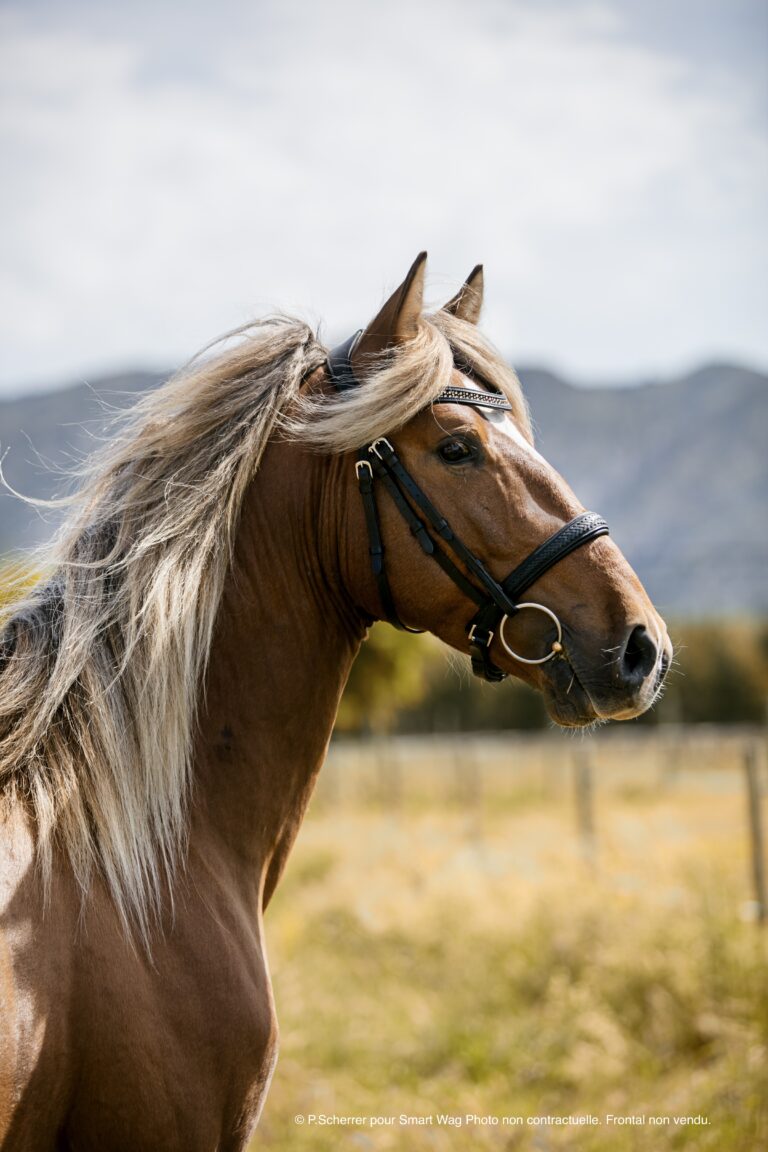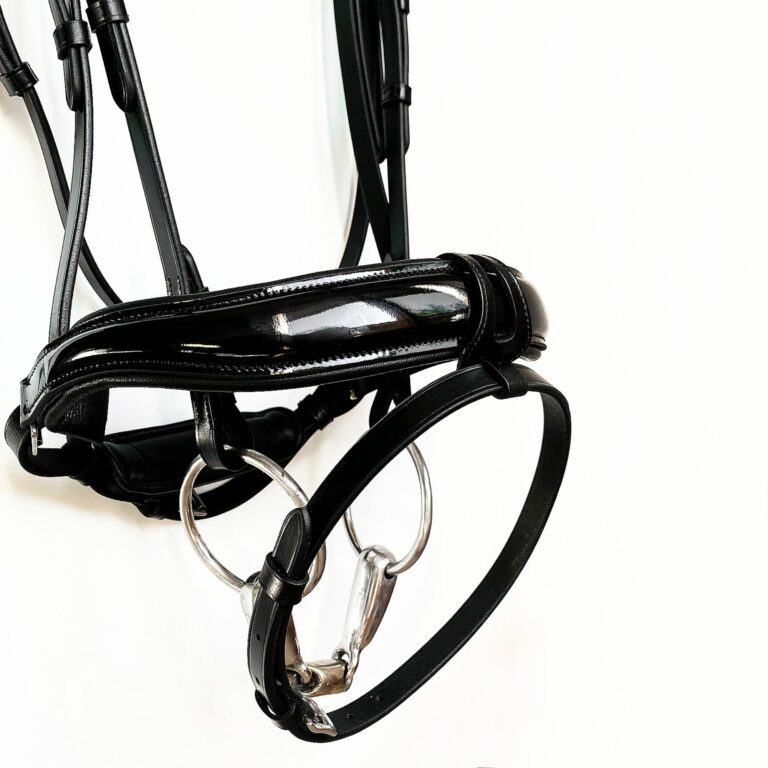
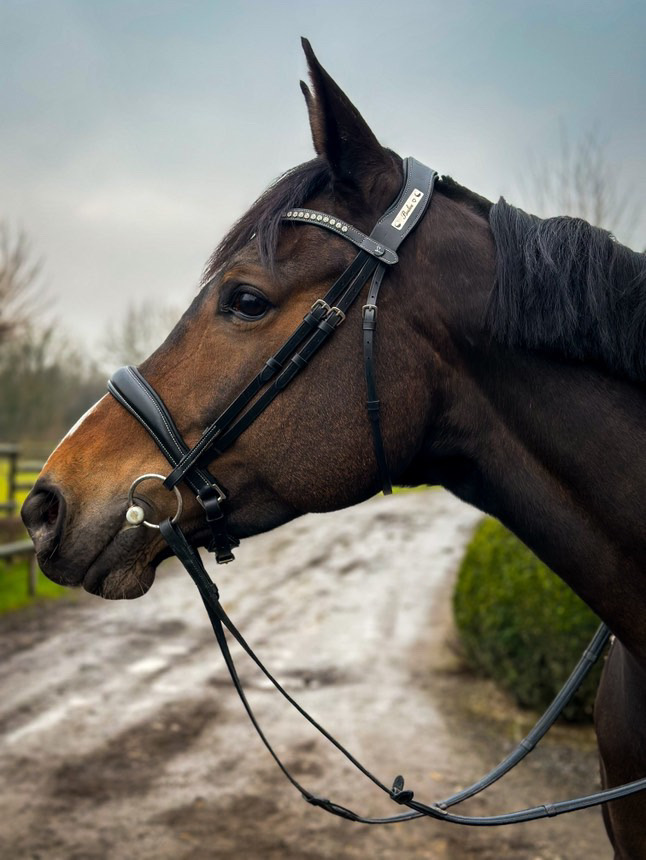

The bridle is a communication tool used between rider and horse. A poorly chosen or badly adjusted bridle can reduce performance and significantly alter the horse's comfort and locomotion. This comprehensive guide covers every aspect: history, anatomy, types, fit, maintenance and innovations 2025.
History and development of the bridle
The history of the bridle goes back a long way. The first archaeological traces date back to around 3500 to 3000 BC., In the Botai culture in Kazakhstan, horsemen were already using leather or rope straps to guide their horses. Discoveries in the Near East also confirm the early use of rudimentary bits, as shown by the worn teeth of a 4,700-year-old donkey found in Israel.
Visit Middle Ages, The bridle became more sophisticated: military riding demanded more complex bits and reinforced leather parts to better control the horses.
La Renaissance A turning point came with the birth of the great classical riding schools, such as the Naples Academy founded in 1530, which helped to standardise the use and design of bridles.
Visit XVIIIᵉ century, As dressage practices continue to evolve, so does the equipment, even if the modern notion of anatomic bridle would not appear until much later.
At the’modern era, The arrival of synthetic materials in the 1970s and the development of biomechanical studies in the 1990s transformed bridle design. Today, research is turning towards cutting-edge innovations such as pressure sensors or bio-based materials, to combine comfort, performance and respect for the horse's morphology.
Complete anatomy of the bridle
The headrest: the backbone of the system
The headpiece is the main structural element of the bridle. It passes behind the ears and supports the whole system. The area of contact with the nape of the neck is critical: it must avoid the nuchal ligament while ensuring even weight distribution.
Modern headrests come in a range of designs: classic straight, anatomical with cut-out for the ears, offset, bridge...
Uprights: support for the bit
The uprights connect the headstall to the bit. Adjustable, they must avoid any pressure on the zygomatic process or the facial nerve.
The position of the adjustment buckles is strategic: they must not enter the horse's field of vision or create pressure points on sensitive areas.
The noseband: aesthetics and stability
The noseband can limit the opening of the mouth, and by extension allow the bit to be more stable.. The correct position is two fingers (about 3-4 cm) below the zygomatic process. The circumference must allow two fingers to pass between the leather and the nasal bone to ensure the horse can breathe and swallow normally.
The noseband may not be adopted for reasons of adaptation and ergonomics, or for traditional reasons.
The different types of nosebands meet specific needs, which we will detail in the dedicated section.
The under-throat: passive safety
The throat latch prevents the bridle from going over the ears in the event of a sudden movement or hooking of the reins. It must allow a closed fist (about 10 cm) to pass between the leather and the throat.
The front: lateral stabilisation
The browband connects the two sides of the headstall by passing over the forehead. It prevents the bridle from sliding backwards, which would put pressure on the nuchal ligament. It also has a decorative function. Models can be straight, V-shaped or wave-shaped to suit different body shapes.
Complete classification of bridle types
Bridles by design
Classic/traditional bridle: Standard design with straight headstall. Suitable for most horses with no particular problems. Average price €60-150.
Anatomical bridle«ergonomic »: Designed taking into account recent biomechanical studies. Offset headrest, curved uprights, specific cut-outs...Price 150-400€.
Bridle micklem : Innovative design avoids facial nerves and sensitive areas. Can be used as a bridle or an enasure.
Bridles generally used depending on the discipline
Dressage bridle : French, German or Swedish pull-back noseband used in competition.
Snaffle bridle : French noseband, sometimes combined or crossed preferred. Popular quick-adjust system.
Cross-country snaffle bridle: Leather or imitation leather bridle, often the same as used in show jumping.
Western bridle : No noseband in 90% of cases. Often adorned with metal decorations.
Endurance bridle : Lightweight and often made of synthetic materials for easy maintenance. Fastening system for halter often integrated. Bright colours authorised and frequently used in competition.
Snaffle bridle: Maximum versatility. Often converts to a halter.
Specific bridles
Bitless bridle : Several systems: side-pull, bitless, hackamore, bosal (western tradition), micklem, Likorne. Pressure distributed over the nose and under the trough. Another way of approaching contact and communication with the horse, which often requires the rider to have an advanced level of technique in the use of body and seat as aids. Particularly useful for horses with sensitive teeth. Price 80-300€.
Two bit bridle (full bridle) : Used in dressage and high school. Two pairs of uprights for curb bit and snaffle bit. Two pairs of reins required. For experienced riders only. Price 200-800€.
Complete guide to nosebands
Precise adjustment of nosebands
Noseband adjustment has a direct impact on well-being and performance. A 2024 study by Scholler D. et al. , Do tight nosebands have an effect on the upper airways of horses?, highlights the risks of a noseband that is too tight, causing :
- Reduced respiratory capacity
- Inability to swallow normally (accumulation of saliva)
- Measurable stress through increased cortisol
- Development of defensive behaviours (squeaking, head shaking)
Correct adjustment method : Place two fingers (index and middle finger) between the noseband and the nasal bone. The fingers should pass easily. This adjustment allows the horse to chew, swallow and breathe normally while keeping the bit stable.
Size and measurements guide
Measurement methodology
The main measurement is taken from one corner to the other, passing through the nape of the neck behind the ears. Use a flexible tape measure. Take three measurements and average them out for greater accuracy.
| Measurement (cm) | Commercial size | Indicative withers height | Typical breeds | Noseband |
|---|---|---|---|---|
| 75-85 | Shetland/Mini | < 95 cm | Shetland, Falabella | 35-45 cm |
| 85-95 | Pony A/B | 95-120 cm | Welsh A/B, Pottok | 45-50 cm |
| 90-105 | Pony C/D | 120-148 cm | Connemara, New Forest | 48-55 cm |
| 95-115 | Cob | 145-160 cm | Haflinger, Fjord, Cob | 52-60 cm |
| 115-125 | Horse (Full) | 155-170 cm | Selle Français, Anglo | 55-65 cm |
| 125-135 | Large horse (XFull) | > 170 cm | Hanoverian, KWPN | 60-70 cm |
| > 135 | Feature (XXFull) | > 175 cm | Shire, Percheron | 65-75 cm |
Note that height at the withers is not a reliable indicator of the bridle size to choose. The measurements of the head should be used as a reference point.
Perfect fit: detailed technical guide
Adjustment protocol
1. Headrest position : Should rest about 1 cm behind the base of the ears. Check that there is no pressure on the auricular cartilage by passing a finger over it. The wrong headband can cause headaches and resistance.
2. Aligning the uprights : They must not overlap.
3. Loop position : The buckles of the uprights must be placed as far as possible from the horse's field of vision - at eye level.
4. Bit height : The bit must never touch the teeth.
5. Noseband adjustment : Allows 2 fingers to pass flat over the nasal bone. Test: the horse must be able to chew a piece of carrot.
7. Throat adjustment : Closed fist between leather and throat.
8. Length of browband : Do not pull the headpiece forward. 1-2 cm distance from the base of the ears.
9. Global symmetry : Check alignment from the front. Uprights of identical length. Noseband centred on chamfer.
10. Dynamic test : Observe at walk, trot and canter. Nothing should slide, turn or hit the horse. The horse must be able to yawn and chew freely.
⚠️ Common mistakes and consequences
- Too tight a noseband: Stress, respiratory problems, mouth ulcers
- Headrest over the ears : Headaches, defences, refusing to be restrained
- Amounts too short : Bit too high, permanent discomfort
- Throat too tight: Breathing difficulties on exertion
- Asymmetry : Contact problems, unilateral resistance
Materials: in-depth comparative analysis
Leathers: types and characteristics
Vegetable-tanned leather (tanned with natural tannins) :
- Service life: 10-15 years with maintenance
- Price: +30-50% vs chrome
- Advantages: Breathable, hypoallergenic, attractive patina
- Disadvantages : Regular maintenance required, sensitive to humidity
Chrome leather (85% on the market) :
- Service life: 5-8 years
- Price: Market standard
- Advantages: Faster flexibility
- Disadvantages: Possible allergies , less durable
Modern synthetic materials
Biothane (TPU - Thermoplastic polyurethane) :
- Composition: Polyester core + TPU coating (petrochemical derivative)
- Strength: 500-1000 kg depending on width
- Service life: 3-5 years
- Maintenance: Simple rinse
- Price: -30-50% vs leather
- Advantages: Waterproof, various colours, hygienic
- Disadvantages : No patina, rigid, «plastic» appearance»
Reinforced PVC :
- Usage: Economy bridles
- Service life: 1-3 years
- Price: -60-70% vs leather
- Limitations: Rigid, non-breathable, low durability
Maintenance and durability: full protocol
Daily maintenance (2-3 minutes)
After each use :
- Wipe off perspiration with a cloth.
- Clean and dry metal parts (rust prevention)
- Check for cracks or points of wear
- Hanging protected by a cotton bag on a suitable bridle stand (prevents deformation).
Weekly interview (15-20 minutes)
Complete cleaning protocol :
- Remove the bridle completely
- Clean with glycerine soap and a damp sponge
- Check each seam
- Reassemble, checking for symmetry
In-depth monthly interview (30 minutes)
In-depth treatment :
- Weekly and complete cleaning
- Application of leather balm (8-12€/250ml):
- - Thin layer with soft cloth
- - Emphasis on crease areas
- - Leave to penetrate for 2-3 hours
- Polish with wool cloth
- Grease buckles (silicone grease)
- Check hole wear (widening)
Optimum storage
Ideal conditions:
- Temperature: 15-25°C
- Ventilated room with low humidity
- Light: Avoid direct sunlight.
- Support: Round bridle holder (shape retention)
- Protection: Breathable fabric cover
Common problems and solutions
Bridle-related behavioural problems
Refusing to be restrained:
- Causes : Pain (teeth, ill-fitting bridle, trauma)
- Solutions: Dental check, revision/adjustment with a bitfitter, call in a behaviourist once the fit of the bridle has been checked.
Head shaking :
- Causes bridles: Too tight noseband, pressure on trigeminal nerve.
- Solutions: Check with a bitfitter that the correct choice has been made and adjust the bridle.
- Veterinary consultation if persistent (possible neurological causes)
Excessive opening of the mouth :
- Causes : Bit discomfort, stress, dental problems
- Solutions: Check bit and bridle fit + check up of the horse's teeth and mouth with a vet.
Bridle wear and repair
- Buckle holes - Leather reinforcement possible with a leather craftsman
- Upright/head seams - Professional stitching
- Noseband leather - Partial replacement possible
- Metal buckles - Replacement by a leather craftsman
Conclusion: Choosing the right bridle for your horse requires precise adaptation
The choice and adjustment of a bridle have a direct impact on the well-being and performance of the horse and rider. Innovations offer new solutions for every problem, but the fundamentals remain the same: precise measurement, comparative testing, adjustment and fitting supervised by a professional, regular maintenance.
Investment in quality equipment, adapted to the horse's morphology and discipline, pays dividends in terms of durability, comfort and prevention of pathologies. Choosing the right bridle for your horse is a key factor in ethical, high-performance riding.
Trends should not obscure the essential point: a bridle is first and foremost a communication tool that must respect the physical and mental integrity of each horse.
FAQ: Frequently asked technical questions
What's the difference between a snaffle and a bridle?
▼In France, there is no difference: the two terms refer to the same equipment. This confusion is sometimes costly: the «bride» (high school dressage equipment with two bits) costs €450+ and is not a bridle. Internationally, «bridle» covers all headgear.
My horse is constantly opening its mouth. Should I tighten the noseband?
▼No! The opening of the mouth indicates a problem: teeth (40% of cases), unsuitable bit (35%), stress (25%). Tightening the noseband masks the symptom without treating the cause. Protocol: dental check, test with different bits, analysis of the rider's hand. A correctly adjusted noseband allows the horse to chew a carrot.
How many bridles do you need?
▼Minimum recommended: 2 bridles (main + reserve). Ideal for regular riders: daily work bridle, competition/outings bridle, reserve bridle. Professionals often have 4-5 bridles depending on the discipline and horse.
Is vegetable leather worth the extra cost of 30-50%?
▼Yes for intensive use or sensitive skin. Measurable benefits: hypoallergenic (0% allergies vs 3% chrome), +50% durability (10-15 years vs 5-8), superior breathability, unique patina. The extra cost pays for itself in 3-4 years. For occasional use, the value for money is less obvious.
How do you recognise a quality bridle?
▼Check points: straight, even seams (8-10 stitches/cm), supple but dense leather (folds without cracking), stainless steel or solid brass buckles (not zamak), clean holes without tears, neat finish (bevelled edges, even dyeing). Simple test: bend the leather at 90° should leave no permanent marks.
Can a cracked bridle be repaired?
▼Superficial cracks ( 2mm) or through cracks: danger of breakage, compulsory replacement. Professional repair costs €50-150 depending on the extent of the damage, but does not guarantee safety on badly damaged leather.
Are anatomical bridles really useful?
▼Scientific studies 2024: measured reduction of 40% in pressure points, reduced stress (salivary cortisol -25%), improved dressage performance (+8% average scores). Particularly recommended for: sensitive horses, intensive work (>1h/day), behavioural problems linked to bridling. Extra cost justified for 70% horses.