In dressage, every detail counts. The precision of the aids, the lightness of the contact and the respect for the horse all depend to a large extent on the quality and relevance of the equipment used. Among the central elements of dressage equipment, the dressage bridle et le dressage bridle play an essential role. They are not mere accessories, but genuine communication tools, the use of which is now subject to strict regulations under the French Equestrian Federation (FFE) and International Equestrian Federation (FEI).
In recent years, regulations have evolved to take better account of the horse welfare, The evolution of sporting practices and the new expectations of riders. The emergence and gradual recognition of alternative solutions, such as ennasures (sidepull) in certain events, illustrate this desire to adapt dressage equipment to more varied approaches, without denying the technical requirements specific to dressage.
The aim of this article is to provide a clear and comprehensive overview of the types of bridles and bridles used in dressage, training as well as in competition, while also explaining the FFE and FEI regulatory frameworks, with a particular focus on ennasures.
Dressage bridle and dressage bridle: essential reminders
Dressage bridles: the basics
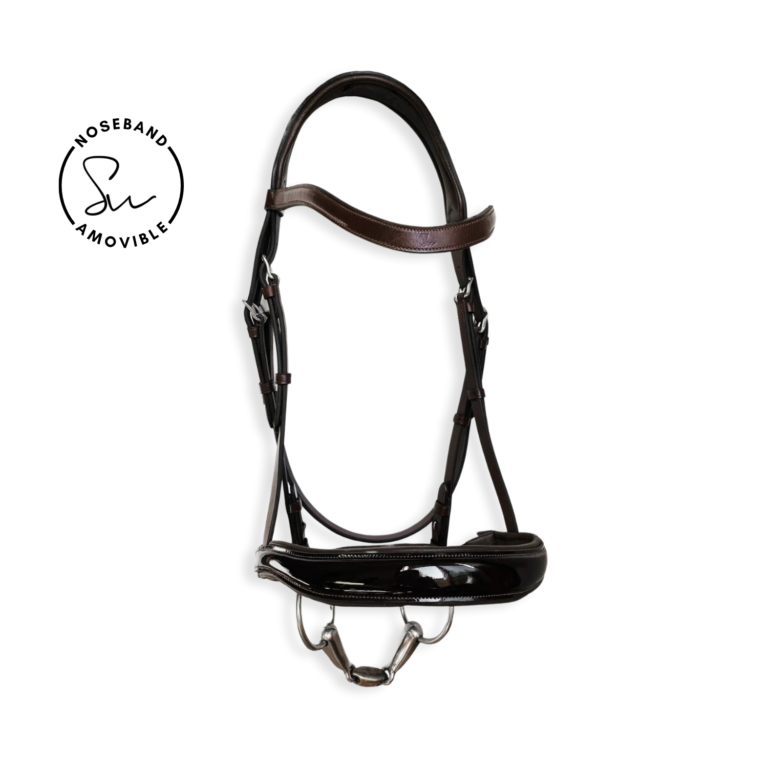
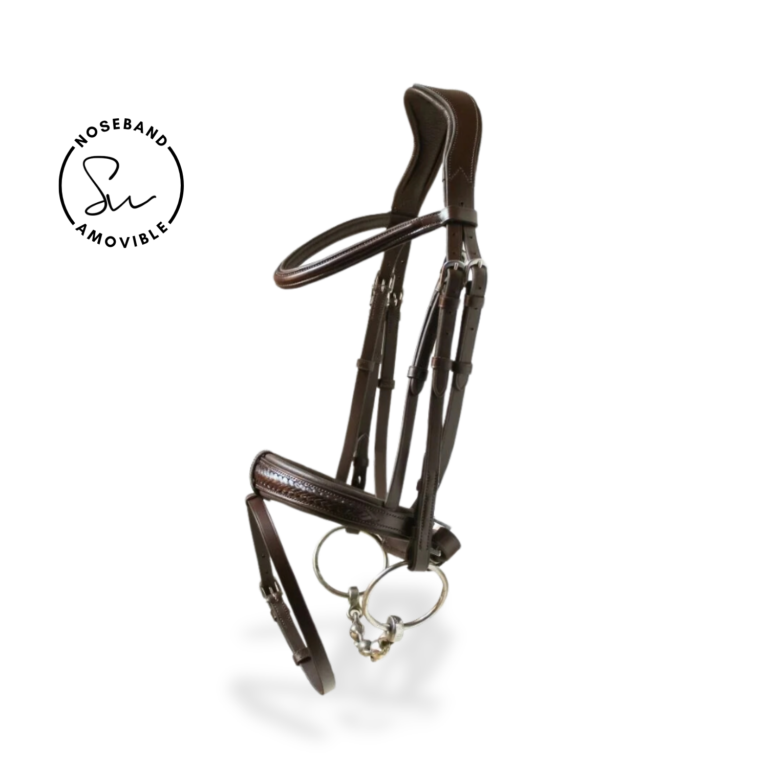
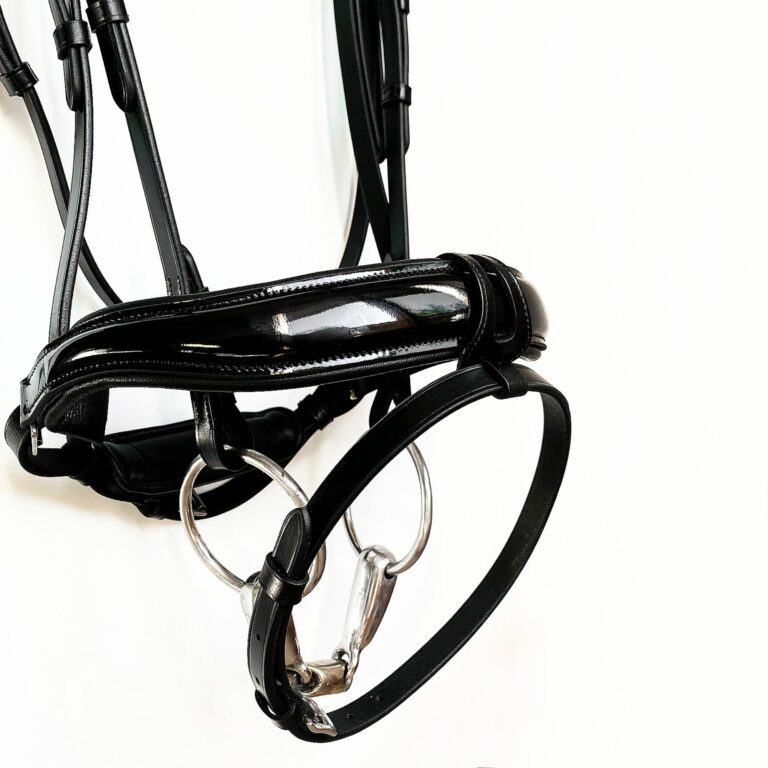
The dressage bridle, The net is the most commonly used piece of equipment, both in training and in competition.
It generally consists of :
- a headrest,
- of a front-end,
- a noseband
- Two pairs of uprights
The bridle is particularly appreciated for the clarity and simplicity of its action. In dressage, it is used for training at all levels and is compulsory or authorised in many official competitions.
The dressage bridle: a finesse tool
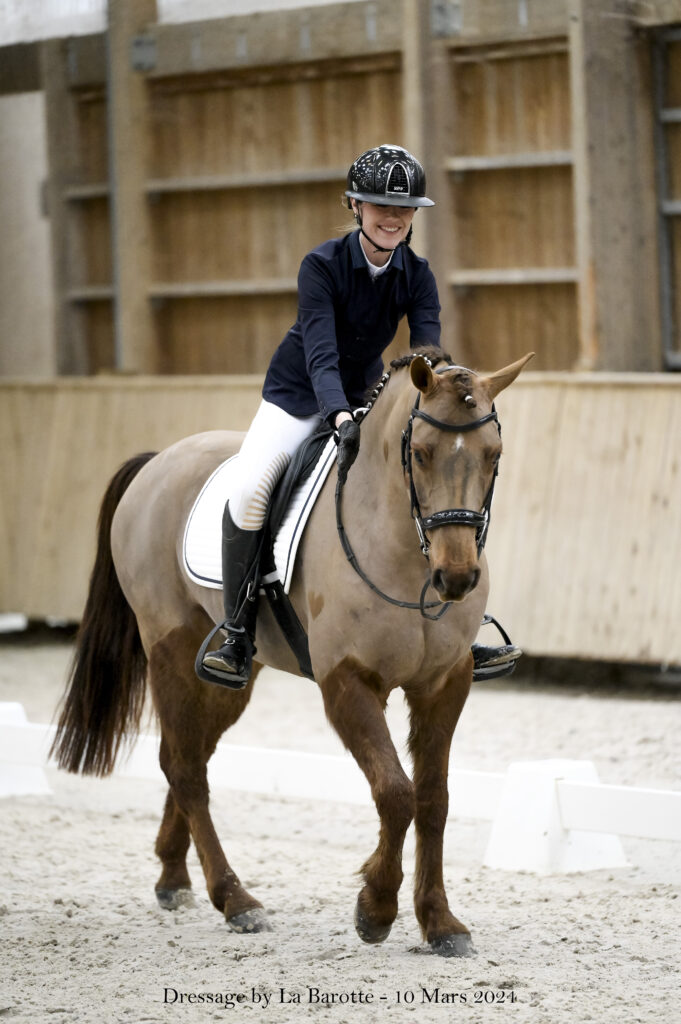
La dressage bridle, Also known as a full bridle, it has two bits and two pairs of reins:
- a snaffle bit,
- a bridle bit with curb chain.
The bridle allows a more precise and subtle action, notably on the horse's balance, gather and attitude. It is designed for horses that are already well trained and for experienced riders capable of using independent, measured aids.
Traditionally associated with the highest levels of dressage, the bridle remains a symbol of refinement, but today its use is more controlled (and contested) and left to the rider's choice according to the rules and the level of the event.
Dressage equipment: a global approach
When talking about dressage bridles or dressage bridles, it is essential to mention the’dressage equipment as a whole. The regulations do not just concern the bit, but the overall coherence of the equipment used.
This includes
- the shape and adjustment of the noseband,
- the type of headrest (classic or anatomical),
- the width and flexibility of the uprights,
- overall fit, to ensure the horse's comfort.
The federations are placing increasing emphasis on the absence of excessive pressure points, freedom of the ears, jaw and tongue, and legibility of the aids.
FEI regulations: the international dressage framework
General principles
The FEI strictly regulates the equipment used at international dressage competitions. The aim is twofold: to guarantee sporting fairness and to protect the well-being of the horse.
In general :
- The bridle must be made of leather or a similar material,
- Synthetic elements are only tolerated if they are not in direct contact with the horse's skin,
- the reins must be attached directly to the bit, without any intermediary.
Bridle and bridle authorised according to level
By category and level :
- the bridle is authorised, or even required, in young horse, pony and junior classes and in certain CDI classes,
- the dressage bridle is permitted at higher levels, including the Grand Prix, with increasing freedom for the rider to choose between bridle and bridle.
This development marks a clear desire on the part of the FEI to adapt to horses and working methods, without systematically imposing a bridle.
Ennasures , sidepull and FEI
To date, the ennasures, including sidepulls, are not authorised in international FEI classic dressage events. Their use remains confined to training or specific disciplines. However, their increasing recognition in national regulations and the debates surrounding welfare point to a possible future development.
FFE regulations: French specificities
Harmonisation with the FEI
The FFE is harmonising its rules with those of the FEI, while taking into account the realities of the French field. The dressage regulations specify in detail the bits, bridles and bridles authorised.
The bridle is widely favoured in Club, Amateur and Young Horse events. Visit flange is authorised mainly at Amateur Elite and Pro levels.
Snaffles and bitless in FFE dressage: 2026 developments
Updated Dressage regulations FFE applicable from 5 January 2026 marks a major evolution in the approach to dressage equipment, with official and extended recognition of the ride without bit, including at high levels.
This development is in line with the FFE's stated intention to promote horse welfare, The aim is to allow a wide range of riding styles and equipment to be adapted to individual needs, without compromising the technical requirements of dressage.
Ennasures: definition and use
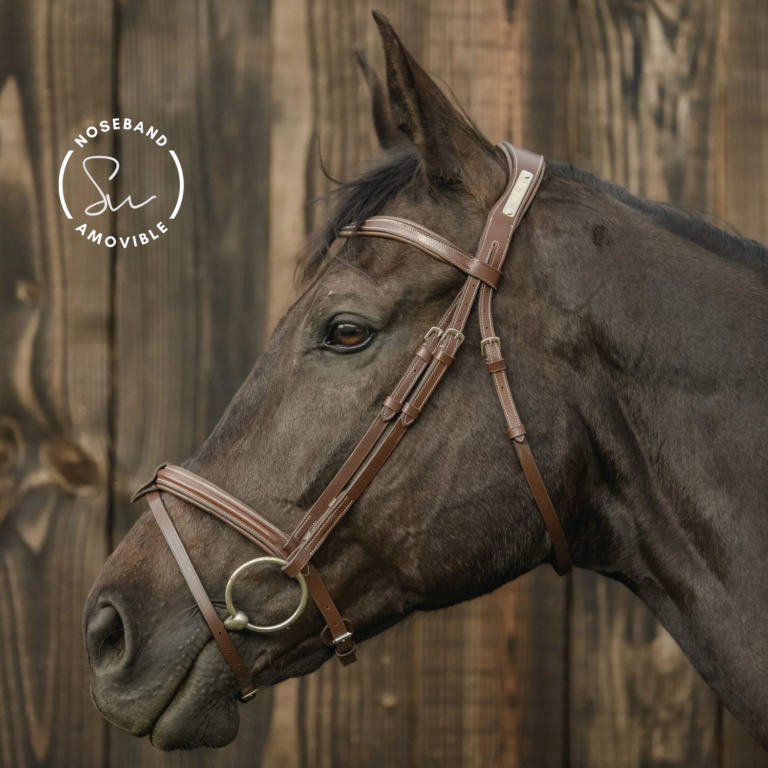
A ennasure, is a bitless harness that exerts lateral pressure on the muzzle and sides of the head. Unlike a bit, it does not act in the horse's mouth, making it an interesting alternative for :
- horses with sensitive mouths,
- horses undergoing rehabilitation,
- riders wishing to work with points of contact other than the horse's mouth.
Authorisation to use bitless in Club events
The FFE Dressage regulations applicable from January 2026 officially recognise bitless riding in an extended framework for the following levels Club, Elite Club and Pony, under certain precisely defined conditions.
This authorisation applies exclusively to free“ tests”, whatever they may be:
- preparatory or not,
- individual or collective (carousels).
Tests concerned
Bitless riding is permitted in all the following events :
- Free Pony
- Club Libre
- Club Élite Libre
- Carousel
- Preparatory or non-preparatory tests in these categories
On the other hand, the «classic» (non-free) Club and Pony tests remain subject to the usual rules concerning the use of bridles.
Bitless harness permitted
In these free events, the FFE explicitly authorises the following harnesses for riding without a mouthpiece:
- Rope halter
- flexible rope,
- without the addition of sheepskin or cushioning material.
- Sidepull (ennasure)
- direct action on the chamfer,
- without leverage.
- Bitless provided that it does not incorporate any amplification or mechanical system.
- Rope used alone, without mouthpiece or additional device.
This equipment is authorised subject to correct fitting and respectful use, guaranteeing the safety of the horse and the legibility of the aids.
Equipment strictly prohibited
The regulations are very clear on this point:
Hackamore riding is prohibited in all dressage events., whether they are hackamores with branches or flowers,
whatever the level or type of event. This prohibition applies without exception, including in free, carousel and preparatory classes.
Authorisation of bitless in Amateur and Pro classes
Since 2026, the FFE explicitly authorises the bitless presentation in certain dressage events Amateur and Pro. This authorisation concerns specific tests, identified as «bitless tests».
This includes
- Amateur Amateur 3 A, Amateur 2 A, Amateur 1 A, Amateur Elite A
- Pro Pro 3 A, Pro 2 A, Pro 1 A
In these events, the rider may present his horse without a mouthpiece, bridle or traditional dressage bridle.
Ranking and sports promotion
It is important to note that :
- bitless tests do not generate FFE points,
- the results obtained are not taken into account in the mechanisms for closing commitment rights.
These tests are above all part of a logic of teaching, experimentation and valorisation of work, Rather than looking for a ranking or numerical performance.
Authorised bitless equipment
In the context of FFE bitless events, only certain harnesses are authorised in order to guarantee the clarity of the aids and safety:
- Rope halter flexible rope only, with no rigid elements or sheepskin protection, comprising a maximum of two knots on the chamfer. The reins or lead rope must be fixed under the halter.
- Sidepull (ennasure) the reins must be attached laterally to the noseband, It is not removable and does not have a lever system.
Any system that amplifies the action, creates leverage or generates excessive pressure is prohibited.
Supervised development of dressage equipment
This opening up to bitless riding does not call into question the use of bridles or bridles in dressage in classic events. It does, however, offer a regulated alternative, consistent with the development of modern dressage practices.
The rider remains responsible for the choice of equipment, which must be suited to the level of the horse, the type of competition and fit perfectly.
Horse welfare and controls
Both the FFE and the FEI are stepping up checks on dressage equipment. An ill-fitting bridle or dressage bridle can lead to sanctions or even elimination.
Points to watch include
- over-tightening of the noseband,
- adjusting the curb chain,
- the general condition of the leather and stitching,
- consistency between the level of the test and the type of equipment used.
How to choose your bridle in accordance with the regulations
Choosing dressage equipment that complies with the regulations is not enough. It also involves taking into account :
- the horse's morphology,
- its level of dressage,
- its sensitivity,
- the rider's sporting objectives.
The best way to choose your dressage bridle, bridle or sidepull is to consult a bit-fitter, who will take into account all the parameters necessary to make a fair and informed choice.
Conclusion
Developments in FFE and FEI regulations concerning dressage bridle, dressage bridle and more broadly’dressage equipment reflects a profound change in the vision of modern dressage. Performance, precision and the horse's well-being are no longer opposites, but are thought of together.
By keeping abreast of the rules in force and choosing the right equipment, riders can be part of a demanding, more ethical and sustainable approach to dressage.
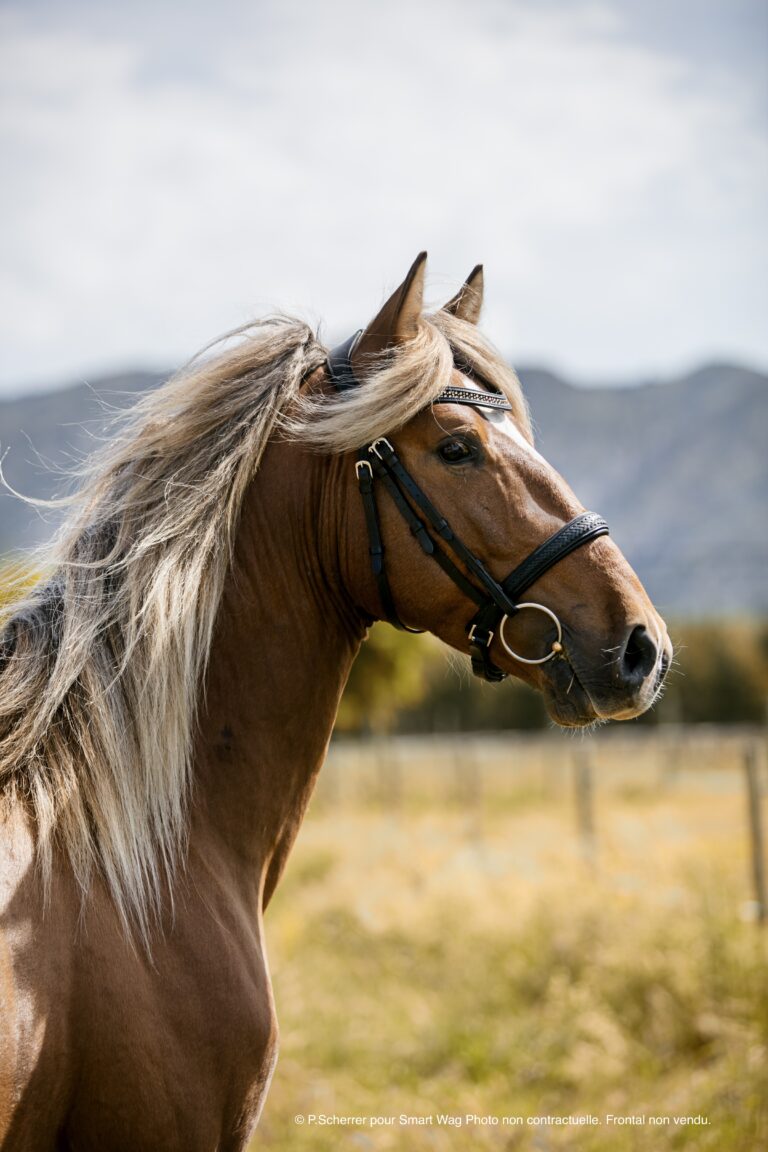
Pictured in this article, the Zurich bridle.